
If you’ve been looking around lately for ways to earn extra or build a steady income, you’ve probably noticed just how many successful businesses are now run entirely from home. They don’t need fancy offices or big teams to work; just solid systems, useful results, and smart tools to connect with people who need what they offer. And honestly? Some home-based AI businesses can generate steady income when they are built with clear services, strong quality control and consistent client demand.
Now that AI tools are easier to get hold of and much more affordable, starting and managing this kind of business has become more accessible. But it also brings up a fair question: Can you actually build something profitable this way, and do it properly?
This guide walks you through how to launch and grow an AI-powered business from home.
What Is an AI Home Business, Exactly?
Put simply: It’s any business where you use artificial intelligence tools to get work done, create content, or deliver services, but you stay fully in control. You decide the direction, check the quality, and handle every part of your relationship with customers. You don’t need expensive gear, a dedicated workspace, or advanced technical training to get started.
Think of AI as having a really helpful assistant. It lets you research faster, write more smoothly, design visuals, crunch numbers, or organise information without wasting hours. That doesn’t mean the end result is generic or low-quality — it just means you have extra support to do the work. The real value still comes from your choices, judgement, and personal touch.
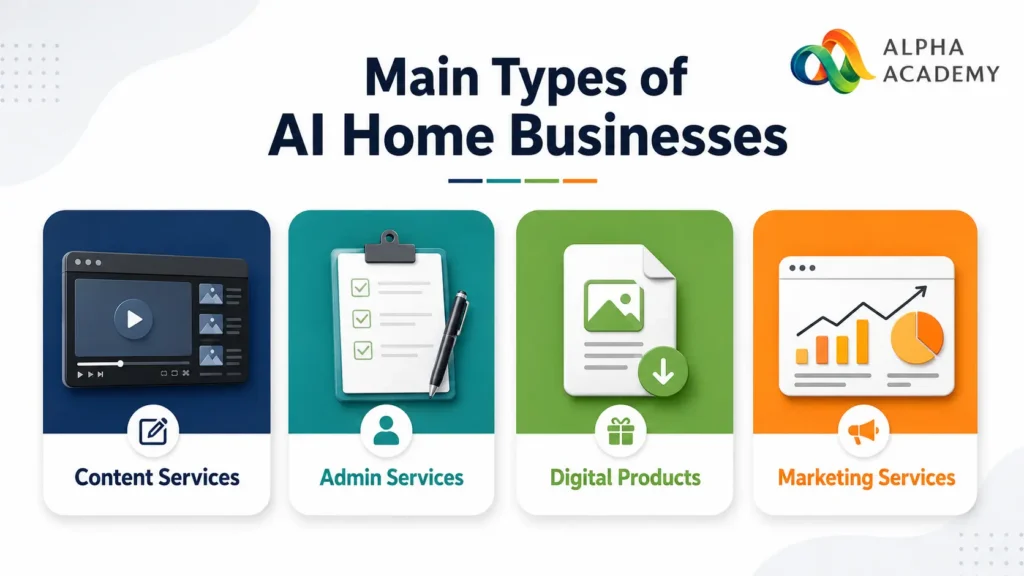
Main Types of AI Home Businesses
You don’t have to stick to just one thing. In fact, relying on only one service or product often limits how fast you can grow. The smartest move is to build a mix of offerings, so your income stays steady and keeps growing over time. Below are 23 practical workflows, grouped clearly so you can pick what fits you best.
Content Creation & Media Services
All about producing information, visuals, and media for audiences or other businesses.
1. Faceless YouTube Channel Operation
This can be one of the more scalable ways to earn from home when the channel has a clear niche and consistent content strategy. You pick a clear niche, make videos without showing your face, and earn through several income streams at once. Start by finding topics people are actually searching for. Use AI to draft a script, but always rewrite it yourself to make sure it’s accurate and sounds natural. Next, gather or create visuals (licensed footage, simple charts, or screen recordings work great) and add a clear voiceover that you have full rights to use commercially.
2. Article & Blog Writing Service
Every business and website needs fresh, useful content to attract readers and build trust. Start by talking through exactly what your client wants — their target keywords, preferred tone, and who they’re writing for. Use AI to put together an outline and first draft, but then rewrite it completely to remove that generic “robot” feel, check all facts, and make it easy to read. Add relevant links, format it neatly, and send it over ready to publish. This type of work is often in demand, and you can charge per article or set a monthly rate.
3. E-Book & Digital Guide Creation
This can be effective because one well-made product can be sold repeatedly, although it still needs marketing, updates and customer support. Pick a topic people are willing to pay to learn – something that solves a real problem or shares useful knowledge. Use AI to structure the chapters logically, then expand and rewrite every section so it actually helps the reader.
4. Social Media Content Management
Brands and creators need regular posts to stay visible and connected to their followers. Begin by getting to know your client’s voice, their goals, and who they want to reach. Use AI to brainstorm ideas, write captions, and suggest relevant hashtags, then create matching graphics or short clips. Schedule posts ahead of time, keep an eye on comments and messages, and send regular updates showing how the content is performing. This turns into a reliable, ongoing income stream.
5. Newsletter & Email Copywriting
Email marketing is still one of the best ways businesses stay in touch with their customers. Start by confirming what the message is meant to achieve and who will read it. Use AI to draft subject lines and the main body, then rewrite it so it feels personal, persuasive, and true to the brand. Add clear links and instructions, then check spelling, flow, and layout before handing it over.
Professional & Administrative Services
Helping individuals and businesses handle daily work, plan ahead, and organise their information.
6. AI-Assisted Virtual Assistant
A flexible, easy way to start. You support business owners and professionals with their routine tasks. Agree upfront exactly what you’ll do — managing emails, arranging meetings, organising files, or handling simple enquiries. With AI, you can summarise long messages, draft replies, gather facts, and put together basic reports much faster than doing it all manually. But always check everything before you send it, keep your client updated, and hit every deadline.
7. Market & Industry Research
Clients often need clear facts about trends, competitors, and opportunities before making decisions. Start by asking exactly what information they’re looking for. Use AI to collect relevant data, statistics, and reports from reliable sources, then organise and summarise it in plain language. Point out what matters most — strengths, risks, gaps in the market — so they don’t have to wade through pages of raw data. Deliver it as a simple, easy-to-follow document.
8. Business Plan & Proposal Writing
Startups and existing companies both need solid documents to secure funding, win contracts, or set clear goals. Learn all about their idea, who their customers are, and what they want to achieve. Use AI to build an outline covering everything they need — market analysis, operations, costs, and growth plans. Then fill in the details, adjust the numbers, and rewrite it to sound professional and realistic. Make sure it flows well and makes a strong case.
9. Resume & Career Profile Optimisation
Job seekers need documents that highlight their skills so they stand out to employers. Collect their work history, education, qualifications, and the type of role they want. Use AI to rearrange and rewrite their details, focusing on achievements rather than just daily duties.
10. Transcription & Translation Services
Turning speech into written text or changing content from one language to another. Get the files from your client and confirm the format, accuracy level, and deadline. AI can process the content quickly, but you must go through it line by line to fix errors in spelling, grammar, or meaning. Make sure it stays true to the original message before sending it back.
Digital Product Creation
Building assets once, then earning from them over a long period.
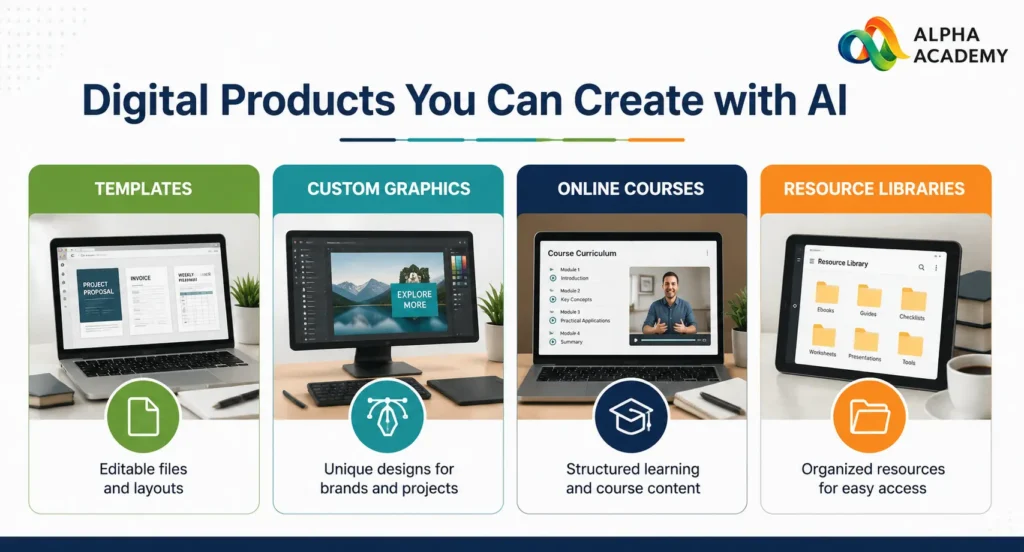
11. Editable Template Design
Templates save people hours of work. Start by finding out what’s actually needed: invoices, planners, checklists, budget sheets, or report formats. Use AI to help plan the layout and sections, then build the file in Word, Excel, or PDF format. The key is making it simple to edit and work on any device. Once tested, package it and list it for sale online.
12. AI Art & Custom Graphics
Almost every business and creator needs visuals for websites, marketing, social media, or publications. Confirm exactly what they need: style, size, purpose; then write clear prompts to generate ideas using AI. Tweak the colours, details, and layout until it looks unique and fits what they asked for. Always double-check that you have full commercial rights to use or sell the final work.
13. Online Course Development
If you have knowledge to share, or know someone who does, turn it into a structured course. Pick a clear topic and decide who it’s for. Break it down into lessons and modules. Use AI to draft explanations, examples, quizzes, and notes, then rewrite and arrange everything so it’s easy to follow. Add diagrams, summaries, and activities to help people learn. Once checked over, host it on a learning platform or sell it directly.
14. Niche Resource Libraries
Put together a collection of useful materials focused on one specific area, such as farming tips, freelance guides, or business tools. Choose your niche, then research what people are willing to pay to access. Use AI to create articles, checklists, and guides, but edit every word, check facts, and remove any generic phrases. Organise it neatly, and let people buy access once or pay a small monthly fee.
Marketing & Growth Services
Helping other businesses attract customers, get noticed, and run more smoothly.15. SEO & Keyword Strategy Service
Websites only get visitors if they show up in search results. Look at your client’s existing site, their industry, and competitors. Use AI to find keywords people are actually searching for — terms with good demand but not too much competition. Suggest which pages or articles they should write or update, and give them a simple plan to follow. This helps their visibility grow over time.16. Ad Copy & Campaign Creation
Good advertising text helps businesses get more clicks and sales for their money. Learn all about the product or service, its benefits, and who it’s meant for. Use AI to write different versions of headlines and descriptions, then refine them until they sound clear, persuasive, and follow the rules of the platform. Suggest who the ads should reach, and keep an eye on results to make improvements.17. Competitor Analysis Service
Clients want to know what other businesses in their field are doing well — and where they can do better. Identify their main competitors, then use AI to gather details on their services, pricing, marketing, and customer feedback. Turn that into a simple comparison, pointing out strengths, weaknesses, opportunities, and risks. Finish with clear, practical advice they can actually use.18. AI Chatbot Setup & Support
Many businesses waste hours answering the same questions every day. Build an automated system to handle that for them. Collect all the common questions, answers, policies, and details the bot will need. Set it up using a suitable platform, then test it thoroughly so replies sound natural and accurate. Once it works, show the business owner how to update it later if they need to.Specialised Services
More focused business models that work perfectly from home.19. Workflow Automation Consulting
Help clients cut down time spent on repetitive tasks. Walk through their daily work to spot steps that can be automated. Use AI and simple tools to connect their software, emails, forms, and files, so information moves automatically instead of being typed in manually. Set it all up, test it, and give them simple instructions so they understand how it works.20. Script & Story Content Creation
Creators and businesses often need scripts for videos, presentations, or stories but don’t have time to write them. Confirm the style, length, audience, and main message. Use AI to draft an outline and first version, then rewrite it to improve the flow, tone, and interest. Make sure it sounds consistent and fits exactly what they want.21. Expert Content Packaging
Many professionals know their subject inside out but can’t turn their knowledge into clear, structured content. Gather their notes, recordings, or ideas. Use AI to organise and expand that information, then rewrite it so it sounds exactly like their voice. Check every fact carefully, and deliver a finished document or guide they can use or sell under their own name.- AI-Powered Data Summarisation & Reporting
- Local Business AI Setup & Support
Rules for Quality & Compliance
This is what worries most new business owners, but it’s simpler than it sounds. A lot of people assume that using AI automatically makes work low-quality or not allowed for business use. But the truth is: clients and buyers care about the value, accuracy, and originality of what you give them, not which tool you used to make it. Remember this: AI is only your helper; you give the direction, check the work, and take responsibility for the final result. Here’s a clear look at what works and what to avoid:| What You Do | How You Build the Work | Usage Rights | Adding Real Value | Being Original | Taking Responsibility |
|---|---|---|---|---|---|
| The Right Way | Your own plan, clear structure, and personal way of organising ideas. | Using tools that clearly say you can use results commercially. | Explaining ideas, checking facts, fixing errors, and making content useful. | Combining ideas, writing in your own style, and making it unique. | Standing by your work and fixing issues if they come up. |
| What Will Cause Problems | Just copying and pasting raw AI output with no changes. | Using tools or assets only allowed for personal use. | Doing no work yourself and just letting the tool do everything. | Producing identical work to hundreds of others or copying existing content. | Blaming the tool for mistakes or refusing to correct them. |
Following these points can help keep your business more reliable, compliant and trusted. The goal is always to deliver something useful that stands out from what everyone else is putting out.
Your Simple Work Process
Using tools to speed things up doesn’t mean lowering your standards; it just helps you stay consistent without wasting time. Here’s a routine you can follow for every project:
- Pick your work: Choose something that fits your interests, skills, and what people actually want to pay for.
- Get clear details: Talk to clients or decide your own goals. Know exactly what’s needed, what it should look like, and when it’s due.
- Use AI as a starting point: Generate drafts, outlines, summaries, or designs, but treat this only as the foundation, not the finished job.
- Rewrite and refine: Go through every part carefully. Adjust the tone, fix mistakes, add explanations, and make it sound natural. This is where you add the real value.
- Check everything: Confirm you have the right to use all tools, images, and materials. Make sure it works, reads well, and is accurate.
- Deliver and follow up: Send it in the format agreed. Ask for feedback, make small changes if needed, and stay in touch for future work.
Common Mistakes to Steer Clear Of
Even with a good plan, small errors can slow you down. One of the biggest issues is choosing speed over quality. Trying to take on too many jobs at once almost always means standards drop, leading to unhappy clients, bad reviews, and fewer returning customers. It’s always better to do fewer jobs well than many jobs poorly.
Another mistake is ignoring terms and conditions. Many new creators use free versions of tools without checking if they’re allowed to sell what they make. This can lead to copyright claims or having work removed later. Always read and confirm usage rules for every tool you use.
Final Thoughts
Starting an AI-powered business from home is completely possible this year, but it needs a sensible, responsible approach. It’s not a quick way to get rich overnight, but it’s a solid, sustainable model when done right.
Focus on services and products you can deliver well, stick to high standards and legal rules, and use technology to work smarter, not to cut corners. When your work is useful, well put together, and compliant, you will have a stronger foundation for building steady income over time.
With the right process and consistent effort, you really can build a reliable income stream, all from the comfort of your own home.
ChatGPT & AI: 23 Ways to Make Money with AI
FAQs on 23 Workflows to Start an AI Business from Home
No. Many of these workflows can be started without coding skills because they use beginner-friendly tools. You just need to be able to explain what you want and check the results; no advanced knowledge required.
Yes, as long as you follow your local laws on home work, taxes, and business registration. You also need to follow the terms of every AI tool you use, so you’re fully allowed to sell or publish your work.
The timeline varies. Some service-based businesses may earn quickly after finding clients, while product-based businesses usually take longer to build visibility and sales. Service-based work can bring income as soon as you find your first client. Selling products takes a little longer, as you need time to create them and get noticed before sales come in.
You can start with free tools, though these often have limits on quality, length, or commercial rights. As you earn money, upgrading to paid plans will give you better results and full usage rights, which helps you grow faster.
At the start, most workflows take 2 to 4 hours a day. Once you get used to your systems and build experience, you’ll work faster and handle more work without losing quality.
Absolutely. Many successful owners offer a mix; for example, writing articles, managing social media, and improving search results, so they can provide complete solutions and earn more from every client.
The best workflow for beginners is usually a simple service-based one, such as AI-assisted content writing, social media posts, basic design support, blog outlines, email templates, or product descriptions. These are easier to start because you do not need to build a full product first. You can offer a service, complete small projects, and improve as you work with clients.
No, you do not need to show your face. Many AI businesses can be run behind the scenes using written content, templates, digital products, automation, voiceovers, graphics, or client services. You can build a professional online presence using a brand name, portfolio, website, or social media page without appearing on camera.
Yes, but you should be honest, careful, and responsible. AI can help with writing, design, research, planning, and automation, but you should always review the final work before sending it to a client. Check accuracy, improve the quality, adjust the tone, and make sure you have the right commercial usage rights for any tools or assets used.
The biggest mistake is relying on AI to do everything without adding real value. Clients and customers want useful, polished, and original work. If you only copy and paste AI output, the result may feel generic or low quality. The better approach is to use AI as a tool, then improve the work with your own judgement, editing, research, and creativity.
Recent Posts