
Moving into your first home, whether you have bought it or rented it, comes with more responsibility than many people expect. A house may look fine on the surface, but small maintenance issues can quickly develop into expensive problems when they are ignored. A slow leak beneath the sink, a patch of damp on the wall, a blocked gutter or an overdue filter change might not seem urgent at first, yet each one can lead to damage, higher bills or unnecessary repairs.
The good news is that home maintenance does not need to be difficult or costly. You do not need advanced DIY skills or a garage full of tools. What you need is a clear routine that explains what to inspect, how often to check it and when professional help may be necessary. The Essential Home Maintenance Checklist for Beginners breaks everything down into simple, manageable steps, helping new homeowners and renters keep their property safe, comfortable and in good condition throughout the year.
Table of Contents
The Handyman Masterclass: Learn Repair & Maintenance Work
Why bother checking regularly anyway?
You might wonder if it’s worth setting aside time each month or season just to look at things that already work fine. The answer is simple: fixing a problem before it gets bad is always cheaper and easier than dealing with it once damage has been done.
When you keep up with these small jobs, you stop dirt and moisture from building up, help your appliances run smoother, and lower the risk of sudden breakdowns. Over time, it brings your electricity and water bills down, cuts repair costs, and keeps your space safe and comfortable. Plus, if you ever plan to sell or rent later? A home that’s been looked after will hold its value way better than one that’s been ignored.
Things to Check Every Month
These are quick little jobs that hardly take any time at all, but they make such a difference to how your home works day in and day out.
- Start with your cooling or heating system.
- Next, peek under all your sinks, in both the kitchen and bathrooms.
- Safety checks matter just as much.
- While you’re in the kitchen and bathrooms, spend a minute looking at your exhaust fans and cooker hood.
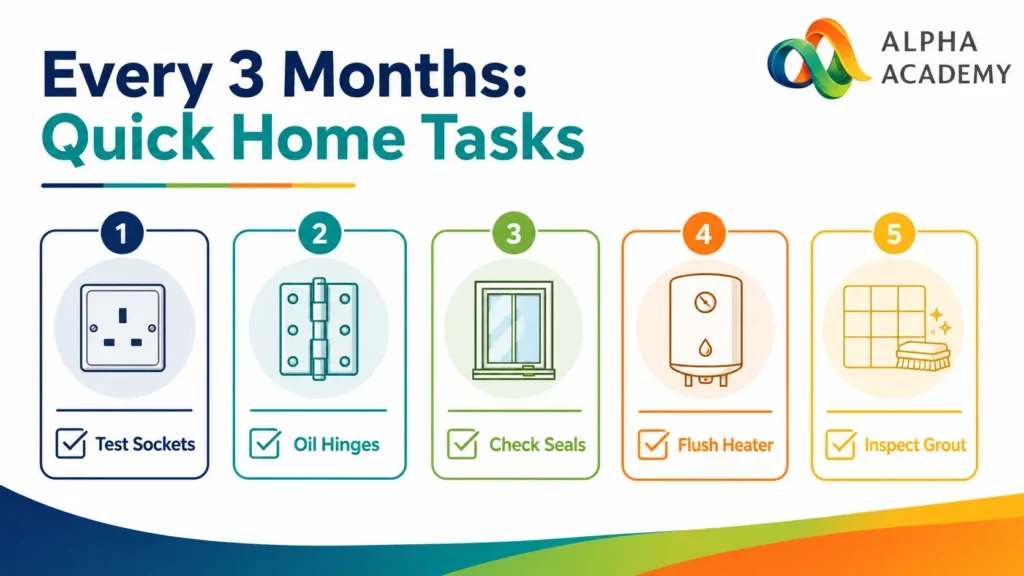
Tasks to Do Every Three Months
Every few months, set aside a little extra time to look at parts of the house that don’t need daily care but still need watching.
Go room by room and test your power sockets. Plug in a lamp or your phone charger to make sure everything works properly. Rest your fingers lightly on the plug or switch while it’s on , if it feels warm or hot, that’s a clear red flag, and you should get it checked sooner rather than later.
Doors and windows get used all the time, so over months their hinges start to creak or stick. A drop of oil or lubricant keeps them running smoothly and stops them from wearing out too fast. Also check the rubber seals around the frames. If they’ve cracked or peeled loose, cold air, rain, or even bugs can sneak right in. Replacing them is cheap and simple, and helps keep your home warm and dry.
Your water heater also needs a little attention every few months. As water sits inside, tiny bits of grit, rust, and minerals sink to the bottom. Over time that builds up into a thick layer that makes the heater work far less well. Draining just one or two buckets of water from the valve at the base flushes that sediment out , your water stays hotter, and the whole unit will last years longer.
Seasonal Jobs: Keep Up With The Weather
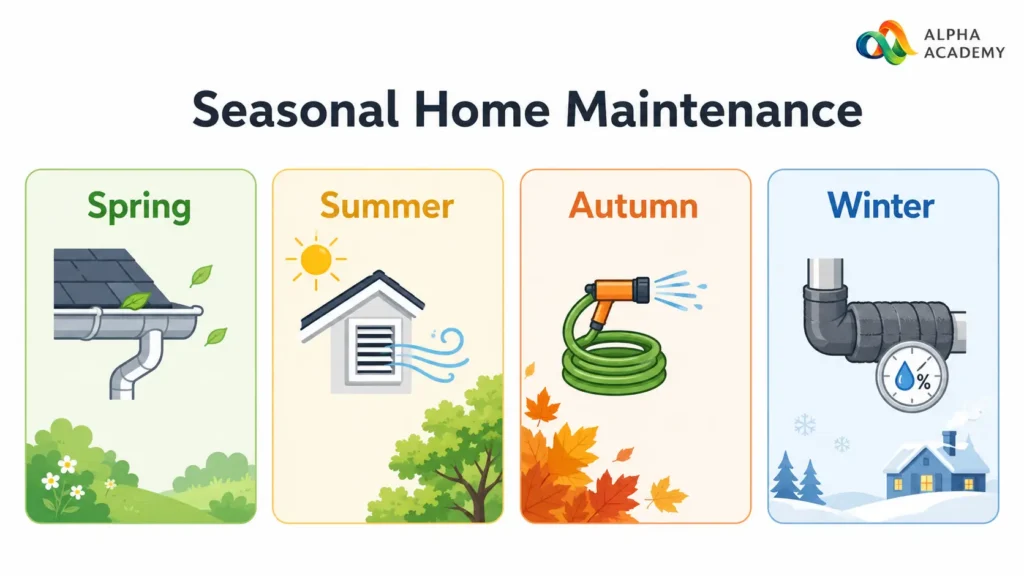
Every season comes with its own little problems, doesn’t it? If you split the work up over time, it never feels like such a big load.
Spring
Once the cold spell and heavy rains are gone, spring is when you sort out all the mess winter left behind. Start with your gutters and those downpipes. Leaves, dust, and bits of twig get caught in there so easily. If they get clogged, rain overflows the sides, runs straight down your outer walls, or sits right next to your house’s foundation. Just scoop them out, and water will drain away properly , no risk of damage. Walk all around outside and glance up at the roof and walls. See if any tiles are loose or missing, if there are cracks in the plaster, or if paint has started to flake off. Even a tiny opening is enough for rain to seep inside. Sort these small issues now, and you won’t be dealing with bigger leaks later on. When the days start getting warmer, you’ll want your air conditioner ready to go. Before switching it on the first time, clear away any weeds, dirt, or dead leaves that piled up around the outdoor unit. Make sure nothing blocks the air vents. If it hasn’t been checked in ages, it’s worth having someone give it a quick look over. And don’t forget your outside taps and garden hoses. Turn the water on and check for drips or splits. Frost can damage pipes through winter without you even noticing. It’s much better to spot it now, before you actually need to use them every day.Summer
When the heat kicks in, the goal is just to keep everything dry, well-aired, and safe. Look at trees and bushes growing close to your home. Cut back any branches that hang too near the roof, walls, or power lines. Strong summer winds can snap them right off, and over time they’ll scratch paint or crack your roof tiles. If you have an attic or a crawl space under the house, just pop your head in for a quick look. These spots get really hot and muggy in warm weather , exactly the kind of place mold and bugs love to settle. Make sure all the vents are open and clear so fresh air can move through freely. Here’s one thing most people forget, but it’s really important: clean the vent on your tumble dryer. Lint builds up slowly inside the hose and the opening on the outer wall. Let it get too thick, and it becomes a real fire hazard. Just pull the hose off, give it a good wipe through, and clear the outside opening too , takes only a few minutes and gives you real peace of mind.Autumn
Autumn means getting ready for colder, wetter weather ahead. First, disconnect all your garden hoses and shake every last drop of water out of them. Turn off the water valve to outside taps, then open them up so any remaining water can drain out completely. If water stays trapped inside, it freezes, expands, and can split the pipe open , messy and expensive to fix. Before winter properly arrives, get your heating system checked over. Whether you use a boiler, furnace, or heat pump, a quick clean and service means it will work properly when you need it most. Swap out old filters, and make sure all the indoor vents aren’t blocked by furniture or storage boxes. Walk around every door and window. Run your hand along the edges , if you feel cold air coming through, seal it up. Use some caulk or fit new weatherstripping. You’ll notice straight away the room stays warmer, and you won’t waste money heating air that just leaks outside.Winter
Once winter is here, focus on keeping your home safe from freezing and dampness. Look at pipes that run through unheated areas , under the floor, in the garage, or along outer walls. Wrap them in foam sleeves or insulation material so they don’t freeze solid. Keep an eye on how the air feels indoors. If it gets too dry, wooden doors, frames, and furniture can shrink and crack. If it’s too damp, mould will start growing on walls and corners. Try to keep humidity between 30% and 50% , you can use a small humidifier or dehumidifier to adjust it easily. After heavy rain or snow melts, take a quick look at your ceilings and inside the attic. Watch for dark or damp patches , those are the first warning signs of a leak. Catch them early, and you can fix things before they turn into a much bigger, costly repair.Annual Tasks to Do Once a Year
Some jobs only come around once every twelve months, but they’re just as important for keeping your place in good shape. Take one day a year to go over everything properly , either give it a thorough check yourself, or bring in someone who knows what to look for. Look out for things you might miss during your usual quick rounds: signs of pests, small cracks in the base of the house, or wear and tear on outer walls and the roof. If you’re not sure about something, paying for a proper inspection is always worth it. They’ll spot issues you’d probably never notice on your own. Your bigger appliances need a yearly look-over too. Fridges, washing machines, dishwashers, and water heaters run non-stop all year long. Giving them a quick service helps them work better and last a lot longer. Just clean the coils, check all the hoses, and make sure connections are tight. Doing this simple step stops them from breaking down when you need them most. If you have a septic tank or your own private drainage system, get it checked and emptied every three to five years. Even if nothing seems wrong right now, solid waste builds up slowly over time. Leave it too long, and it can block pipes and cause messy backups later on.
Maintenance Schedule at a Glance
Here’s a quick, simple overview to help you keep track:| Frequency | Key Tasks |
|---|---|
| Monthly | Clean or replace air filters, check under sinks for leaks, test smoke alarms, wipe exhaust fans, and make sure drains flow freely. |
| Every 3 Months | Check power outlets, oil door and window hinges, inspect seals, flush sediment from the water heater, and check grout and sealant around wet areas. |
| Spring | Clear gutters and downpipes, inspect the roof and exterior walls, service the air-conditioning unit, and test outdoor taps and hoses. |
| Summer | Trim trees and bushes near the house, inspect attics and crawl spaces, clean the dryer vent, and check fences and decks. |
| Autumn | Drain and store garden hoses, service the heating system, seal gaps around windows and doors, and clean fireplaces or chimneys. |
| Winter | Insulate exposed pipes, monitor indoor humidity, check for leaks after rain or snow, and make sure air circulates properly. |
| Once a Year | Complete a full home inspection, service major appliances, inspect drainage or septic systems, and review and update your home insurance. |
Common Mistakes to Avoid
We all mean well, but it’s easy to pick up habits that cause trouble later.
The biggest mistake? Waiting until something breaks before you look at it. A weird noise, a faint smell, or just feeling like something isn’t quite right , these are your first warning signs. Ignore them, and that small issue only gets worse and costs more to fix down the line.
Lots of people skip safety checks too. They think: “It hasn’t gone off yet, so it must work fine.” But batteries die slowly, and sensors get dusty over time. The only way to be sure they’ll work when you need them? Test them regularly.
It’s tempting to do every repair yourself to save money. But some jobs are best left to experts. If you’re dealing with wiring, gas lines, plumbing, or roof work , guessing or cutting corners can put you and your home at risk. It’s much safer to call someone who knows what they’re doing.
Final Thoughts
Looking after your home isn’t about being perfect or hitting every exact date. It’s just about building good habits and noticing the small things. Do that, and you stop tiny problems from turning into huge bills. You also get a space that stays safe, comfortable, and reliable for years.
Use this checklist as a guide, not strict rules. Adjust it to fit your home, your local weather, and how much time you have. After a while, you’ll learn exactly what your place needs , and what once felt like work will become second nature.
Frequently Asked Questions on The Essential Home Maintenance Checklist for Beginners
No. Every home is different, so only complete the tasks that apply to your property. For example, apartment residents may not need to maintain gutters, chimneys or outdoor taps. Focus on the areas relevant to your home.
Most monthly maintenance tasks take around one to two hours in total. Seasonal jobs may require more time, but you can divide them across several evenings or complete them gradually over a weekend.
A beginner’s toolkit should include a screwdriver set, adjustable wrench, hammer, bucket, stiff brush, torch, tape measure and protective gloves. You can purchase more specialised tools when necessary.
Yes. Regular inspections and minor repairs can prevent small problems from becoming expensive emergencies. Cleaning gutters, checking for leaks and maintaining appliances may also extend their lifespan.
Most basic cleaning, visual inspections, filter replacements and simple adjustments are suitable for homeowners. Follow the manufacturer’s instructions and stop immediately if a task appears unsafe or beyond your experience.
Hire a qualified professional for electrical faults, gas appliances, structural damage, roofing problems and major plumbing work. These tasks may require specialist training, equipment and legal certification.
Complete a general inspection every month and a more detailed review at the beginning of each season. You should also inspect your property after severe weather, flooding or unusually cold conditions.
Begin with safety and water-related areas. Test smoke alarms, look for leaks, inspect visible pipes, check doors and windows, and examine walls or ceilings for dampness, cracks or discolouration.
Use a printed checklist, digital calendar or reminder app. Divide tasks into monthly, seasonal and annual categories so that the work remains manageable and important checks are not forgotten.
Avoid using the affected area or equipment if it may be dangerous. Turn off the relevant water, electricity or gas supply only when it is safe to do so, and contact an appropriate qualified professional promptly.
Recent Posts