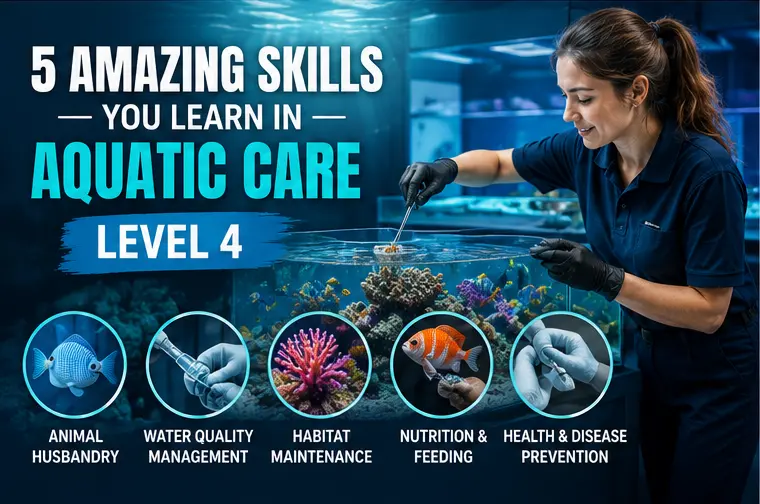
Aquatic Care Level 4 is where you stop just ticking off daily tasks and start thinking and working like a proper professional. A lot of people come onto this course having kept tanks at home for years, or worked in shops and entry-level jobs, figuring they already know all there is to know. Most of them say by the end it’s completely changed how they go about everything ,from checking water quality to making big calls that affect whole systems and all the stock you’re looking after.
This qualification lines up fully with UK industry standards, and every part of it is built around what you’ll actually need day to day in your work. It doesn’t just list what you should do. It explains why you do it, how to adjust things when they don’t go to plan, and how to take proper responsibility for the decisions you make. Below you’ll find the main skills and topics we cover, all written from seeing exactly how this course works out in real, working settings.
Advanced Water System Design and Troubleshooting
At lower levels you’re taught to run tests and tweak numbers until they match what’s written down. Level 4 shows you how all those different factors link together ,how a tiny shift in one place can throw the whole system off balance elsewhere. You’ll learn to pick up on subtle signs that standard tests don’t always show clearly, and how to dig down to find what’s actually causing a problem, instead of just fixing what you can see on the surface.
You’ll also work out how to put together balanced life support setups for different types of creatures, different numbers of stock, and all sorts of tank sizes. That means working out the right flow rates, picking exactly what filter media to use, and getting kits like UV units, protein skimmers and heaters all working as one, not fighting against each other.
Early Health Assessment and Responsible Treatment
You’ve likely already learned to spot clear warning signs like white spot fungus, clamped fins or fish gasping at the surface. Level 4 teaches you to pick up on far earlier, much subtler clues: small changes in how much they eat, slight shifts in their colour, odd ways of swimming, or how they get on with other fish. These little signs often show up days or even weeks before any obvious illness takes hold.
You’ll work through doing full, proper health checks, taking samples the right way, and following all UK legal rules about which treatments you’re allowed to use and how to handle them safely. You’ll also spend plenty of time learning when simply adjusting water conditions, food or their surroundings works far better than reaching for medicine, and how solid quarantine steps can stop most sickness from ever getting a foothold in the first place.
Species‑Specific Husbandry and Breeding Management
It’s all too easy to slip into treating every aquatic creature as though they need exactly the same care ,but doing so will almost always stop them from doing as well as they should. Level 4 gives you a proper, in‑depth grasp of exactly what different groups need: native UK freshwater fish, tropical varieties, marine life, corals and invertebrates all have their own very particular requirements. You’ll also learn how those needs shift as they grow, from tiny newly hatched fry right through to fully grown breeding adults.
Plenty of the course looks at how to create the right conditions to bring out their natural breeding behaviour, how to look after your breeding stock properly, and how to give the most delicate young larva exactly what they need ,whether that’s very precise water settings or tiny live foods. This knowledge is especially vital for conservation work, public aquarium breeding schemes and specialist breeders.
Compliance, Risk and Emergency Management
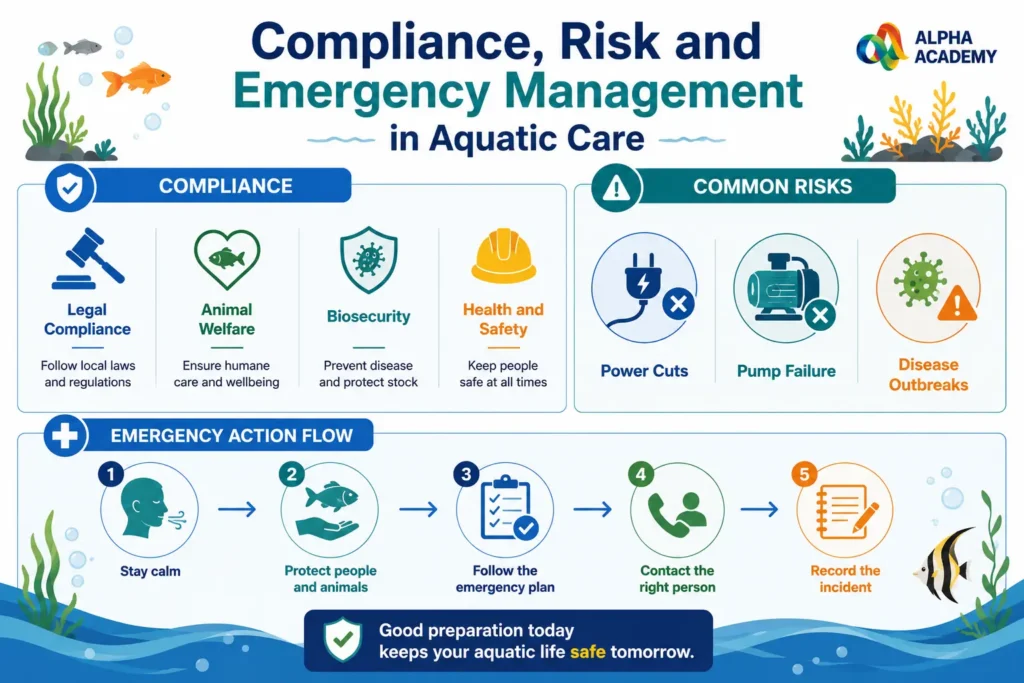
Working with aquatic animals anywhere in the UK means you have to stick to strict laws covering animal welfare, biosecurity, health and safety, and keeping proper records. This part of the course makes sure you know exactly what you’re legally responsible for, how to keep records that will stand up to any inspection, and how to apply these rules properly no matter what kind of place you’re working in.
You’ll also learn how to do thorough risk assessments for everything you do day to day, when new stock comes in, or whenever you change any of your equipment. You’ll work through how to prepare for emergencies too ,things like power cuts, pumps breaking down, or if you suspect an outbreak of disease. Knowing exactly what to do first, who you need to get in touch with, and how to keep both people and animals safe and calm is exactly what makes the difference between regular staff and a trusted senior team member.
Clear Communication and Ethical Decision‑Making
Being good with tanks and water is only half of what you need. If you work in public aquariums, visitor centres, shops or training roles, you have to be able to talk about what you do clearly to people who don’t know all the technical details you do. You’ll learn how to explain tricky subjects in ways that make sense for whoever you’re speaking to ,whether that’s primary school children, new hobbyists or experienced fellow keepers ,without dumbing down facts or passing on things that aren’t true.
Practical Biosecurity and Quarantine Design
Biosecurity is the single best way to stop disease ever getting into your place ,but all too often it’s done half‑heartedly, or skipped completely. Level 4 shows you how to set up proper quarantine areas that actually work, how long you need to keep different species separate, and what cleaning steps to follow so nothing gets carried between tanks or different parts of the building.
You’ll learn exactly what to check when new stock turns up, what early signs to look out for, and how to manage things like shared tools and how staff move around so you never accidentally spread infection from one spot to another. This matters more than anything if you’re caring for rare or high‑value animals.
Feeding Science and Nutritional Planning
Feeding fish the right way is about far more than just tipping flakes or pellets into the tank. Every type has its own specific needs, and those shift as they get older, how active they are, whether they’re breeding, and even how warm the water is. Getting your head around all this means you can give them exactly what they need, just when they need it.
A good feeding routine mixes good quality dry food with frozen or fresh options to give them everything they need in the right balance. Offering different things helps them grow strong, keeps their immune system working well, and brings out their natural colours too. You’ll also learn to spot the first signs that something’s missing from their diet, or that you’re giving them too much, before it starts to affect how they look or behave.
- Choose the right foods for different species and life stages.
- Adjust feeding routines to suit seasonal and environmental changes.
- Recognise early signs of poor nutrition before serious health issues develop.
Working out how much to give them is just as important. Too much means wasted food, dirtier water, and far more strain on your filters. Too little and they won’t grow properly or stay in good shape. Giving them small amounts a few times a day usually works far better than one big feed ,it matches how most fish naturally eat, helps them digest their food properly, and keeps the water cleaner for longer.
Equipment Selection and Preventive Maintenance
Many problems start because the wrong equipment is chosen for the job, or it is not looked after properly. You will learn how to pick pumps, filters, heaters and chillers based on actual needs rather than price or size alone. You will also work through routine service schedules, how to spot early signs of wear, and when repair is more practical than replacement.
This skill helps you avoid costly breakdowns and keeps systems running reliably with less effort.
Habitat Design and Behavioural Enrichment
A tank is not just a container to hold water. You will learn how to build environments that match natural habits, including flow patterns, substrate choice, lighting cycles, hiding places and visual barriers. Good design lowers stress, encourages natural behaviour, and improves both health and breeding results.
You will also look at how to adjust setups over time as fish grow or groups change, rather than setting them up once and leaving them unchanged.
Stock Management and Traceability
You will learn how to plan stocking levels so you do not overload systems, and how to keep full, legal records of all stock arrivals, movements, losses and origins. UK rules require clear traceability for many species, and good records also help you spot patterns in growth or survival over time.
You will also learn how to plan ahead so you do not end up with stock you cannot house or rehome responsibly.
Work Planning and Team Supervision
Even if you do not plan to become a manager straight away, this skill helps you take on more responsibility. You will learn how to organise daily and weekly tasks, prioritise urgent work, and induct new staff or volunteers so they work safely and consistently.
You will also learn how to give clear instructions, listen to feedback, and check that work meets required standards without taking over entirely.
Sustainable Practice and Resource Efficiency
Running systems well means looking after the environment too. You will explore practical ways to reduce water waste, cut energy use, and choose materials or sources that have less impact on wild habitats—all without lowering the standard of care you provide.
You will also learn how to explain these choices to visitors or customers, so they understand why sustainable practice matters.
Comparing Key Skills Across Qualification Levels
| Qualification Level | Core Focus | Independence | Legal and Compliance |
|---|---|---|---|
| Level 2 | Routine care and basic tasks | Follows clear instructions | Basic awareness |
| Level 3 | Standard procedures and basic problem-solving | Limited independent decisions | Follows set rules |
| Level 4 | System design, prevention, and planning | Makes independent professional choices | Full understanding and application |
Certified Aquarium and Aquatic Animals Care Level 4
Final Thoughts
Aquatic Care Level 4 is not just about collecting a certificate for your CV. It changes how you think about every part of your work, from the smallest water test to the biggest system change. The skills and topics covered here apply to every area of the industry, public aquariums, fish farms, breeding centres, retail and conservation work.
What makes this qualification so valuable is that it builds your confidence to work on your own, solve problems effectively, and meet the high standards expected across the UK. Whether you want to progress in your current role, move into a new area, or start your own business one day, this course gives you the solid foundation you need.
Frequently Asked Questions on Certified Aquarium and Aquatic Animals Care Level 4
You will typically develop skills in aquatic animal husbandry, water quality management, disease prevention, nutrition, habitat maintenance, and safe handling techniques.
Yes. Many courses introduce the essential concepts clearly, making them accessible to motivated beginners while also helping learners build more advanced aquatic care knowledge.
Yes. The skills gained may support employment in aquariums, aquaculture facilities, aquatic retail businesses, fish farms, conservation projects, and animal care organisations.
Correct water conditions help prevent disease, reduce stress, support healthy growth, and protect the overall health and wellbeing of aquatic animals.
You may learn how to monitor aquatic environments, identify common health problems, provide appropriate nutrition, maintain life-support systems, and follow aquatic animal welfare practices.
Yes. The course may cover common signs of illness, disease prevention methods, quarantine procedures, and the importance of seeking professional veterinary support when necessary.
Yes. You will learn about the nutritional requirements of different aquatic species, suitable feeding schedules, food selection, and ways to prevent overfeeding or nutritional deficiencies.
Yes. Training usually covers routine cleaning, filtration, temperature control, oxygen levels, habitat enrichment, and the maintenance of safe and healthy aquatic environments.
Related roles may include aquarist, aquaculture assistant, fish farm worker, aquatic retail specialist, aquarium technician, animal care assistant, and conservation support worker.
Yes. The course can provide a strong foundation for further study in aquaculture, marine biology, aquatic conservation, animal management, or specialist aquatic animal care.
Recent Posts