For decades, pools have been seen as heavy users of resources – lots of water, high electricity bills, and constant chemical use that can feel at odds with greener living. But that view is changing fast. New technology doesn’t just make pools easier to look after; it makes them kinder to the planet too.
Eco-friendly smart systems aren’t just a passing trend or something only for luxury builds. They solve real problems that have held the industry back for years. They use less of what we don’t want to waste, cut down on unnecessary work, and deliver better results for both pool owners and maintenance professionals. Below, we look at why this shift is here to stay, and how it will change how pools are built and managed for good.
Table of Contents
Pool Maintenance Career Training
The Environmental Cost Of Traditional Pools
To understand why this change matters, it helps to see where older methods fall short. A standard domestic pool can lose thousands of litres of water every single year through evaporation, splash-out, and backwashing. Most pumps run at full power for hours each day, even when they don’t need to. Chemicals are often added on guesswork rather than measurement, so too much gets used, and excess flows into drains or evaporates into the air.
This isn’t just bad for the environment. It also keeps running costs high, and makes pools harder to justify as more people think about their carbon footprint. Public pressure and tighter rules on water and energy use mean the industry can’t keep doing things the way it always has.
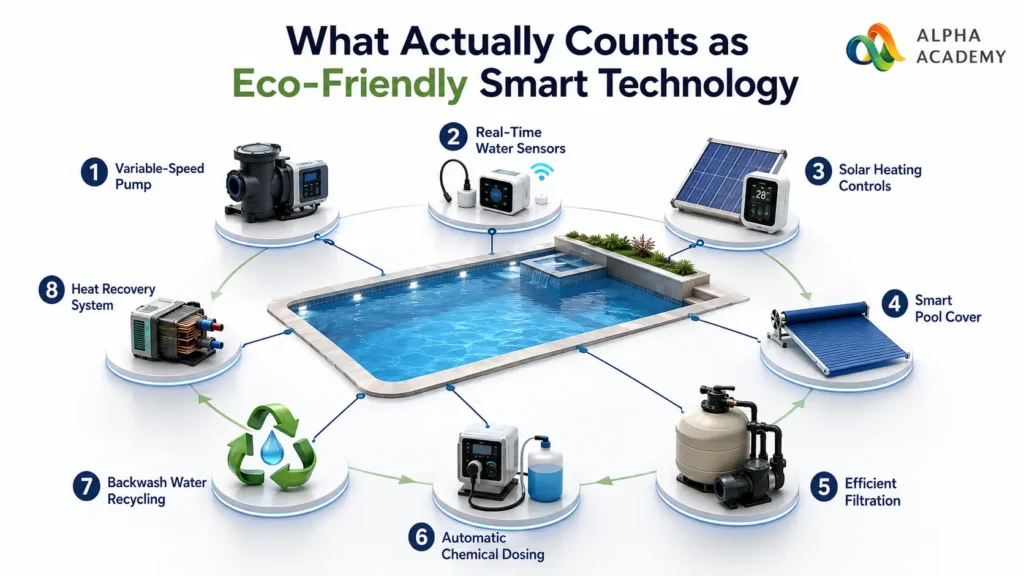
What Actually Counts As Eco-Friendly Smart Technology
These systems combine two important things: smart monitoring and resource-saving design. They don’t just connect to your phone – they actively reduce waste. This includes variable-speed pumps that adjust power automatically, sensors that measure water conditions in real time, solar heating and cover controls, and filtration systems that need less frequent cleaning.
Many also work out exactly how much chemical is needed, rather than adding a set amount regardless of what the water actually requires. Some newer models even recycle backwash water or capture heat that would otherwise be lost. It’s not about adding gadgets for the sake of it; it’s about building systems that work efficiently from the start.
Massive Cuts In Energy Use
This is one of the biggest advantages. Traditional single-speed pumps run at maximum output for 8 to 12 hours a day, even when slower flow is enough to keep water clean. Variable-speed smart pumps can run at lower speeds for longer, using up to 80% less electricity.
They also adjust themselves based on what else is happening – for example, running faster only when the sun is hottest and algae is most likely to grow, or slowing down when people are swimming. Over a year, this can knock hundreds of pounds off electricity bills, and makes a huge difference to the carbon footprint of each pool.
Far Less Water Wasted
Evaporation is easily the biggest reason pools lose water – and smart systems target this right at the source. Automatic covers open and close on a timer, or when sensors pick up heat or strong wind, cutting evaporation by up to 90% straight away.
You also won’t need to drain and refill big batches just to fix wonky chemical levels or clear cloudy water anymore: smart sensors keep everything balanced, so your water stays clean and usable for much longer. Many modern filters also use around 70% less water when they need cleaning, and some systems even treat that used backwash water so you can reuse it elsewhere or let it run off without wasting a drop.
Smarter Chemical Use
Overdosing chemicals is one of the most common and wasteful habits in pool care. It damages surfaces, irritates skin and eyes, and puts unnecessary chemicals into the environment. Smart systems measure pH, chlorine levels, alkalinity and salinity constantly, and add only the exact amount needed.
This means you use 30 to 50% less chemicals overall. Many systems also support gentler alternatives – such as low-salt electrolysis or UV treatment – so you rely less on harsh chlorine altogether. For maintenance businesses, this also means less time spent testing and adjusting, and fewer repeat visits to fix problems caused by imbalance.
Reliability And Less Manual Work
Many people assume “smart” means complicated, but in practice it makes life simpler. The system keeps watch 24 hours a day, and sends alerts if something needs attention – such as a blocked filter or a drop in water level – before it becomes a problem.
For pool owners, this means fewer surprises and less time spent guessing what to do. For maintenance professionals, it means you can keep an eye on multiple pools remotely, spot issues early, and plan visits more efficiently. You don’t waste trips to top up chemicals that weren’t needed, or rush to fix green water that could have been prevented.
Meeting New Rules And Standards
Governments and local authorities are starting to set clearer limits on water use, energy consumption, and chemical disposal. In some areas, you already need to show you have efficient systems in place before you can build a new pool.
Eco-friendly smart technology puts you well ahead of these requirements. It also helps commercial operators – such as hotels, leisure centres and holiday parks – meet their own environmental targets. For anyone selling or maintaining pools, being able to offer these systems means you won’t be caught out by changing rules later on.
Comparing Traditional And Smart Eco Systems
| Feature | Traditional Setup | Eco-Friendly Smart System |
|---|---|---|
| Pump energy use | High, fixed speed | Up to 80% lower, variable speed |
| Water loss | High, no cover control | Up to 90% lower with automated covers |
| Chemical use | Often estimated, prone to overdose | Precise dosing, 30–50% less used |
| Maintenance | Regular manual testing and adjustment | Remote monitoring, targeted visits |
| Running costs | Higher, unpredictable | Lower, more consistent |
Better For Pool Health And Longevity
It’s easy to focus only on resources, but these systems also protect the pool itself. Keeping water chemistry stable means less corrosion to pipes, heaters and liners, and less fading of surfaces and tiling.
Consistent flow rates put less strain on filters and pumps, so equipment lasts longer and needs fewer repairs. This means less waste from replacing parts early, and less work for everyone involved.
Shifting Customer Expectations
These days, people see efficiency as a basic must-have – just like safety or how well something works. We’re all far more clued up on ongoing costs and the effect we have on the planet than we were even a few years back, and we want pools that fit right in with how we live now.
New pools or updated ones with smart, eco-friendly features also sell quicker and keep their value far better. For maintenance companies, offering these options puts you way ahead of anyone still sticking to old ways. It shows you know exactly where the industry is heading, and that you’re listening to what clients actually need right now.
Supporting Sustainable Growth
The pool industry has sometimes struggled to show it can grow without using more and more resources. Eco-friendly smart technology changes that. It opens up new markets in areas where water or energy is scarce, and makes pools acceptable in places where they were once discouraged.
It also creates new opportunities for businesses – from installing and setting up systems, to remote monitoring services, to upgrading older pools. This isn’t just about keeping up; it’s about building an industry that can grow responsibly for years to come.
Conclusion
Eco-friendly smart pool tech isn’t some fancy extra anymore – it’s just what people expect now. It fixes all the biggest headaches that come with regular pools: sky-high energy bills, loads of wasted water, way too many chemicals, and costs that keep creeping up. It’s kinder to the planet, saves owners plenty of cash, and makes looking after a pool so much simpler all round.
With rules getting tighter and more people caring about their impact, any system that doesn’t keep up will soon feel completely out of date. So whether you’re building, selling or maintaining pools, switching to these systems now means you’ll be perfectly set for whatever comes next.
Frequently Asked Questions on Why Eco-Friendly Smart Pool Technology is the Future of the Industry
Eco-friendly smart pool technology combines automated monitoring with energy- and water-saving equipment. It helps control pumps, filtration, heating, chemical dosing and water quality more efficiently.
Smart systems use variable-speed pumps that adjust their operating speed according to the pool’s needs. This prevents equipment from running at full power unnecessarily and can significantly reduce electricity use.
Yes. Automated pool covers, efficient filters, leak detection and accurate water monitoring can reduce evaporation, unnecessary backwashing and frequent draining or refilling.
Smart sensors continuously monitor pH, chlorine, alkalinity and salinity levels. The system then adds only the required amount of chemicals, helping prevent overdosing and water imbalance.
Common features include variable-speed pumps, automatic chemical dosing, robotic cleaners, remote monitoring apps, smart filtration, automated covers, solar heating and water-level sensors.
Although installation may require an initial investment, smart systems can lower long-term costs by reducing electricity, water, chemical use, equipment damage and unnecessary maintenance visits.
Yes. Many existing pools can be upgraded with smart pumps, automated dosing equipment, monitoring sensors, efficient filters, robotic cleaners and remote-control systems.
Smart technology monitors pool conditions continuously and sends alerts when maintenance is required. This allows owners and professionals to identify problems early and avoid unnecessary manual checks.
Yes. Stable water chemistry and controlled flow rates can reduce corrosion, equipment strain and surface damage. This may help pumps, filters, heaters, liners and pipes last longer.
Pool professionals increasingly need skills in automated systems, water-saving equipment, remote monitoring and energy-efficient maintenance. Learning these technologies can improve career prospects in the modern pool industry.
Recent Posts