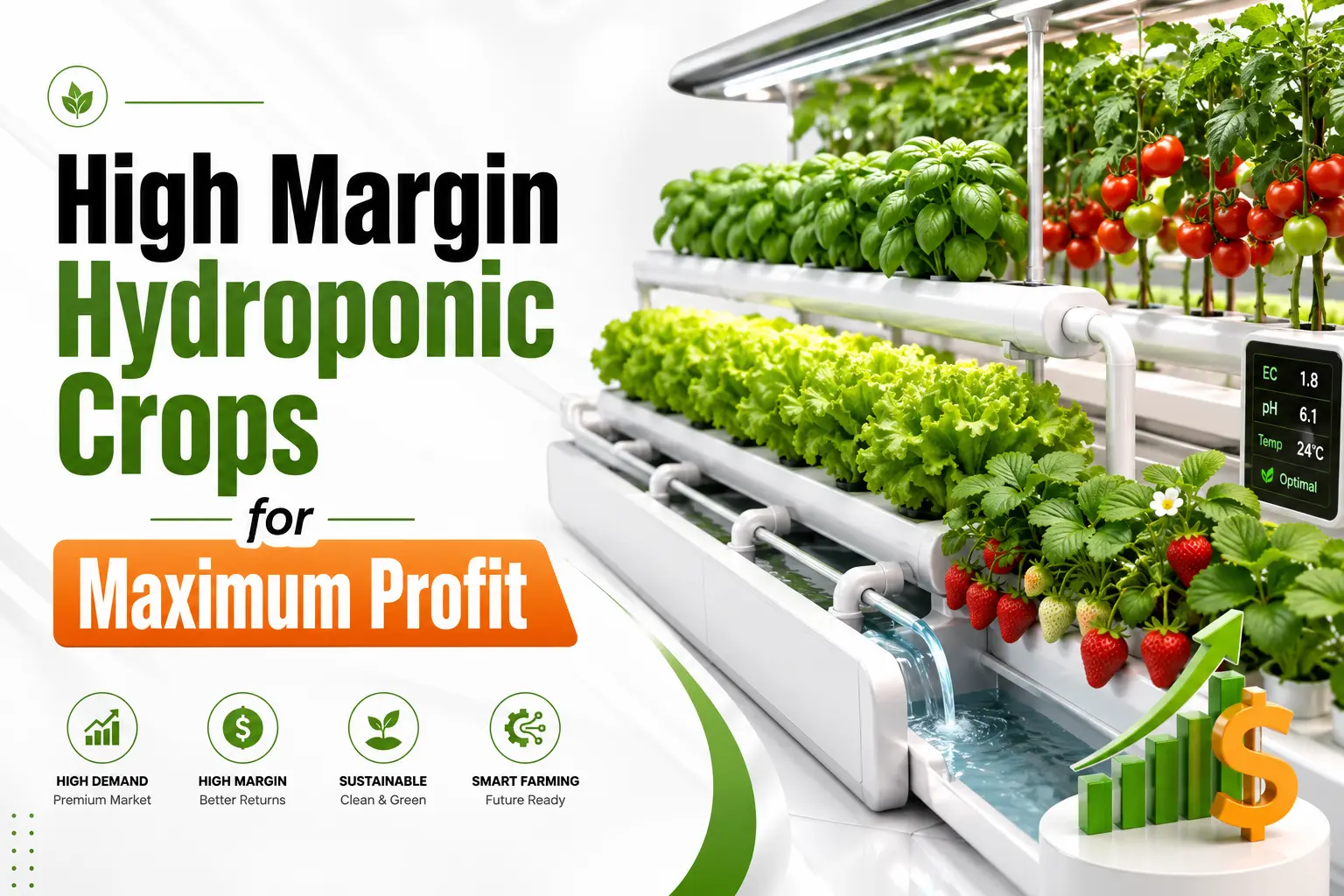
If you are putting time, space and money into a hydroponic setup, you want to be sure you are growing something that pays you back properly. A lot of people start with whatever is easiest to sprout, only to find later that once they have paid for power, nutrients and their own effort, there is barely anything left over.
I have helped many small growers across Bangladesh get started, and the ones who build a steady income are almost always the ones who pick their crops carefully first. This first part explains what “high margin” really means for you, which plants are the most reliable starting points, and what you should check before you sow a single seed.
Table of Contents
Advance Indoor Plant Growing & Care
What Makes a Crop Worth Growing – And The Best Options To Start With
If you are putting time, space and money into a hydroponic setup, you want to be sure you are growing something that pays you back properly. A lot of people start with whatever is easiest to sprout, only to find later that once they have paid for power, nutrients and their own effort, there is barely anything left over.
I have helped many small growers across Bangladesh get started, and the ones who build a steady income are almost always the ones who pick their crops carefully first. This guide explains what “high margin” really means for you, which plants are the most reliable options, how to match them to your system, and how to keep more of what you earn.
It does not just mean the crop sells for a high price. True margin is what stays with you after every single cost is covered. A plant that fetches a high rate but takes months to mature, wastes half its crop before sale, or needs constant expensive upkeep will not leave you with much at the end.
The crops that give the best returns usually tick these boxes:
- They produce more value per square metre than anything grown in soil
- They have short growing cycles, so you can harvest many times each year
- They grow well in water systems, so you get far higher yields than field crops
- They stay fresh long enough to reach buyers without spoiling
- They are hard to find locally, so you do not have to compete with cheap mass supplies
- They do not need fancy gear or years of experience to grow well
Always look at what is already sold in your local markets too. A crop that is rare and expensive in one area might be grown everywhere in another. It makes no sense to fight against cheap, plentiful local supply.
The Best Crops For New Growers
These are the safest, most profitable options to begin with. They carry very low risk, cost little to set up, and you will see your first income within weeks.
Herbs
Herbs are the most consistent high margin choice for almost any size of system. They take up very little room, grow fast, and people will pay far more for fresh, fragrant bunches than dried or imported stock that has travelled thousands of kilometres.
Basil is the strongest pick. It thrives in hydroponic conditions, and you can pick leaves every two or three weeks for months from one planting. Standard sweet basil sells steadily, but Thai basil, lemon basil and purple basil command much higher prices from restaurants and specialist shops.
Mint is just as reliable. It grows vigorously, rarely gets pests indoors, and is used all year round for drinks, desserts and home remedies. You can grow spearmint, peppermint and apple mint side by side to serve more customers.
Chives and coriander are also worth adding. Chives keep producing for two years or more from one sowing. Coriander is ready in about four weeks, though you will need to keep temperatures cool to stop it running to seed too fast.
Speciality Leafy Greens
Skip basic round lettuce if you want better returns. Go for types that are harder to find and more sought after.
Pak choi and bok choy are ready in just over a month, and Asian grocery stores and restaurants buy them in large amounts. They are light feeders too, so you spend less on nutrient solution compared to heavier plants.
Curly kale, red kale and baby leaf mixes sell very well. You can harvest outer leaves while the centre keeps growing, so one plant gives you pickings for months. Selling them as living heads with roots still attached will get you 30 to 50 per cent more than pre-cut, bagged produce.
Why Microgreens Are So Profitable
Microgreens are tiny seedlings harvested just after their first proper leaves open – usually between one and three weeks after sowing. They have some of the highest margins of any crop you can grow.
Because they are so small, you can stack trays on shelves and produce 15 to 20 batches a year from the same space that would give you three or four lettuce harvests. Chefs use them to finish dishes, and health-focused customers pay premium prices for small punnets.
The main thing to watch is seed cost – always buy in bulk from trusted suppliers to keep expenses down. You also need good airflow to stop mould, but you do not need expensive lights if you have a bright, well-ventilated spot. Many growers run microgreens alongside slower crops to bring in steady cash flow early on.
Mistakes To Avoid Right At The Start
One of the biggest errors new growers make is trying to grow too many different things at once. Every crop needs slightly different nutrients, temperature and light. If you run separate setups for tiny amounts of half a dozen plants, your costs will climb fast and your quality will slip.
Start with two or three crops that like similar conditions – basil, mint and kale work perfectly together. Once you have a steady routine and regular buyers, you can add more varieties slowly.
Fruiting Crops, Specialty Picks, and What Fits Your System
Once you have got the hang of fast-growing herbs and greens, you might want to look at crops that bring in even more money. These take longer to mature and need a little more care, but they pay off well over time. Most are either only available for short seasons in Bangladesh or brought in from abroad, so you can sell fresh stock all year round when field-grown or imported options run out.
Best Fruiting Crops for Strong Returns
These do not give you a harvest in a few weeks, but they keep producing for many months, so the work you put in upfront pays off for a long stretch.
Chillies
Chillies are one of the smartest choices for local growers. Standard green chillies are cheap and easy to find, but speciality types like bird’s eye, habanero, cayenne, and our own hotter local varieties sell for two to four times as much. One plant will keep fruiting for 12 to 18 months, uses less water and nutrients than tomatoes, and stores well if you have more than you can sell straight away. You can also dry any surplus to sell later, so very little goes to waste.
Cherry Tomatoes
Cherry tomatoes are consistently popular and give very heavy yields. Smaller varieties are preferred by cafes, salad makers, and families over larger slicing types, and you can grow red, yellow, or dark-skinned kinds to stand out from what is sold at local markets. They need good light and simple strings to hold the weight of the fruit, but each plant will keep producing for 8 to 10 months.
Bell Peppers
Bell peppers take about 10 to 12 weeks before you pick the first ones, but they will keep going for almost a year. Always leave them to ripen fully: red, yellow, and orange peppers sell for double what unripe green ones do. They are less prone to sudden disease issues than tomatoes, so they are easier to keep healthy long term.
Niche and Speciality Crops
These do not sell in huge volumes, but they fetch very high prices from the right buyers. It is always wise to check who will buy them before you plant large batches.
Strawberries
Fresh local strawberries are hard to find in most parts of Bangladesh, and people will pay well for them. Hydroponic systems suit them perfectly, and if you keep temperatures steady you can harvest for 8 to 10 months a year. They taste better and last longer than imported fruit that is picked early to survive long journeys.
Edible Flowers
Nasturtiums, borage, and colourful marigolds are used by caterers, cake makers, and high-end restaurants to finish dishes. They need similar care to salad greens but sell for a very high rate per small punnet. You only need a small growing area to meet demand from local caterers.
Asparagus
Asparagus needs patience – you will wait two years before taking full harvests – but then it will keep producing for 10 years or more. Fresh asparagus is rarely grown locally, so prices stay high, and there is very little competition from other hydroponic growers.
Crop Comparison Table
| Crop | First Harvest Time | Production Span / Annual Cycles | Price vs Common Field Crops | Best For | Key Trade-Off |
|---|---|---|---|---|---|
| Basil | 3–4 weeks | 10–12 cycles | 2–3 times higher | Fast turnover and steady demand | Needs warm, stable conditions |
| Microgreens | 1–3 weeks | 15–20 cycles | 4–6 times higher | Small spaces and quick cash flow | Higher cost for quality seed |
| Cherry Tomatoes | 10–12 weeks | 8–10 months fruiting | 1.5–2 times higher | High yield per plant and year-round supply | Needs good light and support |
| Speciality Kale | 4–5 weeks | 7–8 cycles | 2 times higher | Low maintenance and repeat picking | Slower growth in cooler weather |
| Speciality Chillies | 12–14 weeks | 12–18 months fruiting | 2–4 times higher | Long life and good storage potential | Slow to start flowering |
How Your Setup Changes Your Profit
You do not need the most expensive equipment to make good money – you just need one that matches what you are growing.
Deep water culture works perfectly for herbs and greens, is simple to run, and costs little to set up. Nutrient film technique uses very little water and suits lettuce and strawberries well. Drip systems are better for larger fruiting plants, which need steady moisture and more space for their roots.
Using vertical racks will double or triple the number of plants you can fit in the same floor area. This is one of the easiest ways to lift your margin straight away, especially for shallow-rooted crops like herbs and microgreens.
Cut Costs, Sell Well, and Keep More of Your Earnings
Picking the right crop is only half what you need to do. I have seen growers produce perfect, high-value plants yet barely break even, just because they spent too much on running costs or sold through middlemen who took most of the money. These final steps cover how to keep your expenses sensible, sell directly where it matters, and make sure all your effort turns into real profit you can keep.
Keep Costs Down Without Cutting Quality
Most small growers waste money on things that make no real difference to their crops. Small changes here add up to hundreds or even thousands of taka saved every month.
Electricity is usually your biggest regular expense. Use efficient LED lights, and turn them down or off when natural daylight is bright enough. If you can, line the walls of your growing space with simple insulation material – this keeps heat out in summer and stops warmth escaping in winter, so your fans and pumps do not have to work overtime.
Do not dump your whole nutrient solution every week. Test its strength and pH every few days, top up with fresh water and missing nutrients, and only replace the full batch when it becomes hard to balance or shows signs of mould. Buy seeds, growing medium and supplies in bulk – almost every seller will give you a good discount for larger orders, and it means fewer trips to the shop too.
Sell Direct for the Best Margin
You will always get the lowest price if you sell at wholesale markets or through agents. They need to make their own profit too, so you end up with barely a fraction of what your produce is worth. Selling straight to the people who use your crops is the single biggest way to lift your margin.
Local restaurants, cafes and hotels are your very best customers. Take them a small free sample first, explain you grow without chemical sprays, and offer steady, reliable deliveries on the same days each week. Most chefs will happily pay extra for fresh produce that arrives exactly when they need it, instead of chasing whatever is left at the market.
Final Thoughts
There’s no magic crop that’ll make you rich in a hurry. The best yields and steady money come from growing what suits your land, what you know how to look after, and what people around here actually want to buy. Keep your spending sensible, sell straight to customers whenever you can, and never rush to get bigger before you’re ready.
Begin with something straightforward, get your daily routine sorted, and take things step by step. As you go along, even small changes to what you plant and how you shift it will add up to a much better return from every harvest.
Frequently Asked Questions on High Margin Hydroponic Crops for Maximum Profit
High-margin hydroponic crops commonly include basil, microgreens, lettuce, strawberries, cherry tomatoes, cucumbers and specialty herbs. Their profitability often comes from strong demand, premium pricing and relatively fast production cycles.
Profitability depends on market demand, selling price, yield per square metre, growing time, production costs and shelf life. Crops that grow quickly and can be harvested several times a year often provide stronger returns.
Yes. Microgreens can be highly profitable because they grow within a few weeks, require limited space and are popular with restaurants, retailers and health-conscious customers. However, quality seeds and careful hygiene management are essential.
Yes. Beginners can start with crops such as lettuce, basil or microgreens, which are generally easier to manage. Proper training in nutrient control, lighting, water quality and harvesting can improve success rates.
Choose high-demand crops, reduce water and energy waste, maintain stable growing conditions and produce consistent quality. Selling directly to restaurants, local shops or customers may also increase profit margins.
Yes. With careful planning, efficient system management and suitable crop selection, hydroponic farming can become a sustainable commercial business serving local markets, supermarkets and food service companies.
The space required depends on the crop and growing system. Microgreens and leafy herbs can be grown in small indoor areas, while tomatoes and cucumbers need more height, lighting and structural support.
Microgreens, basil and leafy greens usually provide the fastest returns because they have short growing cycles. Some crops may be ready for harvest within one to four weeks, depending on the variety and growing conditions.
Common costs include hydroponic equipment, lighting, seeds, nutrients, electricity, water, packaging and labour. You should also consider maintenance, marketing, transport and any business registration requirements.
Research local demand, customer preferences, competitor prices and seasonal trends before selecting crops. The best choice is usually a crop that grows well in your system and has reliable buyers willing to pay a profitable price.
Recent Posts