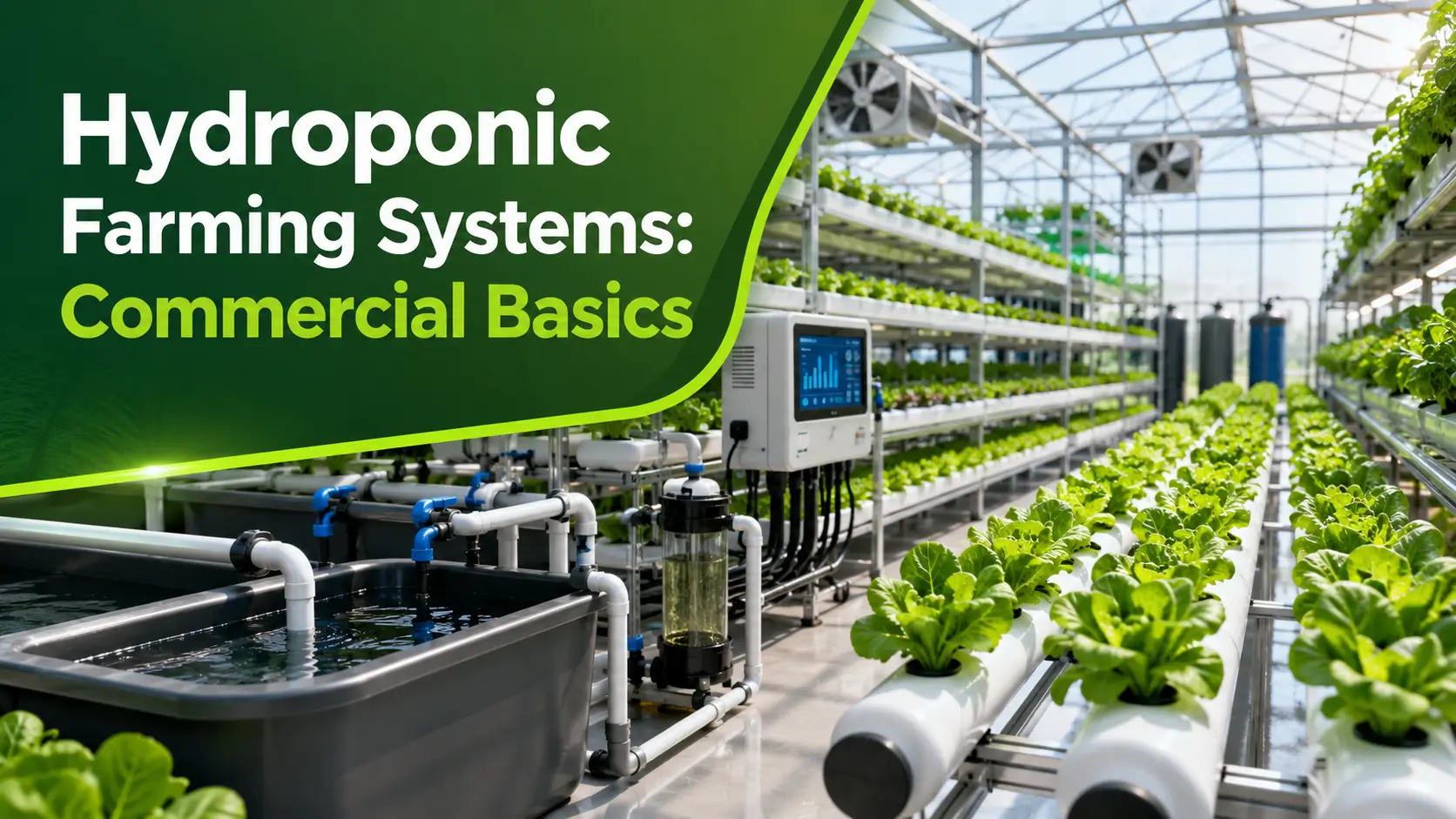
If you’ve ever grown a few lettuce heads or herbs on your windowsill and thought “could I turn this into something that pays?”, you’re in the right place. Moving from a hobby setup to a proper business isn’t just buying bigger trays or more buckets. It means thinking about reliability, getting the same results every time, and being honest about what you can actually manage day after day. There’s no secret trick here- just clear facts, what people really run into, and what you need to know before you spend a penny.
Table of Contents
Advance Indoor Plant Growing & Care
What makes a system “commercial grade”?
Lots of people think “commercial” just means bigger. That’s not true at all. A proper commercial system is built to run non-stop, year after year, without falling apart or giving you lopsided crops. Hobby gear is fine for occasional use, but thin plastic piping, cheap pumps and loose joints will fail fast when they’re running 24 hours a day.
For business, every single plant needs the same water, same food, same light as the one next to it. You can’t afford half your crop thriving and the other half struggling because one channel’s blocked or one pump’s weak. Even a small 60-square-metre setup counts as commercial if it’s built to last and deliver steady yields. A huge pile of cheap parts will only cost you more in lost stock and extra work later.
How it’s different from growing at home
The core idea stays the same: feed plants through water instead of soil. But everything else changes completely. At home you might top up water when you remember, tweak food by eye, and move things around if they look sad. When you’re selling to people, you can’t do that.
Your buyers need the same size, same quality and same supply every single week. If pH slips just a little, or your mix is slightly stronger one time, you could lose most of a crop before you even notice. You also have to plan way ahead: every seed goes in at a set time so harvest lines up exactly with when your customers need stock. You’ll keep simple notes on what you did and how plants reacted- not just for rules, but so you learn what works best on your own site.
Comparing the main system types
There’s no one “best” system. Each has good points and downsides, and the right choice depends on what you want to grow, your space, and what you can afford to start with.
| System Type | Best For | Upfront Cost | Work Needed | Key Thing to Know |
|---|---|---|---|---|
| Nutrient Film Technique (NFT) | Leafy greens, herbs and fast-growing small crops | Moderate | Low once set up | Very space-saving, but roots can dry out quickly if the pumps stop. |
| Deep Water Culture (DWC) | Lettuce, kale and large salad greens | Moderate | Very low | The most forgiving system and one of the easiest to learn. |
| Dutch / Bato Buckets | Tomatoes, peppers, cucumbers and other fruiting crops | Low to moderate | Moderate | Flexible and easy to expand by adding more units later. |
| Ebb and Flow / Flood and Drain | Seedlings, young plants and mixed crops | Moderate | Moderate | Versatile, but the flooding and draining cycle needs careful timing. |
| Aeroponics | High-value herbs, cuttings and new plants | High | Moderate | Uses very little water, but the spray nozzles can block easily. |
Matching systems to what you’ll grow
You can grow almost anything without soil, but some crops make far more sense for business than others. Leafy greens like lettuce, rocket and spinach grow fast, sell steadily, and stack neatly to save space. Herbs such as basil, mint and coriander get better prices, but buyers will reject anything that looks even a little wilted.
Fruiting crops take longer to pay off. Tomatoes, strawberries and peppers need more warmth, more support, and closer watching- but each plant keeps producing for months. Root vegetables like carrots or turnips are possible, but rarely worth it for new farms. They need extra depth and usually sell for low prices from traditional fields.
Think first about what your local shops, cafes and markets actually struggle to get. If everyone asks for fresh microgreens or unusual salad mixes, that’s a much better place to start than fighting over standard lettuce.
What you’ll actually need to spend
Lots of first-time growers look at system prices and forget all the extra costs you can’t skip. You’ll pay for the frames, channels, tanks and pumps but also for the space itself, water treatment, power, ventilation, packaging and seeds.
- For a basic 100-square-metre setup in an existing greenhouse, allow £7,000 to £14,000 for core gear alone. If you need new structures, full indoor lights or winter heating, this can go up to £22,000 or more. Always set aside around 15% of your budget just for repairs and surprises- saving £30 on a pump now could cost you thousands if it fails in summer.
- Running costs add up too: nutrients, electricity, water and labour will make up most of what you spend month to month.
Picking and setting up your space
You can put systems in greenhouses, polytunnels, empty warehouses or solid sheds. Greenhouses use free natural light, which keeps electricity bills down, but you’ll still need shade in hot spells and some heating when it gets cold. Indoor spaces give you full control all year round, but lights and fans add a lot to your costs.
Leave proper gaps between rows. Packing things tight saves space on paper, but stops air moving, encourages mold, and actually lowers your total yield. Check your water supply too: hard water or heavily chlorinated water will need filtering before you add nutrients.
Gear you can’t run without
Your troughs or buckets are only the start. You need reliable pumps, air stones to keep water full of oxygen, and sealed tanks so light doesn’t grow algae. You’ll need tools to measure pH and nutrient strength- manual kits work fine for checking, but digital meters that keep a record are much easier when you’re growing larger volumes.
If growing indoors, pick lights that match what your plants need at different stages. You also need fans and extractors to move air around and stop damp building up. Most experienced growers add a backup pump or small generator, losing power for two hours on a hot day can wipe out an entire crop.
Getting your plant food right
Commercial mixes usually come as two or three separate concentrated liquids. Never pour them all straight into one tank at once, they’ll react and form solids plants can’t use. Add them one at a time, stirring well between each part.
Test your source water first. If it already has plenty of calcium or magnesium, you can use a weaker mix to save money and avoid overfeeding. Watch your plants closely: pale leaves usually mean not enough nitrogen, while brown crispy edges often mean food’s too strong or pH is off. Jot down what you change and how plants react- after a few months you’ll know exactly what works for your site.
What daily work really looks like
This business doesn’t run itself. Most days you’ll spend around 1–2 hours per 100 square metres checking water levels, testing pH, clearing filters, and pulling off dead or damaged leaves. Planting and harvesting take much longer- you’ll almost certainly need extra help at these times once you grow beyond a small start.
Most new people take on too much too soon. Start smaller than you think you can manage, so you can learn the routine without rushing or cutting corners.
Rules and paperwork to sort first
Before you spend anything, find out what permissions you need. You may need approval for new buildings, or consent to take water from wells or public supplies. Some areas have strict rules about getting rid of waste nutrient solution- you can’t just pour it on the ground or down drains.
If you sell to shops, schools or bigger buyers, you’ll need to meet basic food safety standards. This usually means keeping track of where seeds come from, how you clean gear, and what you use to treat pests. If you want to label produce as organic or pesticide-free, you’ll need to follow set standards and get formal certification.
Common mistakes to watch for
Most problems come down to simple errors that could have been avoided.
- Trying to grow too many different crops at once, which makes planning and care far harder
- Ignoring small changes in plant health until it’s too late to fix
- Buying cheap parts to save money, then replacing them over and over
Also remember: stronger food doesn’t mean faster growth. Overfeeding burns roots and slows plants down.
Pricing and growing steadily
Work out exactly what it costs you to grow each bunch or kilogram, then set prices that cover your costs and leave a fair profit. It’s tempting to undercut local farms to get your first sales, but you won’t last long if you lose money on every crop you send out.
Look for regular orders with cafes, schools or greengrocers- steady demand makes planting schedules and cash flow much easier to manage. Expand step by step as you learn, rather than building a huge setup before you know exactly how your system runs.
Closing thoughts
Commercial hydroponics isn’t a quick way to easy money, but it’s a solid way to build a business that uses less water, less land, and keeps producing when bad weather stops traditional fields. The best results come from picking the right system for your needs, learning the basics well, and taking your time to get things right. What you learn from your first few crops will always be more useful than any sales brochure.
Frequently Asked Questions on Hydroponic Farming Systems: Commercial Basics
A commercial hydroponic farming system grows crops without soil by delivering water, oxygen and nutrients directly to plant roots. Commercial systems are designed for reliable, continuous production and consistent crop quality.
The main systems include Nutrient Film Technique (NFT), Deep Water Culture (DWC), Dutch or Bato buckets, ebb and flow, and aeroponics. Each system suits different crops, budgets and production environments.
Deep Water Culture, simple NFT systems and Dutch bucket systems are often suitable for beginners. They are relatively straightforward to operate, and replacement parts and maintenance guidance are widely available.
Popular commercial crops include lettuce, spinach, rocket, basil, mint, coriander, tomatoes, peppers, cucumbers and strawberries. Leafy greens and herbs are often preferred because they grow quickly and have steady market demand.
A basic 100-square-metre system in an existing greenhouse may cost approximately £7,000 to £14,000 for essential equipment. Costs can rise above £22,000 when new structures, indoor lighting, ventilation or heating are required.
Essential equipment includes growing channels or containers, nutrient tanks, pumps, air stones, filters, pH meters, EC meters and ventilation systems. Indoor farms may also need grow lights, extractors and backup power.
A 100-square-metre farm may require around one to two hours of daily monitoring. Tasks include checking water levels, measuring pH and nutrient strength, cleaning filters and inspecting plants for damage or disease.
Commercial hydroponics can be profitable when growers control operating costs, choose high-demand crops and maintain reliable yields. Regular contracts with cafes, schools, markets or greengrocers can also improve cash flow.
Common mistakes include expanding too quickly, growing too many crops, using unreliable equipment, overfeeding plants and ignoring early signs of poor plant health. Inadequate airflow and a lack of backup pumps can also cause serious losses.
Requirements depend on the location and type of operation. Growers may need planning permission, water-use approval, waste-disposal arrangements and food safety procedures. Organic or pesticide-free claims may also require formal certification.
Recent Posts