
If you’ve spent any time scrolling through YouTube lately, you’ve probably noticed a growing number of channels blowing up fast – and the person behind them never once shows their face. These “faceless” channels build loyal audiences purely through solid information, great visuals, and clear audio, and many bring in steady, reliable income every single month.
Now that AI tools are cheaper, simpler to use, and more accessible than ever, starting and running one of these channels has become something almost anyone can try. But a lot of people still wonder: Can you really earn money this way? And is it allowed under platform rules?
This guide walks you through exactly how it works – from the best ways to get paid and the most profitable topics, to staying compliant and keeping your content consistent.
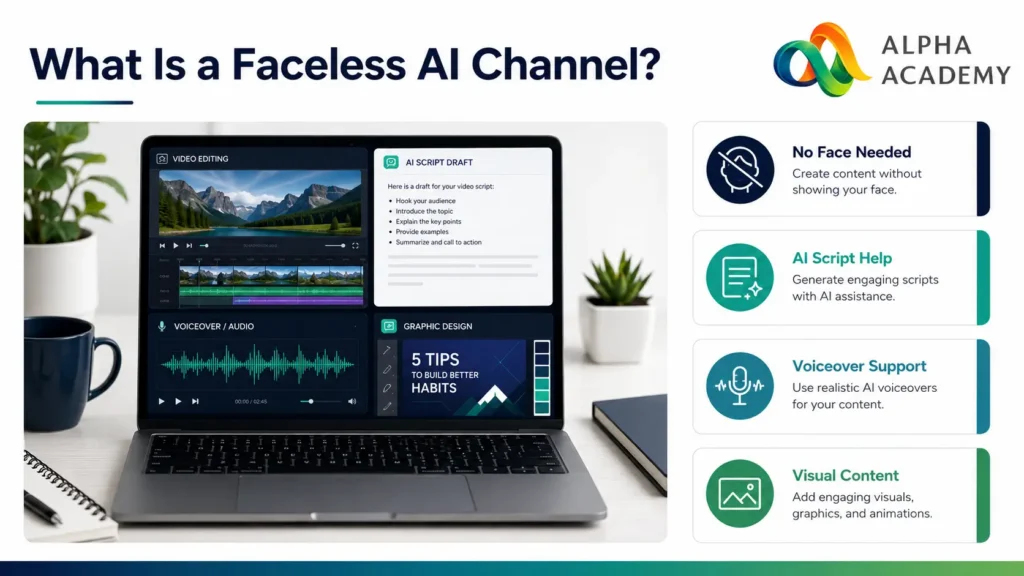
What Exactly Is a Faceless AI Channel?
Put simply, it’s a channel where you never appear on camera yourself. That means no fancy camera gear, no expensive lighting setup, and no need to feel nervous speaking in front of people.
When you bring AI into the process, it acts more like a helper than a replacement. It can draft scripts, create voiceovers, design graphics, or edit clips to save you hours of work. But here’s an important truth: using AI doesn’t automatically make your content low‑quality or unoriginal. It’s just a different way to produce videos – the value still depends on what you share and how you present it.
There’s a common myth that faceless or AI‑helped content can’t be monetised. That’s completely wrong. Thousands of creators are already doing this successfully and earning regular income. The real difference between making it and struggling comes down to how you structure your content, how much original thought you add, and whether you follow platform guidelines.
Ways to Earn Money From Your Faceless Channel
You don’t have to rely on just one income source – mixing different streams gives you stability and helps your channel grow long‑term.
YouTube Partner Programme
This is usually the first goal for new creators. To join, you’ll need 1,000 subscribers and 4,000 valid public watch hours within any 12‑month window, while following all YouTube’s rules. Once accepted, you earn from ads shown before, during, or next to your videos. This works perfectly well for faceless channels – as long as your content meets quality standards and isn’t just copied or lacking your own input.
Affiliate Marketing
For many creators, this ends up being the most profitable method. You simply recommend products or services that fit your channel’s topic, and include special links in your video description. When viewers click those links and buy something, you get a commission. The best part? It doesn’t depend only on how many views you get – even a smaller but engaged audience can bring in better earnings than ads alone.
Digital Products & Courses
Once your channel gains trust and you’re seen as someone who knows their stuff, you can create and sell your own products – things like guides, templates, e‑books, or online courses. This gives you much higher profit margins and means you aren’t waiting on changes in ad rates.
Sponsorships & Brand Deals
As your channel grows, companies may reach out (or you can pitch them) to pay you a flat fee to feature their products or services in your videos.
Best‑Paying Topics for Faceless Channels
Not every subject earns the same amount. “CPM” is what advertisers pay for every 1,000 views, and this changes a lot depending on the industry. Choosing a topic with higher demand and better rates means you earn more for the same number of views. Here are the strongest options:
| Topic Category | Typical CPM Range | Why It Works Great for Faceless Channels |
|---|---|---|
| Personal Finance & Investing | $15 – $50+ | Big budgets from banks and investment firms; viewers care far more about accuracy than who’s speaking. |
| Tech & Digital Tools | $12 – $35 | Lots of advertiser interest; easy to explain through screen recordings, comparisons, and demos. |
| Education & Career Skills | $10 – $28 | Demand stays steady all year; works perfectly with diagrams, animations, and clear step-by-step guides. |
| Business & Entrepreneurship | $12 – $32 | Attracts people ready to invest in solutions; great for affiliate links and selling your own products. |
| Health & Wellness | $10 – $30 | Strong advertiser spending; easy to present using text, charts, and educational visuals. |
ChatGPT & AI: 23 Ways to Make Money with AI
Staying Compliant With YouTube’s “Reused Content” Rules
This is the part most new creators worry about. Many assume that using AI means your videos will automatically get marked as “reused” or unoriginal. But platforms judge the final result , not the tools you used to make it. Content only counts as reused if you simply take material from other sources and post it again without adding your own explanation, structure, or perspective.
To keep your channel eligible for earnings, follow these simple rules:
- Build every video around your own outline and logical flow – even if AI helped draft the first version.
- Use visuals (images, clips, animations) that are royalty‑free, licensed, or custom‑made, and make sure they actually explain what you’re talking about.
- Pick voiceover tools that clearly give you the right to use their output commercially.
- Focus on adding value – explain, summarise, or analyse information, rather than just collecting facts.
- Always respect copyright laws for music, sound effects, and other assets.
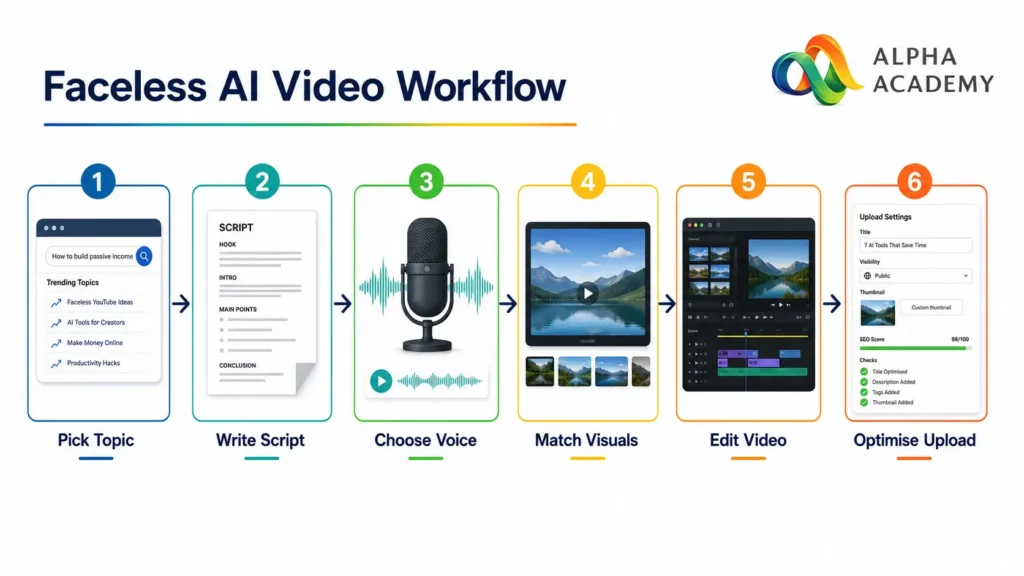
A Simple, Reliable Workflow
Using tools to work faster doesn’t mean cutting corners – it just helps you stay consistent. Here’s how to do it right:
- Pick smart topics: Look for things people are actually searching for, but that don’t already have hundreds of identical videos. Use YouTube’s search suggestions and trend data to find questions viewers want answered.
- Write and refine scripts: Use AI to get a draft started, but rewrite it until it sounds natural, accurate, and organised in your own way. Show you understand the topic, don’t just repeat generic lines.
- Choose your voice: Go for a clear, pleasant tone that fits your subject, and confirm you have commercial rights before using it.
- Match visuals to your message: Every clip, graphic, or photo should support what you’re saying – don’t just throw things in to fill time.
- Edit carefully: Arrange everything smoothly, balance audio levels, add clear subtitles, and keep background music quiet enough that it doesn’t distract.
- Optimise for viewers: Write clear titles, thorough descriptions, and relevant tags so people can actually find your videos.
Mistakes to Watch Out For
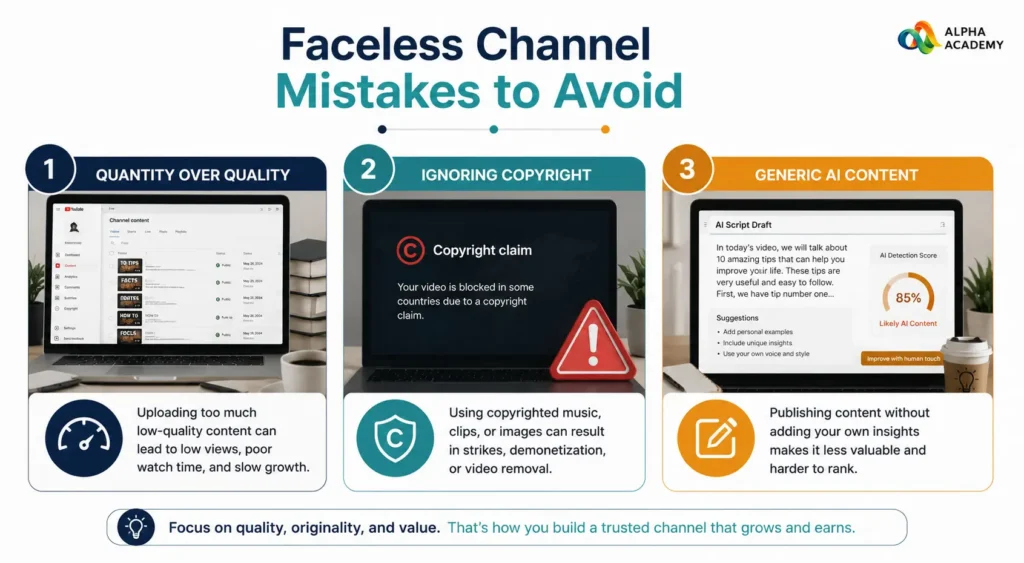
- Quantity over quality: Trying to pump out too many videos too quickly almost always leads to lower standards, shorter watch times, and less visibility. It’s much better to make fewer videos that people actually want to watch all the way through.
- Ignoring copyright: Using images, footage, or music you don’t have rights to can lead to warnings, videos being taken down, or even losing monetisation.
- Relying 100% on generic AI: If you don’t shape or improve the output yourself, your content risks looking like every other generic video , and platforms will treat it as low‑value.
Final Thoughts
Making real money with a faceless AI channel is absolutely possible this year , but it takes strategy and responsibility. It won’t make you rich overnight, but if you build it the right way, it can become a solid, long‑term income stream.
Focus on topics that help people, stick closely to the rules, and use technology to work smarter – not to skip the hard parts. When your content is useful, well‑put‑together, and compliant, growth and earnings will come naturally over time.
FAQs on How to Make Money With Faceless AI Channels This Year
Yes, you can. Platforms care about whether your content is original, helpful, and valuable, not whether you show your face or use AI tools. As long as you organise the information, add your own explanations, and follow platform guidelines, your channel can qualify for monetisation.
Not if you use AI properly. Problems usually happen when creators copy scripts, reuse the same visuals, or upload low-effort videos with no original structure. If you rewrite the content, arrange ideas in your own way, and match visuals to your message, your videos can still be considered original.
Most creators need time to build steady results. It may take a few months or longer, depending on your niche, upload schedule, video quality, and audience response. First, you need to meet the platform’s monetisation requirements, then you need consistent views to generate income.
Yes, it can be legal if the voiceover tool allows commercial use. Always check the terms before using an AI voice in monetised videos. Some free tools only allow personal use, so choosing the right platform is important.
No, you do not need to show your face. Many successful channels use animations, stock footage, screen recordings, text overlays, charts, AI visuals, and voiceovers. What matters most is whether the video is useful, clear, and engaging for viewers.
High-paying niches often include personal finance, investing, technology, business, digital tools, education, and health-related content. These topics attract strong advertiser interest and can work well without showing a person on camera.
Yes, you can use stock footage if it is royalty-free, licensed, or approved for commercial use. However, you should not just combine random clips. The footage should match the script, support the message, and help viewers understand the topic better.
You may need tools for scriptwriting, voiceover, video editing, thumbnail design, captions, and visuals. A beginner can start with a simple setup: one AI writing tool, one voiceover tool, one editing tool, and a source for licensed visuals.
Avoid copying other creators, using unlicensed music, publishing generic AI scripts without editing, or uploading repetitive videos with no real value. You should also check facts, improve the script, and make sure your visuals and voiceover match the topic.
Yes, it is still worth starting if you approach it properly. AI can help you create content faster, but success depends on choosing a strong niche, creating useful videos, staying consistent, and building multiple income streams such as ads, affiliate links, sponsorships, and digital products.
Recent Posts