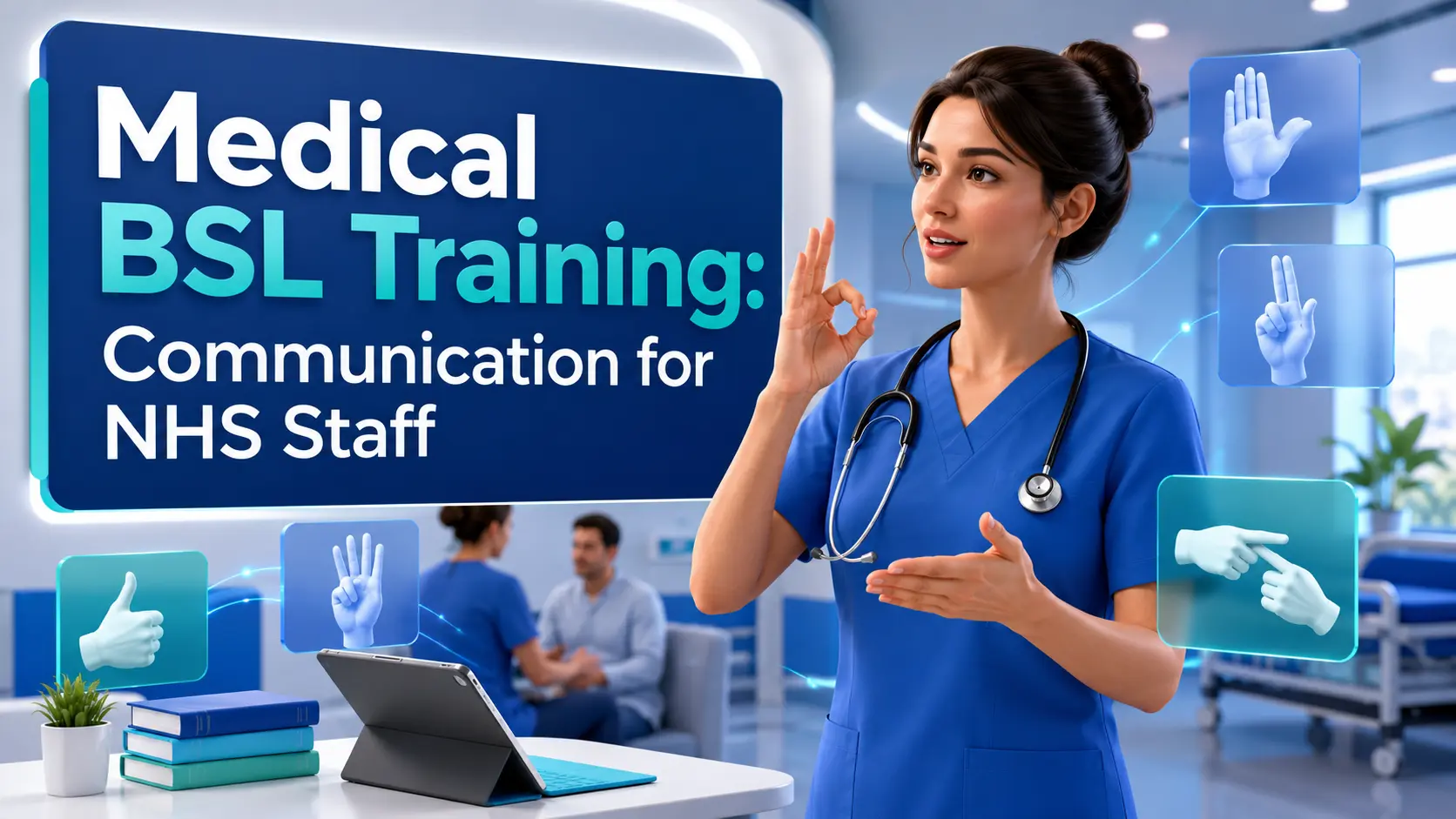
Clear communication is essential in every healthcare setting. NHS staff rely on it to understand symptoms, explain procedures, confirm consent and help patients feel safe. However, Deaf patients who use British Sign Language may face serious communication barriers when staff cannot sign and a qualified interpreter is not immediately available. Even routine interactions, such as confirming an appointment or asking where someone feels pain, can become stressful and confusing.
Medical BSL training gives healthcare professionals practical communication skills for common clinical and administrative situations. It can help staff greet Deaf patients, ask simple questions, understand basic responses and explain routine care more clearly. The training also covers important communication techniques, including maintaining eye contact, positioning the hands and face correctly, gaining attention respectfully and recognising when alternative communication methods may be needed.
This training does not replace a qualified BSL interpreter, particularly during diagnoses, consent discussions, treatment planning or other complex conversations. Instead, it helps NHS staff communicate more confidently during everyday interactions while knowing when professional interpreting support is essential. This guide explains what medical BSL training covers, who it is suitable for, how long different levels may take and how it can support safer, fairer and more inclusive patient care.
Table of Contents
Certificate in British Sign Language (BSL) Level 1 & 2
How to adjust the way you communicate
Learning the signs is only half of it. How you stand, where you look, and how you move matters just as much.
First, never start signing until you are sure you have their attention. A small wave or a light tap on the table is fine, but don’t grab or touch someone suddenly , it can be frightening. Once they are looking, make sure the light falls on your face, not behind you. If you stand with your back to a bright window, your hands and mouth will be in shadow, and they won’t be able to see anything.
Keep your hands up around chest or face level, not hanging down by your sides. Speak in your normal voice as you sign, but don’t shout or pull silly faces , that only makes it harder to read your lips. If you need to turn away to get something, just say so first so they know you haven’t stopped talking. These little changes make such a big difference.
Understanding Deaf culture and basic manners
A lot of people think this is just about learning new words, but it is actually about respect too. For many Deaf people, sign language isn’t just a way to talk , it is part of who they are and how they belong to their community.
One thing that feels strange at first is keeping eye contact. If you look away while signing, it means you have finished speaking, just like walking away in the middle of a chat. It takes a bit of getting used to, but it is only polite.
And don’t be shy to admit if you missed something. It is far better to say “Sorry, could you repeat that?” than to guess what someone means and get it wrong. Being honest and open helps build trust much faster than pretending you understand everything.
The common struggles and how to get past them
Like learning anything new, you will hit bits that feel tricky. That’s totally normal , it doesn’t mean you’re not good enough.
- Remembering signs is the most common issue. You might pick something up in class, only to draw a blank a few days later , this happens to everyone. The secret is to use what you learn right away. Even if it’s just one or two simple signs, try using them daily until they start to feel second nature.
- Keeping up with speed can feel hard at first. When you start out, you’ll sign slowly and carefully, but fluent users move much faster. It may feel like they’re going too quick to follow, but don’t let it put you off. The more you watch and practise, the more your brain will get used to the rhythm , it always gets easier over time.
Simple things to help you learn
You don’t have to depend only on what you pick up in class. There are plenty of simple, practical ways to keep getting better without adding extra work to your daily routine. A small notebook or pocket card with the signs you use most often is really handy , you can slip it into your uniform pocket and have a quick look whenever your mind goes blank. Many hospitals and workplaces also have short videos or easy guides you can save on your phone, so you can watch or read through them for just a few minutes while you’re on your break. It also helps a lot to talk to other people who are learning, or join local sign language groups. Being around others who are practising means you can try things out and make mistakes without feeling silly, and you’ll also get used to seeing how different people sign in real life.
What this means for your job
It helps to know where this training fits into your daily work. Under the law, every part of the NHS must make sure everyone can use its services fairly, no matter how they communicate.
Learning these skills helps you do that. It means no patient is left sitting there confused or guessing what is happening to their health. But it is just as important to know what you can’t do. This training does not make you a professional interpreter. For serious talks, explaining diagnoses, or getting someone to sign consent forms, you still need to book a qualified interpreter. Knowing when to ask for extra help is just as important as knowing how to sign.
At the end of the day, this keeps both you and your patients safe. When communication is clear, there are fewer mistakes, fewer complaints, and much better care all round.
Why This Training Matters
Walk into any hospital, GP surgery or clinic across the UK, and you’ll see how much we rely on talking. We use speech to work out what’s wrong, explain what happens next, and make sure patients feel safe and looked after. But for Deaf people who use British Sign Language, even a simple chat can be one of the hardest things about going to the NHS, and many leave appointments unsure about their health or next steps because interpreters aren’t always there or staff can’t communicate clearly. That’s exactly where this training in medical BSL makes such a difference.
This isn’t about turning every nurse or doctor into a professional interpreter. It’s just about giving you simple, practical skills to bridge that gap. When you can greet someone properly, understand where the problem is, or explain clearly how to take medicine, you take away all the confusion and worry. It makes care safer, fairer and more respectful. For anyone working in the NHS, it’s one of the most direct ways to make sure no patient is left behind just because of how they communicate.
What Makes This Different From General BSL?
Learning standard BSL teaches you how to chat about daily life ,work, family, hobbies. Medical BSL is focused entirely on what you actually do on shift. Every sign and phrase is chosen because you’ll use it regularly.
You’ll learn signs for symptoms: pain, fever, cough, dizziness, allergies. You’ll cover body parts, medication names, common procedures, and words for appointments or follow-up visits. But it’s not just hand shapes. You’ll learn how to position yourself so your face and hands are clearly visible, how to get attention politely, and how facial expression changes the whole meaning of what you sign. You’ll also learn what to do when you don’t know a sign — how to gesture, draw, or rephrase so you still get the message across.
What You’ll Learn At Each Level
| Training Level | Who It’s Best For | What You Will Be Able to Do | Time Needed to Complete |
|---|---|---|---|
| Basic | Reception staff, porters, admin teams and ward clerks | Greet patients, ask simple questions and understand answers such as “yes”, “no” or “where it hurts”. Confirm names, appointments and basic details. | 6–10 hours in total, usually completed over 2–4 weeks |
| Intermediate | Healthcare assistants, nurses, ward staff and outpatient staff | Talk about symptoms, explain how to take medicine, describe simple procedures and hold short conversations about health needs. | 20–30 hours in total, usually completed over 1–3 months |
| Advanced | Doctors, specialists, senior nurses and lead staff | Discuss more complex conditions, explain treatment plans, understand longer conversations and use more detailed medical signs. | 50 or more hours in total, usually completed over 6–12 months |
| Full Qualification | Those who want to work regularly with Deaf patients | Communicate clearly in most everyday healthcare situations while still knowing exactly when to call a professional interpreter. | 12–24 months alongside general BSL study |
The Levels of Training
Courses are built to fit different roles and how much time you can give.
Basic Level
Best for reception teams, porters, admin staff and ward clerks. It covers greetings, simple questions, and understanding answers like “yes”, “no”, “here” or “hurts”. It takes around 6 to 10 hours total , often done over a few weeks. It means you can welcome patients, confirm details, and point them in the right direction without confusion.
Intermediate Level
Perfect for healthcare assistants, nurses and anyone working on wards. You’ll pick up a much wider range of signs, learn how to give simple instructions, and hold short conversations about health-related matters. This stage usually takes around 20 to 30 hours of learning, spread out over a couple of months. By the end, you’ll be able to handle routine checks, explain basic care steps, and put patients at ease whenever there’s no interpreter available.
Advanced Level
For doctors, specialists and senior staff who need to discuss more complex topics. It covers detailed medical terms, treatment options, and understanding longer exchanges. It takes 50 hours or more, often studied alongside general BSL qualifications. Even at this level, the training makes it clear when you still need to call in a professional interpreter for diagnosis, consent forms or legal matters.
What It Gives You & Your Patients
The difference this training makes is obvious once you start using it. For patients, it means they feel heard. They don’t have to guess what you’re saying or rely on family members to translate private medical details. Studies show that when communication is clear, patients are more likely to follow advice, which leads to better health outcomes and fewer unnecessary visits.
For you and your team, it makes work less stressful. You spend less time trying to guess what someone needs or writing long notes back and forth. It also eases pressure on interpreting services, which are always stretched when you can handle simple conversations, interpreters are free for the longer, more complex appointments where they are truly needed.
It also looks good professionally. Most NHS trusts now accept this training as part of your continuing development, and having it on your record shows you take equality and patient care seriously.
How Long Does It Take?
You don’t need to study for years just to get good enough to help others. The basic level is easy to fit around work shifts, even just an hour a week for a month or two will get you there. Intermediate training usually takes between 3 and 6 months if you go to classes every week. Even the advanced courses are set up to be flexible, with evening sessions or online options to suit your schedule.
There’s one simple rule: doing a little bit regularly works far better than trying to cram everything in at once. Spending just 10 or 15 minutes each day going over what you’ve learned will stick in your head much better than sitting down for three hours once a month. Most courses also give you handy quick guides or videos you can save on your phone, so you can refresh your memory whenever you have a spare minute.
Final Thought
Medical BSL training is not about being perfect or replacing qualified interpreters. It’s about making an effort. It’s about saying to every Deaf patient: “I see you, I understand you, and I will do my best to help you.”
For the NHS, it’s a small investment that pays off every single day safer care, happier patients, and more confident staff. Even if you only learn a handful of signs, that effort changes how someone feels about their whole experience with the health service.
Frequently Asked Questions on Medical BSL Training: Communication for NHS Staff
Medical BSL training teaches British Sign Language vocabulary and communication techniques that are relevant to healthcare settings. It may include signs for symptoms, body parts, medication, appointments, pain, allergies and common clinical instructions.
The training can benefit receptionists, healthcare assistants, nurses, doctors, porters, ward clerks, administrative staff and other professionals who may communicate with Deaf patients in hospitals, GP surgeries, clinics or community care settings.
No. Beginner medical BSL courses usually start with basic signs, fingerspelling, greetings and simple questions. Learners can then progress to more detailed healthcare vocabulary and longer conversations.
No. Medical BSL training supports basic and routine communication, but it does not qualify a member of staff to act as a professional interpreter. A registered interpreter should still be used for diagnoses, treatment decisions, consent, legal matters and complex medical discussions.
Courses may teach signs relating to pain, fever, dizziness, coughing, allergies, medication, body parts, appointments and basic procedures. They may also cover useful phrases such as asking where something hurts or checking whether a patient understands.
The time required depends on the level of training. A basic course may take several hours over a few weeks, while intermediate or advanced learning may continue for several months. Regular practice is essential for developing confidence and accuracy.
Yes. Many courses offer flexible options such as online modules, evening classes or weekend sessions. Short daily practice sessions can also make it easier for staff to retain signs while working irregular shifts.
BSL is a visual language, so eye contact helps show that both people are engaged in the conversation. Looking away while someone is signing can interrupt communication and may appear as though the conversation has ended.
Be honest and ask the patient to repeat or rephrase the message. You may also use writing, pictures or gestures for simple information. For important or complex communication, arrange support from a qualified interpreter rather than guessing.
Medical BSL training can reduce confusion, improve trust and help Deaf patients feel more respected and included. It also helps staff manage routine interactions more confidently while recognising when professional interpreting support is necessary.
Recent Posts