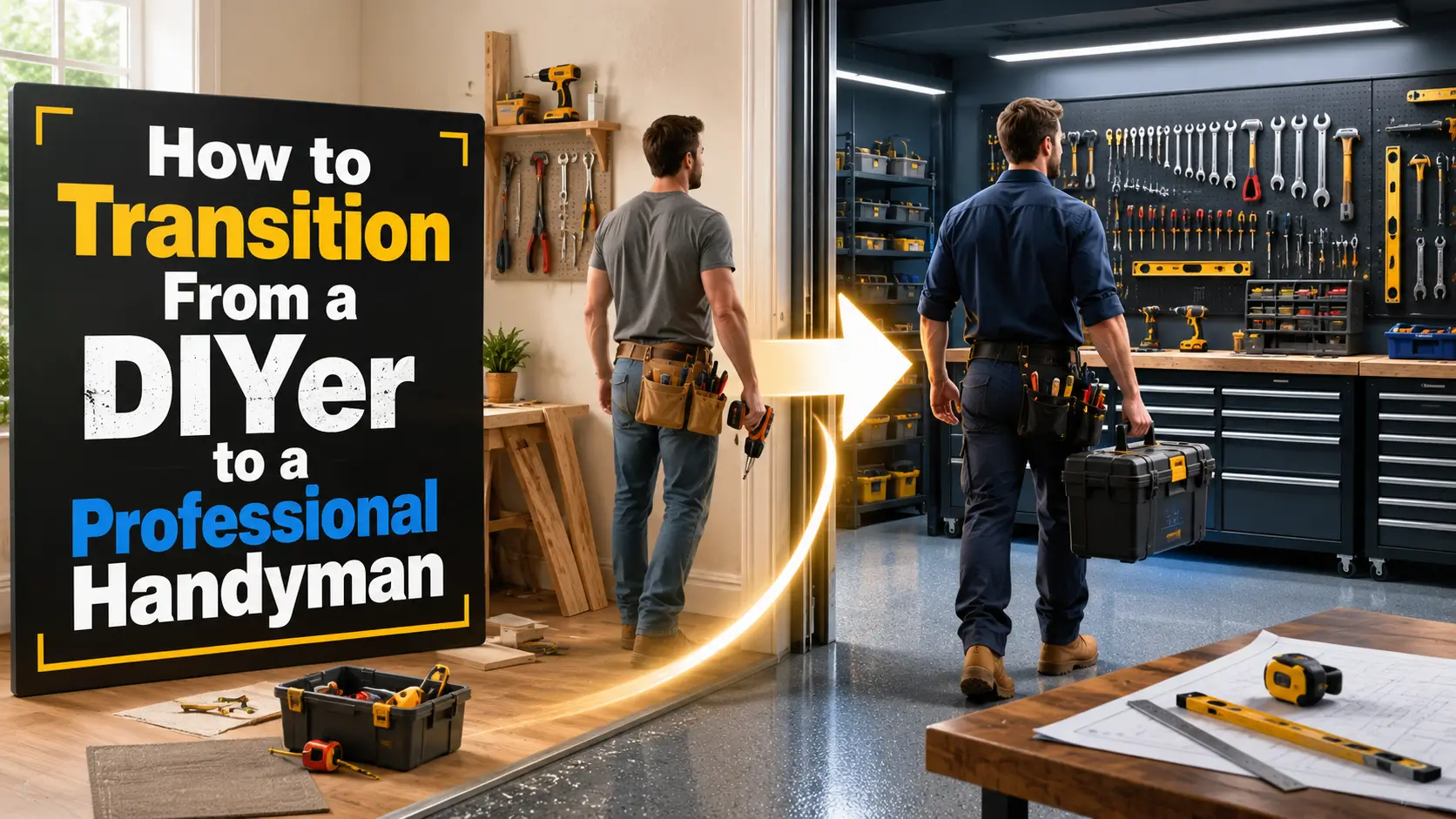
Lots of us spend years sorting out little repairs around our own place, helping mates with odd jobs, or taking on renovation projects at weekends- and after a while, you start wondering if all that know‑how could turn into a proper job. The great news is that going from keen DIYer to professional handyman is absolutely doable. But getting paid for your work is about much more than just knowing how to use a drill or fix a leaky tap.
Clients want to know they can count on you: that you’ll turn up when you say you will, keep them in the loop, do the job properly, and never cut corners when it comes to safety. Building a solid business also means getting your head around the legal side, charging the right price for your time, picking up any recognised training you need, and building a name that makes people want to use you again and again- and tell their friends too. This guide walks you through every practical step to turn what you love doing into a proper, lasting career.
Table of Contents
Handyman Training
What Changes When You Go Pro
At home, you can take your time, experiment, or come back to a job next week. When someone pays you, you have a duty to finish on time, work safely, and stand by what you do. You also have to follow rules you might never have thought about before.
You’ll need to explain clearly what you will and won’t do, give fair quotes, and be reliable. Small mistakes you’d fix yourself at home can cause arguments or extra costs for clients. The biggest shift is taking full responsibility for every part of the job, not just the hands‑on work.
Map What You Can Actually Do- And What You Can’t
Start by listing honestly what you’re confident doing. That might be hanging shelves, fixing doors, replacing tap washers, painting, or assembling furniture. Then list what you’ve only tried once, or aren’t sure about.
Most importantly, know where the legal lines are. You can do minor repairs and maintenance, but you cannot do gas work at all- that needs Gas Safe registration. You can only do very basic electrical work that doesn’t alter circuits- anything else needs a qualified electrician under Part P rules. Structural work, major plumbing changes, and roof work also need specialists or official approval. Being clear about your limits keeps you safe and protects clients.
Fill The Gaps In Your Knowledge
You already have practical skills, but professional training fills in what DIY never teaches. You don’t need years of study- short courses in working at height, COSHH awareness, basic health and safety, and Part P awareness make a huge difference.
These don’t just give you a certificate. They teach you how to spot risks, use tools properly, and follow standards clients and insurers trust. You can do most theory online, but look for any practical sessions if you can- they help you avoid bad habits picked up from trial and error at home.
Get The Right Insurance And Legal Basics
This is the step most DIYers put off, but it’s essential. Public liability insurance isn’t always legally required, but almost every client- especially agents and businesses- will ask for it before you start. It protects you if you damage property or someone gets hurt.
Once you earn more than £1,000 in a tax year from this work, you must register as self‑employed with HMRC and complete a tax return. You don’t need a special license to be a handyman in the UK, but you must follow health and safety law and consumer rights rules.
Build A Professional Toolkit
You don’t need to spend thousands straight away, but you do need reliable gear that won’t let you down on site. Start with what you use most: a good drill, set of screwdrivers, level, tape measure, sturdy ladder, and basic safety kit.
Keep your tools clean, organised, and in good repair. Clients notice when you turn up with battered, rusty equipment. Add new tools gradually as you take on new types of work- don’t buy things you haven’t used yet.
Learn To Price Properly- Don’t Undersell Yourself
This is where most new starters slip up. You can’t just match what you think others charge- you need to cover every cost: fuel, insurance, tools, materials, travel time, and the hours you spend quoting and admin.
Many people forget that you only get paid for time spent working- not driving or sorting paperwork. Aim for a rate that covers your true costs and leaves you a fair profit. Be clear in quotes what is included and what extra- vague agreements cause arguments later.
How to Handle Client Quotes, Deposits and Payment Terms
Many new starters lose money or upset clients because they don’t set clear payment rules from the start. Always give a written quote- even a simple text or email- that lists exactly what you will do, what materials you’re providing, and the total cost. Never just give a verbal “it’ll be around £100”- if the job takes longer, you’ll end up working for free or arguing over extra money.
- Always give a written quote- even a simple text or email- that lists exactly what you will do, what materials you’re providing, and the total cost. Never just give a verbal “it’ll be around £100”- if the job takes longer, you’ll end up working for free or arguing over extra money.
- For larger jobs, it’s normal to ask for a 20–30% deposit to cover materials and lock in your time. For small one-off tasks, you can ask for payment on completion. Tell clients clearly which methods you accept- bank transfer is safest for both, but you can take cash too.
- If extra work comes up that wasn’t in the quote, pause, explain the extra cost, and only carry on if they agree in writing. This stops awkward disputes and makes sure you’re paid fairly for every hour you work.
For larger jobs, it’s normal to ask for a 20–30% deposit to cover materials and lock in your time. For small one-off tasks, you can ask for payment on completion. Tell clients clearly which methods you accept- bank transfer is safest for both, but you can take cash too. If extra work comes up that wasn’t in the quote, pause, explain the extra cost, and only carry on if they agree in writing. This stops awkward disputes and makes sure you’re paid fairly for every hour you work.
Practise And Build Proof Of Your Work
Before you take on paying clients you don’t know, refine your skills on jobs for friends, family, or local community groups. Take clear before‑and‑after photos- these become your best advertising.
Ask people you’ve helped for honest feedback. Did you turn up on time? Did you clear up properly? Did you explain what you were doing? Use this to fix small habits that look unprofessional- like leaving mess or rushing the finish.
Comparing DIY Habits vs Professional Standards
| Area | How You Work at Home | How You Work Professionally |
|---|---|---|
| Time | Take as long as you like. | Agree on clear start and finish times. |
| Standards | “Good enough for me.” | Consistent, neat and built to last. |
| Safety | Work how you are used to. | Follow formal risk assessments. |
| Pricing | No cost to yourself. | Calculate all costs and include a fair profit. |
| Communication | No need to explain. | Keep clients clearly updated. |
| Limits | Try anything you want. | Only do work you are trained and legally permitted to do. |
Make A Good First Impression
Professionalism isn’t about wearing a uniform- it’s about how you treat people and their homes. Turn up when you say you will, or call early if you’re delayed. Remove your shoes or ask where to put them. Lay down dust sheets, tidy up every day, and take away your rubbish.
Explain what you plan to do before you start, and check if they’re happy. If you find something unexpected, tell them straight away- don’t just carry on and add cost later. These small things make people recommend you more than any fancy advert.
What to Do When Things Go Wrong: Fixes, Complaints and Liability
No one gets every job perfect- even pros make mistakes, but how you handle it is what makes you look professional. If you damage something or realise you’ve done a poor job, tell the client straight away. Don’t hide it or hope they won’t notice- that will only break trust completely. Offer to put it right at your own cost, or suggest a fair discount if it can’t be fixed easily.
If a client complains, listen without arguing first. Ask what would make them happy, then explain what you can reasonably do. Your public liability insurance covers big accidents like burst pipes or broken fixtures, but you should be ready to fix small errors yourself. Most people will be understanding if you’re honest, quick to apologise, and committed to sorting it out properly- turning a problem around can actually make them recommend you more later.
Land Your First Proper Clients
Start close to home. Tell people you know you’re now working professionally- word of mouth is still the strongest way to grow. Set up a free Google Business Profile so local people can find you when they search for help nearby.
Join local community groups online, and be specific about what you offer- vague posts about “handyman work” get ignored. Once you’ve done a good job, politely ask for a short review- these build trust faster than anything else.
How to Stand Out From Other Local Handymen
There are plenty of people offering general repairs, so you need to give clients a clear reason to pick you. Instead of just saying “all jobs considered”, be specific- highlight things like “elderly-friendly home adjustments”, “rental property turnaround”, “quick weekend repairs” or “eco-friendly low-waste work”. These narrow down what you’re good at and make you easier to find.
Small consistent habits make the biggest difference: sending a quick text when you’re on your way, wiping down surfaces after you finish, sending a photo of the completed job, or leaving a small note with your contact details. You can also offer a simple guarantee- “all work guaranteed for 12 months”- most DIY starters won’t do this, so it sets you apart immediately. You don’t need to be the cheapest option; being the most reliable and easy to work with will always win more work long-term.
Keep Growing And Learning
You don’t have to know everything on day one. As you get steady work, you can add new skills gradually- maybe tiling, basic decking repairs, or smart home fitting- as long as you train properly first.
Keep up to date with changes in safety rules or product standards. Over time, you can choose to focus on what you enjoy most- whether that’s helping older people with home adjustments, working with agents, or taking on small renovation projects.
Conclusion
Moving from DIY to professional handyman isn’t about becoming perfect overnight. It’s about being reliable, honest, safe, and clear about what you can do. You already have the core skill- now you just need to wrap it in professionalism, legal protection, and fair pricing.
Take it step by step, start small, and build your reputation one job at a time. Before long you’ll have a steady stream of work and a business you can be proud of.
Frequently Asked Questions on How to Transition From a DIYer to a Professional Handyman
Start by identifying the repair and maintenance tasks you can complete confidently. Improve your skills through professional training, practise on small projects, build a portfolio and gradually begin offering services to paying clients.
There is no general licence or mandatory qualification required to work as a handyman in the UK. However, recognised training in health and safety, COSHH awareness, working at height and electrical safety can improve your competence and credibility.
A handyman can usually complete general repairs, furniture assembly, decorating, minor plumbing maintenance, shelving and basic property upkeep. Gas work, major electrical work, structural alterations and certain roofing tasks must be handled by appropriately qualified professionals.
Public liability insurance is strongly recommended because it can provide protection if your work causes property damage or someone is injured. You may also need tool insurance, vehicle cover and employer’s liability insurance if you hire staff.
In the UK, you generally need to register as self-employed with HMRC when your annual trading income exceeds the relevant trading allowance. You will also need to maintain financial records and submit tax returns when required.
Your prices should cover labour, materials, tools, insurance, fuel, travel time, administration and tax. Include a reasonable profit margin and clearly explain what is included in each written quote.
A deposit may be appropriate for larger jobs, particularly when materials must be purchased in advance. Many handymen request around 20% to 30%, while smaller tasks are commonly paid for after completion.
Begin by offering services to friends, relatives and local community contacts. You can also create a Google Business Profile, join local online groups, display before-and-after photographs and ask satisfied clients for reviews and recommendations.
A basic professional toolkit may include a reliable drill, screwdrivers, a spirit level, measuring tools, hand tools, a sturdy ladder and suitable personal protective equipment. Additional tools can be purchased as your range of services grows.
Professional handymen arrive on time, communicate clearly, provide written quotes, protect the client’s property and clean the work area after finishing. They are also honest about their limitations and respond quickly when problems arise.
Recent Posts