
If you’re thinking about moving into solar installation, or you’re already working in the trade and wondering if you’re on the right money, you’ve probably noticed there’s no single clear figure out there. Some sources quote very low numbers, others sound too good to be true, and few explain why earnings vary so much from one person to the next.
The truth is, what you take home depends on what you can do, where you work, how you choose to be employed, and what kind of projects you take on. This guide sets out realistic, up‑to‑date figures for 2026, explains what moves the numbers up or down, and helps you work out what you could reasonably aim for.
Table of Contents

Starting Out: Apprentices and Entry‑Level Installers
When you’re new to the trade, you’ll usually start as a mate, labourer, or apprentice, helping with lifting materials, fixing mounting frames, and basic site tasks before taking on full responsibility for panels or wiring.
Apprentice pay follows standard trade rates. First‑year apprentices typically earn around £12,000 to £16,000 a year, rising to £18,000 to £22,000 in the final year of training. Once you’ve finished your training and can work under supervision, you’ll move into the entry‑level bracket, usually between £24,000 and £28,000 as an employed installer.
At this stage, you won’t usually be signing off electrical work or making design decisions. You’ll learn how to read layouts, work safely at height, follow MCS standards, and spot basic problems before they cause delays. It’s a lower‑paying phase, but it’s where you build the habits that will make you more valuable later.
Mid‑Level Pay: Competent Independent Installers
Once you’ve got one to three years’ solid experience, can complete a full domestic installation without constant supervision, and hold your core solar PV qualifications, your pay will jump noticeably.
For employed installers, the typical range here is £30,000 to £40,000 a year. Many firms pay a base rate plus a small bonus per job finished on time, which can add another £1,000 to £3,000 a year. If you can also do basic testing, fault‑finding, or commissioning, you’ll sit at the upper end of that bracket.
This is the point where many people start weighing up whether to stay employed or go it alone. You know how the job works, you’ve built up speed, and you understand what good work looks like. But you also know how much can go wrong on a tricky roof or a tight deadline.
Senior and Specialist Installer Earnings
Once you have three or more years’ experience, can lead a team, handle tricky sites, and hold full electrical sign‑off rights, you can expect to earn between £38,000 and £52,000 as an employee. Those working on commercial projects, battery storage systems, or integrated EV and solar packages often push higher, with some advertised roles reaching £55,000 or more where full 18th Edition and MCS certification is required.
Specialism makes a big difference here. Installers who can design, fit, and commission battery storage or hybrid heat‑pump systems are in short supply right now, so employers will pay a premium to keep them. If you’re happy to travel to larger commercial or farm sites, you’ll also command better rates than those working only on local domestic roofs.
Employed vs Self‑Employed: How Pay Compares
One of the biggest choices you’ll make is how to work , and it changes the numbers dramatically. Employed roles give you a steady salary, holiday pay, sick pay, pension contributions, tools, and often a company van. You don’t chase payments or find your own work, but your ceiling is lower. Self‑employed installers can earn more, but they carry more risk and cost.| Working Status | Typical Annual Earnings | Pros | Cons |
|---|---|---|---|
| Employed, entry–mid | £24,000–£40,000 | Steady income, benefits, training included | Lower ceiling, less flexibility |
| Employed, senior/specialist | £38,000–£52,000+ | Good pay, security, varied work | Still tied to employer rates |
| Self-employed, domestic | £45,000–£65,000 | Higher day or job rates, greater freedom | No guaranteed work, cover your own costs |
| Self-employed, commercial/battery | £60,000–£80,000+ | Premium project fees | Higher administration, travel and liability |
Self-employed installers typically charge £400 to £700 per domestic system, or £180 to £300 per day, depending on location and complexity. Over a year, this can work out to more than employed pay. However, insurance, fuel, tools, van costs and tax must be deducted before calculating the final income.
Professional Diploma in Renewable Energy
How Qualifications Push Your Pay Higher
You don’t need a university degree to earn well in solar, but the right tickets make a huge difference. Some employers will only consider you once you have them, and they’re the fastest way to move up the pay scale.
- MCS certification is essential if you want to work on systems that qualify for export payments or government grants.
- Level 3 NVQ in Electrical Installation plus 18th Edition Wiring Regulations let you sign off electrical work , this is the single biggest pay booster.
- Manufacturer accreditations for inverters, batteries, or mounting systems can add £1,000 to £3,000 to your annual pay, or higher day rates as a contractor.
You can start with just a solar PV installation course, but adding electrical skills opens up the highest‑paid work. Many installers start in roofing or general labour and then do their electrical training part‑time as they go.
Regional Differences in Pay
Where you work shifts the numbers up or down, though not always as much as people think.
London and the South East pay the highest base rates , usually 10–15% above the national average , but living costs are also higher, so your actual take‑home may not stretch further. The Midlands, North West, and Yorkshire have strong demand and pay close to the national average, with lower overheads making it feel better in your pocket.
Scotland, Wales, and rural areas tend to sit at the lower end of the range, around £25,000 to £38,000 employed, but demand is rising fast as more community and farm projects come forward. If you’re willing to travel for a week or two on a larger site, you can usually claim extra expenses that narrow the gap.
Extra Payments and Benefits to Factor In
Base salary is only part of what you get. Many solar firms add extras that make a real difference over the year.
- Overtime rates of time‑and‑a‑half or double time for weekends or emergency work.
- Job completion bonuses for hitting targets or keeping customer satisfaction high.
- Van, fuel card, and tools provided , worth around £3,000 to £5,000 a year if you had to pay for them yourself.
- Training paid for by the company, so you can add new qualifications without dipping into your own pocket.
When comparing offers, don’t just look at the headline figure. A slightly lower salary with a van, fuel, and full training can leave you better off than a higher number where you pay for all those things yourself.
Long‑Term Pay Growth and Outlook
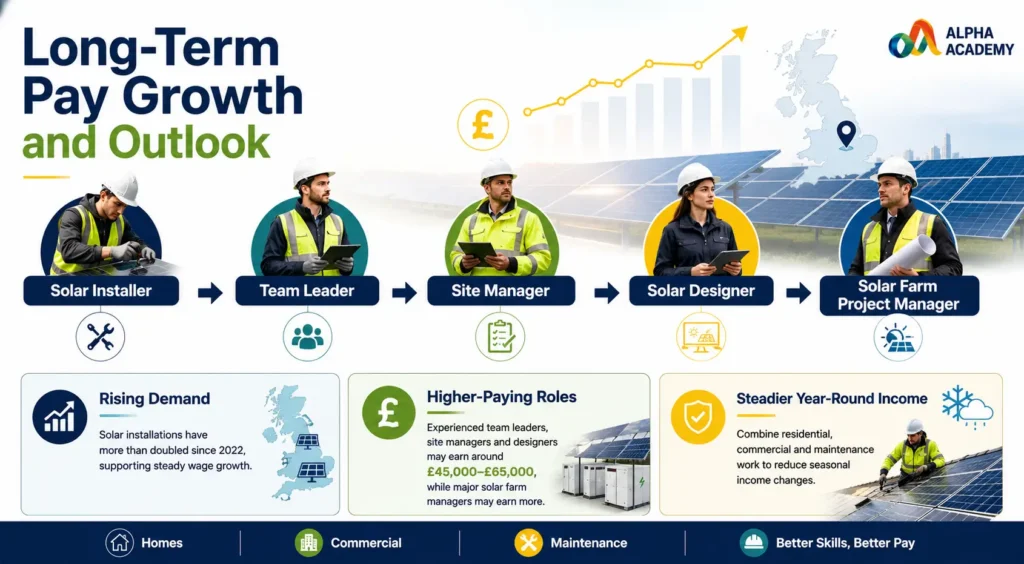
Solar is one of the fastest‑moving trades in the UK right now, and that’s pushing wages steadily upwards. The amount of kit going in has more than doubled since 2022, and demand just keeps climbing , energy bills stay high, and more people want to take control of their own costs instead of relying on big suppliers.
All the surveys from across the trade say pay will keep rising over the next few years, especially if you can do more than just bolt panels down. Step up to running a team, managing a site, or working on the design side, and you’ll usually see salaries hit £45,000–£65,000. Those running big solar farm projects can earn quite a bit more than that.
It’s not all plain sailing though. Work can slow right down in the depths of winter , roofs get slippery, days get short, and things grind to a halt. Some firms also take on lots of people when orders flood in, then cut hours when things quieten off. If you can pick up a mix of home jobs, commercial work, and regular maintenance, you’ll keep your income much steadier through the year.
Common Mistakes That Limit Your Earnings
Lots of installers leave money on the table without realising it.
- Sticking only to panel mounting and not learning electrical testing or commissioning , this is where the premium pay sits.
- Turning down battery or hybrid work because it feels more complex , these are the jobs firms struggle to fill and will pay more for.
- Not keeping qualifications up to date , old MCS or manufacturer accreditations can mean you’re passed over for better projects.
- Accepting the first offer without checking what similar roles pay locally , demand is strong, so you have room to negotiate.
How to Boost Your Earnings This Year
If you want to move up the pay scale quickly, there are some straightforward things you can focus on. Start by adding battery storage or EV charger installation to your existing skills,these are in high demand right now and command better rates. If you don’t already have your full electrical sign-off rights, work towards getting those too, as they open up more responsibility and higher pay. You can also look to step up into leading small teams, or take on site-checking duties that come with extra value. You don’t need to rush or do everything at once, pick just one area to focus on first, put in the work, and you’ll usually see a pay rise or get better job offers within six to twelve months.
Conclusion
There’s no single “correct” salary for a solar installer , your earnings reflect what you can do, how much responsibility you take on, and how you choose to work. Entry pay is modest, but there’s a clear path to solid, reliable money, and demand for skilled people is only going to grow.
If you’re just starting out, focus on building good habits and getting your core qualifications right. If you’re already experienced, look at adding specialist skills or considering how self‑employment might work for you. And whatever stage you’re at, always compare offers properly , the best deal isn’t always the one with the biggest number on the first line.
Frequently Asked Questions on Solar Installer Salary: What Can You Expect to Earn?
A solar installer’s salary varies based on experience, qualifications, location, employer and project type. Entry-level installers usually earn less than experienced technicians, supervisors or specialist solar engineers.
The main factors include experience, technical skills, professional qualifications, location, employer size and the type of solar projects completed. Commercial and large-scale installations may offer higher salaries than smaller residential projects.
Yes. Solar installers can improve their earning potential by gaining advanced qualifications, building electrical knowledge and developing expertise in battery storage, system testing, maintenance or project management.
Solar installation can offer strong long-term career prospects. As homes and businesses continue to adopt renewable energy systems, demand for trained installers, technicians and maintenance specialists is expected to remain important.
Requirements vary depending on the employer and type of work. However, completing recognised solar installation, electrical or renewable energy training can strengthen your employability and help you develop relevant practical knowledge.
Yes. Many people enter the industry through apprenticeships, trainee roles or introductory training courses. These routes allow beginners to develop practical skills while gaining supervised workplace experience.
Commercial solar installers may earn more because larger projects often involve more complex systems, stricter safety requirements and greater technical responsibility. However, earnings still depend on experience, qualifications and employer.
Self-employed installers may have the potential to earn more by setting their own rates and managing multiple projects. However, they must also cover expenses such as insurance, tools, transport, marketing and business administration.
Useful skills include electrical testing, fault diagnosis, battery storage installation, system maintenance, health and safety, roofing knowledge and project supervision. Strong customer service and communication skills can also support career progression.
Experienced solar installers may progress into senior technician, site supervisor, project manager, system designer, maintenance engineer or renewable energy consultant roles. Further training and industry experience can open access to more specialised and higher-paying positions.
Recent Posts