Most structured courses provide reference material or ongoing access to course content, so you can revisit specific lessons whenever you need a refresher on a particular repair.
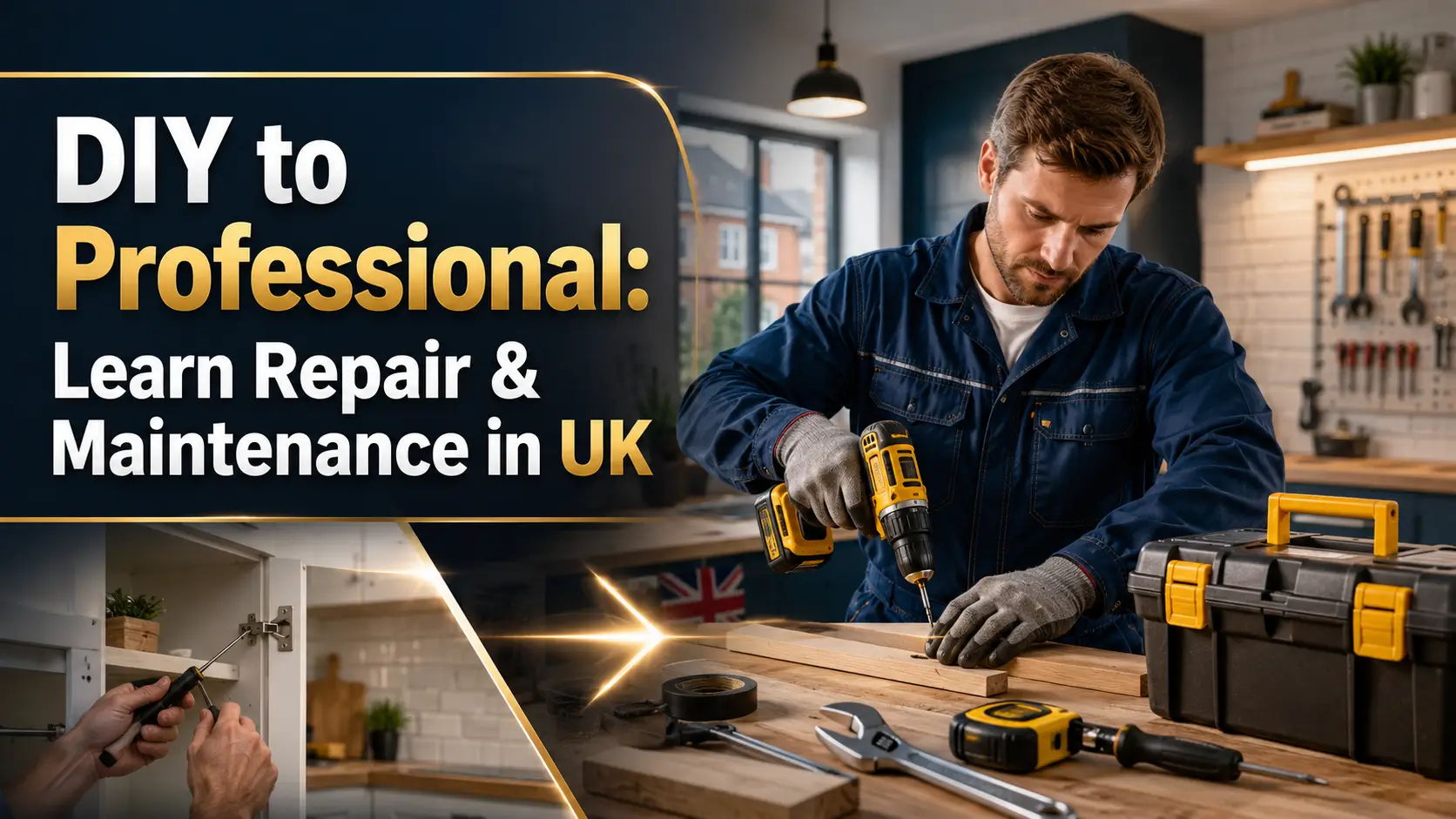
From a wobbly shelf to a leaking tap, most of us have faced a small home repair job and wondered whether to call in a professional or attempt it ourselves. With the cost of hiring tradespeople rising steadily across the UK, more people are turning to DIY skills, not just to save money, but to gain the confidence and independence that comes with knowing how to fix things themselves.
Repair and maintenance skills aren’t just useful for homeowners either. They’re increasingly valued in property management, facilities work, and even as a foundation for a full-time trade career. Whether you want to patch up plasterwork, understand basic plumbing, or simply stop dreading every squeaky door and dripping tap, building these skills can make a genuine difference to your daily life and your wallet.
In this guide, we’ll walk you through what it takes to go from complete beginner to confident handyman, the kinds of skills you’ll pick up along the way, and how a structured course can fast-track your learning.
Ready to get started? You can enrol on our Handyman Masterclass: Learn Repair & Maintenance Work course today and begin building practical skills you’ll use for life.
Table of Contents
What Is the Work of a Professional Handyman?
The professional handyman does many small to medium to large home repairs or installations for residential properties (homes) and commercial properties (buildings) to keep up on maintenance and serve as the general contractor for home repairs and maintenance projects throughout the year. The handyman typically has experience and energy to accomplish all of the current maintenance tasks for a typical home or building. Some examples of repairs or installations would be to replace broken or leaking faucets; repair loose doorknobs or hinges; install damaged book shelves; or repair the minor damage done to a wall or a floor.
The demand of Handyman Services in the UK Property market
There is an increasing need for handyman services in the UK housing market due to the fact that all the types of properties currently available require a degree of maintenance. In addition, as more renters, buy-to-let property owners and short term accommodation (e.g. serviced apartments, holiday rentals) enter the marketplace, it is the landlord or property owner’s responsibility to ensure their properties remain safe, clean and in good condition so they can meet the expectations of their tenants and reduce the potential for future repair bills. This means that there will be a continual supply of work available for handymen; from repairing leaks and fixing doors, to painting rooms/a room, changing small fixtures and fittings, assembling furniture and general maintenance between tenants.
Skills and training necessary to be a current day handyperson
To qualify as a modern handyperson working in the UK you’ll require many skills including practical repair skills, awareness of health & safety, and good communication skills not just the ability to “fix things”. As a reliable handyperson you have experience of using tools you use on a daily basis and maintenance work such as installing and repairing plumbing (leaks, tap fittings) or simple carpentry (doors, shelving, hinges) and simple decorating repairs (filling in cracks, touch-up painting). Also, having an understanding of electrical safety would also come in handy, but above all you need to know what you can do yourself and what needs to be done by a qualified tradesperson..

Safety, Problem-Solving & Communication (Professional Standards)
An additional skill you will need to possess is the ability to troubleshoot because not all properties are identical; new issues may occur while performing your duties. By keeping your cool; troubleshooting any new issues that arise, finding reasonable solutions, and completing your work to a high standard, you will help to demonstrate your credibility as a tradesperson.
Lastly, building trust is achieved through communication, that is by clearly explaining what is wrong with your client, giving clearly documented quotes, managing client’s expectations in relation to timing and cost, and presenting yourself in a polite manner will help you build a successful business with repeat custom and positive reviews.
Average Salary of the Handyman in UK (2025 Trends)
A handyman in the UK typically makes PS25,000 to PS35,000 a year. Salary rates may be different based on experience, location and nature of work that you are doing. Handymen in busy areas like London and other big cities tend to earn more since there is more demand and it is more expensive to live. Self-employed handymen can also be able to make more money through establishing a good client base. Lots of them charge between PS20 to PS50 an hour, and the routine work of landlords or property firms may give a predictable store of earnings.
Why Is It Important to Learn Repair and Maintenance Skills in 2026?
By 2026, individuals will increasingly require repair and maintenance skills due to an upward trend in housing prices throughout the UK. Homeowners are opting to repair rather than replace items or relocate due to rising housing costs and living expenses. This leads to a growing need for individuals with an understanding of practical home maintenance within the UK property market. Professionals capable of completing small repairs both quickly and safely will become increasingly sought after by the UK property market.
Financial Benefits of DIY Home Repairs
Another important reason for the growing need for an individual to have good repair and maintenance skills is the financial benefits associated with DIY home repairs. By being able to complete simple household repairs, such as repairing a leaking tap, fixing a loose door or patching up minor wall damage, you can save yourself thousands of pounds annually on tradespeople fees by being able to carry out these types of tasks on your own.
Opportunities to Start a Handyman Business
If you’re thinking about starting your own handyman business in the UK, there are a lot of opportunities beyond just being a handyman. Many people are choosing to become self-employed due to the greater flexibility and income potential. If you have received appropriate training and have acquired some hands-on experience, you can register as a sole trader, provide maintenance services locally, and build a loyal customer base through referrals and the use of internet-based platforms.
Career Pathways in Construction and Facilities Management
Additionally, handyman and maintenance skills may provide opportunities for a future career in construction or facilities management. Many housing associations, property management companies and construction companies are constantly searching for people with practical repair skills to assist in maintaining the buildings they manage and help keep their operations functioning smoothly.

Repair of Appliances and Installation
A good handyman must possess a fundamental knowledge of installation and repair of the common domestic gadgets like washing machines and dishwashers. They are also expected to check that the appliance is properly connected and functioning as expected after installation. In the UK, a certain type of jobs related to gas and electricity require the performance of licensed professionals. A handyman must, however, know how to approach the ordinary tasks on the appliances safely and in a responsible manner. Clients can also be made more useful by a handyman knowing how to install appliances. Several homeowners and landlords require assistance in installation or replacement of household appliances.
Tools and Equipment Every Handyman Should Know
Another major aspect of being a handyman is learning how to use hand and power tools. You should get accustomed with common hand tools, which include screwdrivers, wrenches, pliers, hammers, measuring tools and spirit levels.You should also be knowledgeable on how to operate power tools like drills, sanders and saws safely and properly. It should be known that there are certain tools that suit a certain job and how to take care of your tools and also know the UK health and safety regulations.
Final Thoughts
The Handyman Masterclass offers a practical and reliable pathway into the UK’s growing repair and maintenance sector. It builds essential skills for everyday home upkeep while opening doors to stable employment and flexible self-employment opportunities. With rising demand for cost-effective property maintenance, these skills provide both financial savings and strong earning potential. Whether for personal use or career growth, investing in handyman training is a smart and sustainable choice for the future.
FAQs on The Handyman Masterclass: Learn how to repair and maintain work (UK Guide)
No prior experience is necessary. Most handyman courses, including ours, are designed for complete beginners and build up gradually from basic tools and safety practices to more advanced repair techniques.
Typical topics include basic carpentry, plumbing repairs, electrical safety basics, painting and decorating, furniture assembly, wall and flooring repairs, and general home maintenance tasks.
Yes. While hands-on practice is important, online courses use video demonstrations, step-by-step guides, and detailed explanations to help you understand techniques you can then practise at home.
Absolutely. Many everyday repairs, such as fixing a leaking tap, patching drywall, or unblocking a drain, can cost significant money if you call in a tradesperson. Learning to do these yourself can lead to real savings over time.
Not at all. Renters, property managers, facilities staff, and anyone interested in DIY can benefit from learning these skills, whether for their own home or as part of their job responsibilities.
Most courses will guide you on the tools needed as you progress, and many basic repairs only require simple, affordable tools that you may already have at home.
While this course won’t replace formal trade qualifications for specialised work (like gas or electrical certification), it can serve as a strong foundation if you’re considering handyman services or general property maintenance work as a career path.
This depends on your pace, but most learners can complete a structured online handyman course within a few weeks, especially if studying part-time alongside other commitments.
No, the course is generally open to learners of all ages, whether you’re a young adult moving into your first home or simply looking to build new skills later in life.
Recent Posts

Stop Guessing SEN: Get a Level 3 Teaching Assistant Diploma Now
August 13, 2026

Top 10 Technologies to Gain a Competitive Advantage in 2026
August 5, 2026

Aquatic Level 4: What It Takes to Be a Fish Expert in UK
August 4, 2026

The Ultimate Guide to Mastering Deep Oven Cleaning
August 4, 2026

Auto Mechanic Salary: How Much Can Certified Pros Earn?
August 4, 2026

August 24, 2026


