A parent observes that their toddler hasn’t started to say things clearly at a time when siblings are talking confidently. A very high achieving student is not reading aloud when TA asks him.A very high achieving student doesn’t read to TA when he asks him. A care worker observes an elderly person coughing several times throughout a meal and thinks that there’s something more going on than it appears. The daily situations are the core of speech and language therapy and more and more individuals are seeking to know the how and the why of what is going on and how they can best support the individual.
This article examines the role of Speech and Language Therapy from the point of view of the person who is affected by communication problems – whether as a parent, educator, carers or an inquisitive professional – and explains why structured online learning has become of significant value to this group.
Table of Contents
Speech Therapist Online Course
Why Communication Difficulties Deserve Serious Attention
From a child asking for help in the playground to an adult telling a doctor the symptoms, communication is the basis for most interactions. If speech, language or swallowing problems are not treated, the reaction is more than just the frustration of being misunderstood. Social isolation and reduced academic self-esteem for children, and loss of independence and relationships for people recovering from a stroke.
It really does make a difference when we are aware of the early signs and know the correct responses – that is why it is important to have structured knowledge and not guess work – for parents and professionals alike.
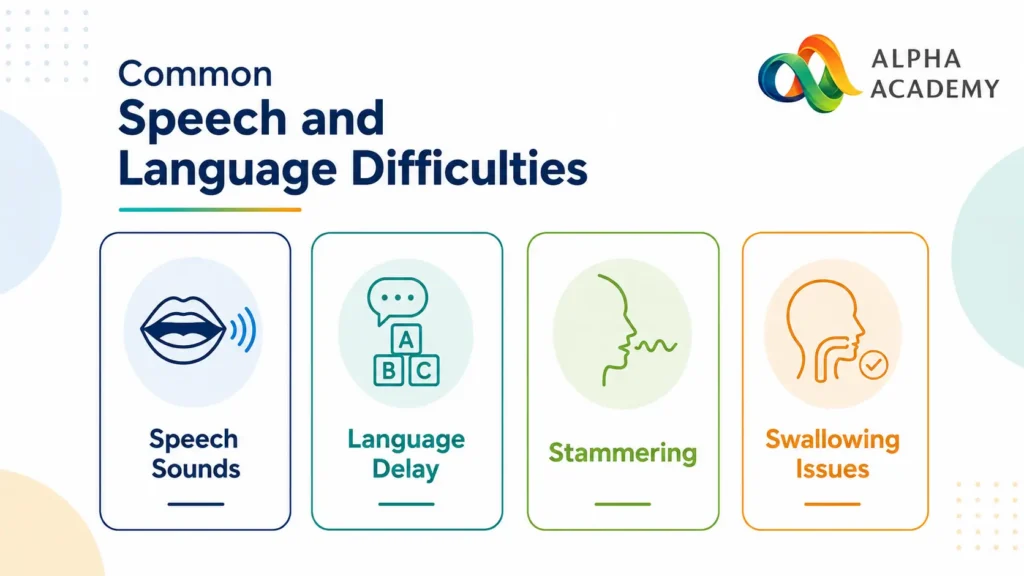
Common Speech and Language Difficulties Explained
Speech Sound Difficulties in Young Children
Children often misspeak certain sounds in early childhood and this happens to many children usually. But, if there are ongoing problems with a variety of sounds that are not expected for the age, or if speech is generally not understood by people who are not familiar with the child, these may also be a cause for professional evaluation.
Language Delay and Disorder
Others still may have problems with language, not pronunciation, for example in sentence construction, understanding, or acquiring a vocabulary at the expected rate. This is significant because the correct support will vary if it is a sound difficulty or a language difficulty.
Stammering
Stammering may be sudden and occur in early childhood, disrupt the flow of speech, and sometimes get better by itself. At other times, it continues through childhood and adulthood and may be accompanied by anxiety during times of speaking. It is important to distinguish between normal developmental disfluency and a real stammer, and this can only be done by careful observation and not by assuming.
Swallowing Difficulties in Adults
In the clinical world, swallowing problems or dysphagia are not often discussed, but they are a common problem among the elderly and stroke victims. Early, safe intervention can occur when warning signs are identified, including when a child coughs during eating and drinking or if there is an unexplainable loss of weight.
Why an Online Course Helps Parents and Carers Specifically
Early interventions for parents who are concerned are typically a short consultation with a GP and a long wait for a referral. Knowing the principles of communication development helps parents to participate meaningfully with their child in communication at home without being overwhelmed. A systematic developmental curriculum and helpful strategies for what to look for and what to do at home build parents’ confidence. A well-designed course is not based on individual comments posted in forums or from acquaintances in the field, but it is based on the well-documented science of development, translated into practical terms.Why Educators and Support Staff Benefit Equally
Teaching assistants, SENCOs and classroom teachers regularly encounter pupils with unaddressed or undiagnosed communication difficulties. A child who appears inattentive or disruptive may, in fact, be struggling to process spoken instructions. Recognising this distinction changes how a teacher responds entirely, shifting from discipline-focused strategies towards genuinely supportive communication techniques.| Audience | Common Challenge Faced | How Course Knowledge Helps |
|---|---|---|
| Parents of young children | Uncertainty around whether speech delay is typical or concerning | Confidence to recognise genuine warning signs and support development at home |
| Teaching assistants and SENCOs | Misinterpreting communication difficulties as behavioural issues | Improved classroom strategies and referral awareness |
| Care home and healthcare staff | Overlooking early signs of dysphagia in elderly residents | Earlier recognition and safer mealtime support |
| Aspiring career changers | Uncertainty about whether the profession suits them | Structured foundational understanding before further study |
What a Well-Structured Course Should Realistically Cover
A genuinely useful course for this audience extends beyond dry theory and includes realistic, relatable scenarios. Consider a module explaining how to differentiate typical toddler mispronunciation from a genuine speech sound disorder, paired with a case study of a real-sounding scenario involving a four-year-old. This approach embeds understanding far more effectively than abstract definitions alone.
- Look for courses that include relatable scenarios rather than purely clinical terminology divorced from everyday context.
- Prioritise courses offering practical, at-home or in-classroom strategies alongside theoretical explanation.
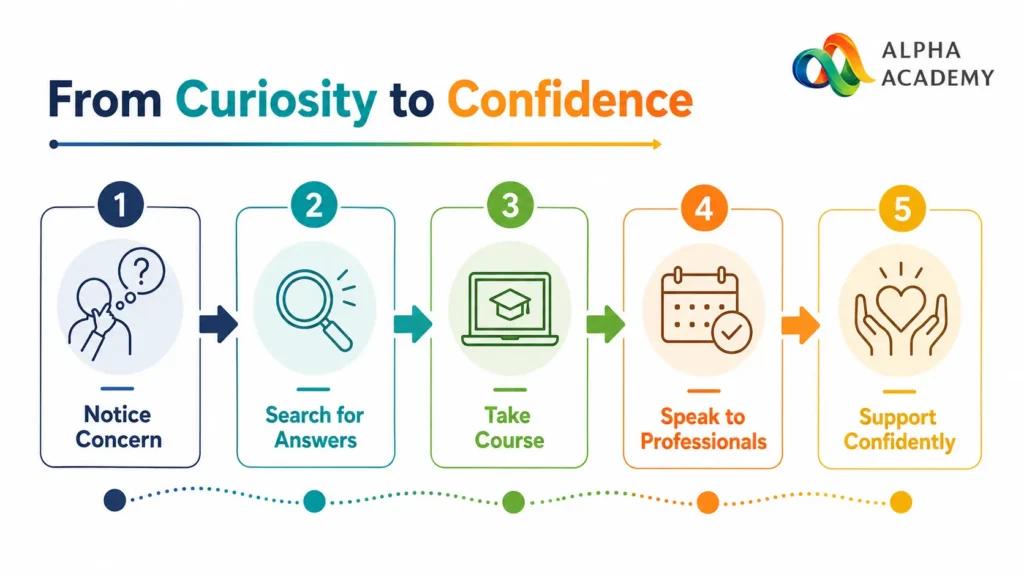
The Learning Journey From Curiosity to Confidence
Noticing a Concern (child, pupil, patient or relative)
↓
Searching for Understanding
↓
Speech Therapist Online Course
(developmental knowledge + warning signs + practical strategies)
↓
Informed Conversation with GP, School or Clinician
↓
Confident Ongoing Support at Home, School or Care Setting
This visual pathway reflects a genuine shift many parents and professionals describe: moving from anxious uncertainty towards calm, informed confidence, simply by understanding what is actually happening and what reasonable next steps look like.
When Professional Referral Remains Essential
This is worth repeating: No online course, no matter how well organised, is a substitute for formal evaluation or diagnosis by a registered speech and language therapist. True to its name, it is most important to help parents, educators, and carers understand how to better identify concerns early, communicate with professionals more effectively, and help to continue therapy recommendations at home or in the classroom.
Why the Speech Therapist Online Course Is Worth Considering
The Speech Therapist Online Course has been developed with this expanded audience in mind and addresses child speech and language development, typical disorders, dysphagia awareness and practical strategies that are beneficial for both parents and educators/care staff as well as those interested in pursuing a career in speech therapy. Instead of trying to get a “hassle” of information from forums and unofficial sources, one can take one course at one time, and get a real direction in understanding.
A Real-World Scenario: Supporting a Child Between Therapy Sessions
Think of a family where their 5-year-old child has recently been referred for Speech Sound therapy after a referral from the nursery. Appointments with the child’s therapist occur every second week and parents may be left wondering what they should do during the week in between.
A parent in this position can identify what kind of activities, which would be consistent with the therapy goals, are actually going to be beneficial to the child, for example, it is helpful for them to model correct pronunciation during conversation, but not directly correcting the child, which can sometimes raise self-awareness and reluctance to speak. Reading aloud together and pausing to allow the child to predict and repeat some words are often helpful in making meaningful progress between sessions, as long as parents are aware of the rationale behind these strategies and don’t use them without careful consideration.
When to Seek a Second Opinion
Sometimes parents/carers may receive advice from a nursery, school or even in their first clinical assessment that does not match what they are seeing at home. This uncertainty can be uncomfortable, especially for parents who don’t know the clinical jargon or don’t know if their concerns are being taken seriously.
Learning some of the principles of communication development helps the parents to pose more specific, well-informed questions during their visits and to know when to get a second opinion or further evaluation is warranted, and when it is not. This is not an unnecessary attempt to second guess the professionals, it is about being an involved participant, an informed member of the family, a child or relative receiving care and not being bullied, which most clinicians welcome with open arms.
How Technology Has Changed Family Access to Support
A generation ago there were few resources available to families to help them today. Children in remote locations can get specialist help without having to make long journeys to attend video based teletherapy sessions. For children with autism or with a late onset or language delay, there have been new opportunities created through communication apps for non-verbal or minimally verbal children. Online courses are one aspect of this new way of learning, and parents and carers can gain access to structured and credible knowledge from the comfort of their own homes – and with an internet connection – which was previously accessible almost exclusively through clinical training programmes or high-priced private consultations.
Genuine responsibility is attached to this democratisation of knowledge, but. Not all of the advice you see online is equally reliable, and that’s where the importance of a well-organized, case-study based course comes into play.
Recognising Progress: What Realistic Improvement Looks Like
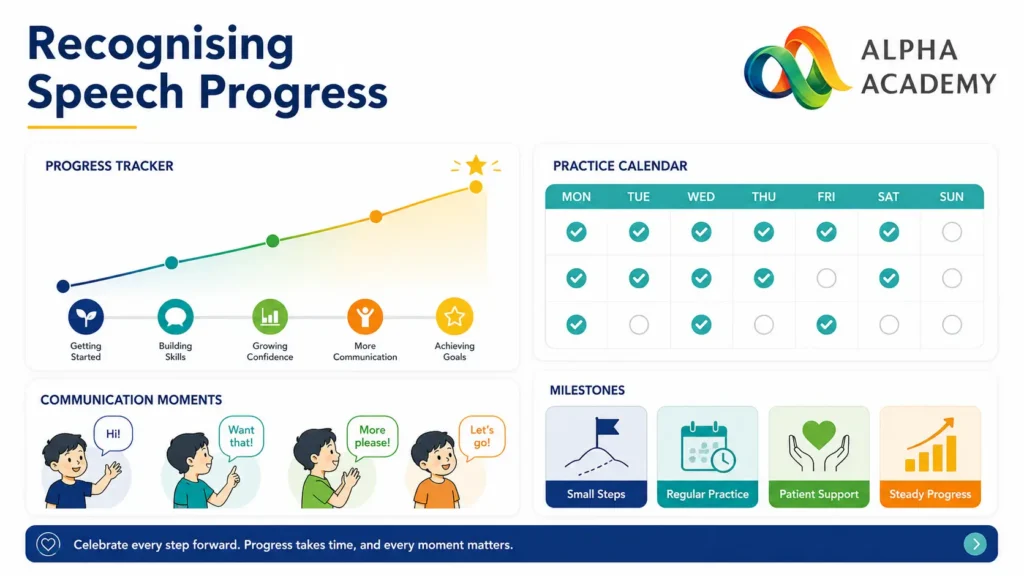
One of the most common questions parents and carers have is how long their child will have to wait for noticeable progress to take place after starting therapy or after implementing home strategies. In reality, speech and language progress does not proceed in a linear fashion. In some weeks there may be clear signs of progress and in some weeks almost none, and this is nothing unusual-that is the way it is.
A realistic idea of this pace, rather than anticipating rapid change, helps to keep parents and carers patient and consistent, which are far more important to outcomes than any one dramatic moment of change.
Building Confidence in Conversations With Professionals
Parents report that they feel daunted at appointments with speech and language therapists, GP’s or the school, especially when using unfamiliar terms without explanation. This may result in concerns being demeaned or misunderstood, or essential questions not being asked because of fear.
Parents who have participated in some structured, accessible learning in the past seem to feel a lot more comfortable to be involved in these discussions, with the ability to ask questions and make specific and relevant comments from home about what they see. This type of active and educational conversation is common and well received by clinicians, as observations by parents often include important background information that can’t be gathered in one assessment session.
Supporting Siblings and Wider Family Understanding
A child’s communication challenges do not only impact the one involved, siblings, grandparents and extended family members often require some level of understanding as well, especially to avoid the possibility of unintentional teasing or frustration when the child has trouble communicating effectively. A child’s understanding of the reasons why their sibling needs more patience when speaking, or why some sounds are harder for them to make etc., is an important part of the support given in the home.
Parents who have been structured in their own learning will find it much easier to convey this to other family members and children, as opposed to avoiding the subject or giving a half-truth that leaves siblings feeling confused and/or anxious.
Making the Most of Limited Appointment Time
For many families, the time spent with a registered speech and language therapist, especially when time is scarce in stretched public health services, is frustratingly short. Being well-prepared for each appointment with clear, specific observations, rather than trying to remember what happened during an appointment that you are trying to recall, makes better use of this limited time.
With background learning, parents are likely to be able to tell more accurately if their child has a problem with certain sounds and is not a problem with others, and so on. Such detailed, informed reporting often assists a therapist to see the situation more clearly and faster, and, thus, the child more effectively.
Long-Term Outlook: Why Early, Informed Support Matters
The findings of these studies in developmental psychology and speech and language sciences all point to a more general rule that should be remembered: “the sooner the better informed the intervention, the better the long-term results.” This is especially true of the early years of language development. But it doesn’t mean parents should be alarmed by any slight nuance of their child’s speech, it just means that when they have any real problem, any real concern, it is not something to wait and see and wait and see and wait, it’s something to address, and address, and address.
A key principle of timely action is to make informed, confident decisions at the right time – and the confident decision would have come from having structured knowledge, whether as a parent, teaching assistant or care worker, long before we got to that point, when uncertainty and delay could have set in.
Final Thoughts
Communication difficulties touch nearly every family and classroom at some point, whether briefly or over many years. Approaching these challenges with informed confidence, rather than uncertainty or misplaced worry, makes a genuine difference to outcomes. A carefully chosen online course cannot replace clinical assessment, but it offers something equally valuable: the knowledge and confidence needed to support a child, pupil, patient or relative through what can otherwise feel like an overwhelming and confusing process.
Frequently Asked Questions on Understanding Speech and Language Therapy: Why an Online Course Could Change Careers and Lives
Development varies considerably between children, though persistent unintelligibility beyond the expected age range, or lack of expected vocabulary growth, generally warrants a conversation with a health visitor or GP.
No. An online course builds understanding and awareness but cannot replace formal diagnosis and assessment from a registered speech and language therapist.
Signs may include difficulty following multi-step instructions, limited vocabulary compared with peers, or reluctance to speak in group settings, though a structured understanding of typical development helps distinguish genuine concerns from normal variation.
A speech delay generally relates to pronunciation and sound production, while a language disorder involves difficulty understanding or using language itself, such as forming sentences or following instructions.
Some children experience temporary disfluency that resolves naturally, while others develop a persistent stammer requiring professional support, making early informed observation genuinely valuable.
Recognising early warning signs such as coughing during meals allows for earlier, safer intervention and reduces risks associated with swallowing difficulties in elderly residents.
Yes, many structured courses include practical, everyday strategies suitable for supporting a child’s communication development at home, alongside professional therapy where needed.
Consistent journaling is widely regarded as one of the most valuable habits a trader can develop, revealing patterns in behaviour and decision-making over time.
Recognising that certain disruptive behaviours may stem from unaddressed communication difficulties allows educators to respond with supportive strategies rather than purely disciplinary measures.
Consulting a GP, health visitor, or registered speech and language therapist remains the appropriate next step, with online course knowledge helping to inform and support that conversation.
Recent Posts