

- Develop proficiency in preparing comprehensive financial statements and interpreting financial data.
- Gain insights into effective strategies for capital raising and budgeting techniques essential for financial planning.
- Master principles related to fixed assets and understand their impact on financial reporting.
- Familiarize yourself with international transfer pricing rules and their implications for multinational businesses.
- Calculate and interpret return on capital employed (ROCE) to evaluate business profitability and efficiency.
- Analyze stock movements and their influence on financial markets to make informed investment decisions.
- Transparent pricing with no hidden fees, including the final exam.
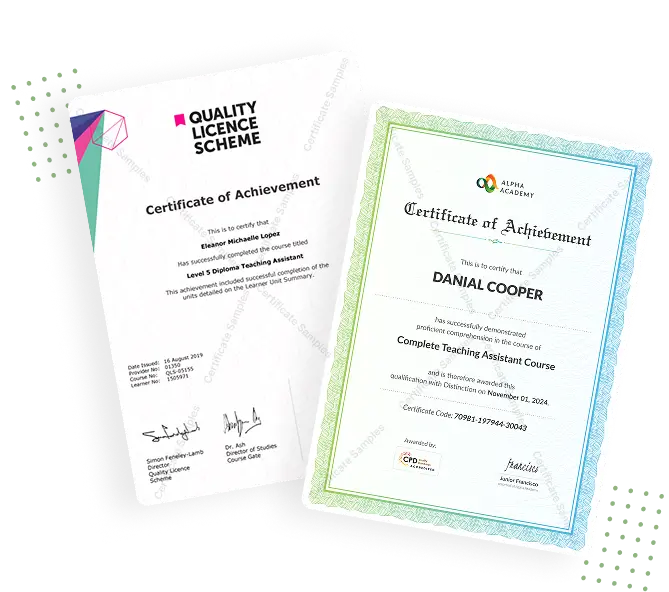
- Earn an Accredited Certificate upon successful completion to validate your skills.
- Benefit from an efficient exam system with instant results.
- Access a personalized learning portal to track your progress and review course materials.
- Receive 24/7 customer support via live chat for prompt assistance with any course-related queries.
Frequently Asked Questions
Accounting basics involve recording, classifying, and summarizing financial transactions to understand a business’s financial health. Learners start with T-accounts, trial balances, income statements, and balance sheets to build strong foundational skills.
T-accounts visually represent debits and credits used to record transactions. They help learners understand how entries affect assets, liabilities, and equity, providing clarity before moving to trial balances and financial statements.
A trial balance checks whether total debits equal total credits in the ledger. It helps identify recording errors and ensures accuracy before preparing income statements and balance sheets.
An income statement shows revenue, expenses, and profit for a specific period. It helps measure business performance and is essential for financial analysis, decision-making, and understanding profitability.
A balance sheet summarizes a business’s assets, liabilities, and equity at a point in time. It helps assess stability, liquidity, and overall financial position, forming a core part of basic accounting skills.

TAKE ALL
COURSES FOR £49