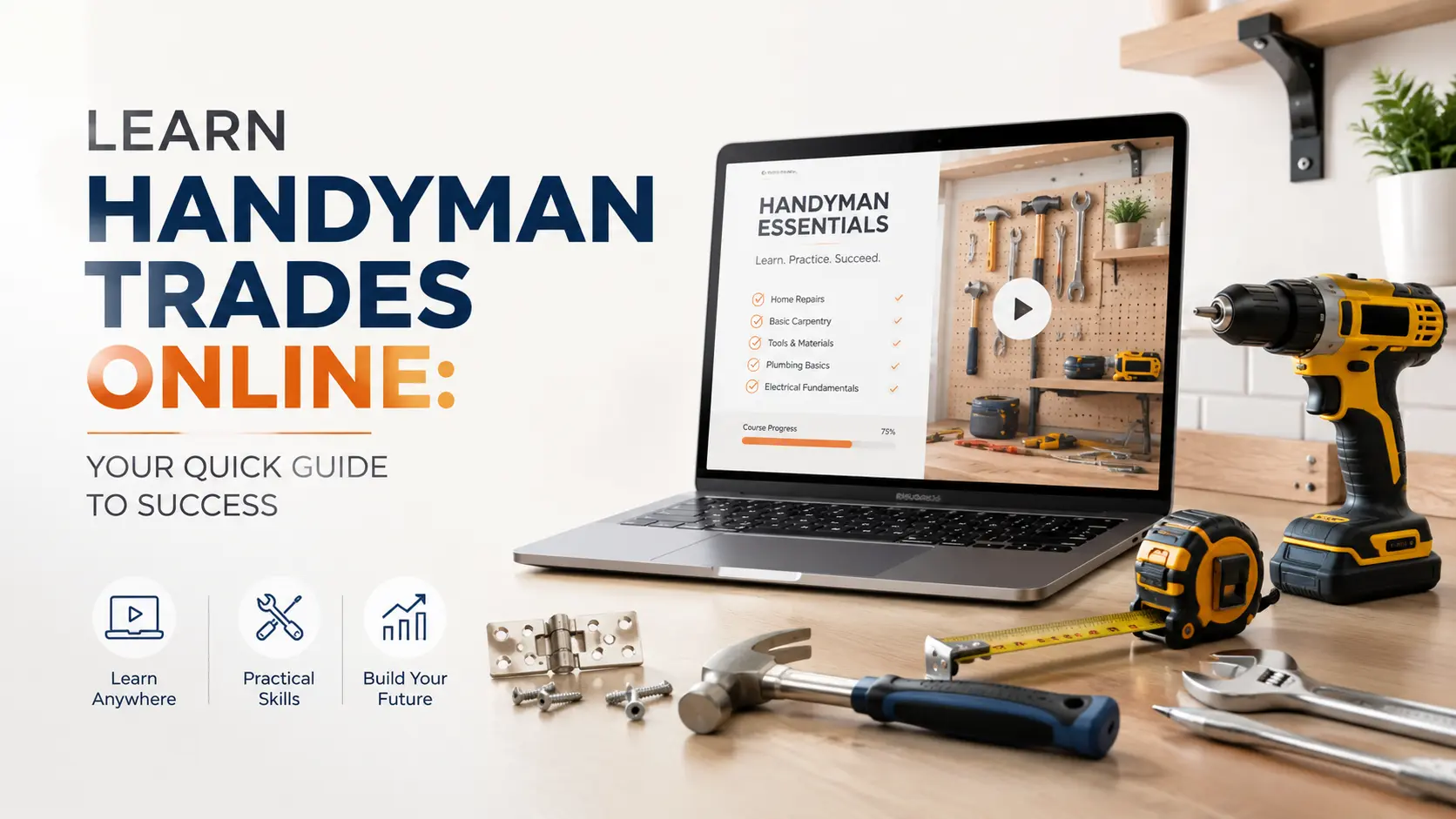
Learning handyman trades online can be a practical and affordable way to develop useful repair, maintenance and home-improvement skills. You do not always need to spend years at college before learning how to assemble furniture, repair doors, seal gaps, complete basic carpentry work or handle everyday property-maintenance tasks. With structured online training, you can study at your own pace, fit learning around your existing responsibilities and focus on the skills most relevant to your goals.
However, becoming a capable handyman involves more than watching video tutorials. Online courses can teach you essential theory, tool selection, safety procedures, job planning and legal boundaries, but practical ability must be developed through supervised or carefully controlled hands-on practice. It is also important to recognise that specialist gas, electrical and complex plumbing work may require formal qualifications, registration or professional assessment.
This guide explains how to learn handyman skills online effectively, choose reliable training resources, build a useful starter toolkit and practise safely. It also covers potential earnings, insurance, legal responsibilities and the steps you can take to turn your new skills into your first paid handyman jobs.
Table of Contents
Handyman Training
What You Can and Can’t Learn on Online
It helps to be clear from the start. Online training is perfect for understanding how things work, what safety rules to follow, which tools to use, and the right order to do a job. You can learn how to measure correctly, spot common problems, and stay within legal limits.
What it can’t do is give you muscle memory, or show you how materials behave in real life. You also can’t learn to work safely with electricity, gas, or complex plumbing online alone , these always need practical assessment and official qualifications. Stick to general repairs, maintenance, and finishing work until you have the right extra training for specialist tasks.
Plan What You Need To Learn First
Don’t jump from one random video to another , it’s easy to miss important basics. Start with these core areas, in this order:
Safety always comes first. Learn how to use tools properly, work at height, handle chemicals, and protect yourself and other people. Then move on to simple repairs: fixing doors, hanging items, sealing work, and basic carpentry. After that, cover the limits of what you can legally do, and finish with how to price jobs and look after clients.
Where To Find Reliable Learning Material
You don’t need to pay for every resource, but you do need to choose carefully.
Reputable course platforms like Reed, Udemy, and Alison offer structured lessons that build step by step. Trade organisations and trusted builders also share clear, honest guides on their websites , these are often more accurate than random social media clips. YouTube is great for seeing exactly how a job is done, but always cross‑check advice with more than one source.
What To Look For In An Online Course
Not all courses are worth your time. Pick one that:
- Starts with safety and legal rules, not just tricks
- Shows real jobs being done, not just diagrams
- Clearly explains what work you can and can’t do
- Includes a summary or test to check what you’ve learned
- Offers a certificate of completion if you need it for insurance or clients
Best Ways To Practise What You Learn
Once you’ve watched or read about a task, you need to try it for real. Start with simple jobs around your own home, tightening hinges, sealing skirting boards, or assembling furniture. Then ask friends or family if you can help with small repairs.
Don’t be afraid to start slowly. Practice on scrap material first if you can, for example, try cutting or filling on an old piece of wood before you work on a visible wall. This builds confidence and helps you see what works and what doesn’t.
Essential Tools You Actually Need (And What To Skip At First)
You don’t need to fill a whole van with gear just to get started, buying stuff you’ll never use is the number one mistake new people make. Stick to a core kit that covers almost every basic job: a solid cordless drill with a full set of bits, a claw hammer, a range of screwdrivers, a spirit level, tape measure, Stanley knife, pliers, adjustable spanner, and a basic set of chisels. You’re looking at around £150–£300 for decent mid‑range versions; steer clear of the super‑cheap sets that fall apart after two uses, but there’s no need to splash out on top professional brands until you’ve got regular work coming in.
Safety gear comes first, always: heavy‑duty work gloves, safety goggles, and a dust mask, these aren’t optional. Anything more specialist, like tile cutters or power saws, you can borrow or rent only when you’ve got a specific job that needs them. As you get busier and work out exactly what jobs you do most often, you can add to your kit bit by bit. That way you keep your startup costs low, and you only pay for things you’ll actually get good use out of.
How Long It Takes To Get Ready For Paid Work
You can learn the core theory and safety basics in one to two weeks. If you study a few hours each week, you’ll be ready to take on simple jobs within a month or two.
You don’t have to know everything before you start. Many successful handymen begin with the five or six jobs they do best, then add new skills as they go.
How Much You Can Expect To Earn: Rates, Jobs And Income
Lots of people pick up practical skills online to cut down on training costs, so it makes sense to know what sort of money you could be making before you dive in. For straightforward one‑off jobs like putting up shelves or fixing a dripping tap, you can charge anywhere from £25 to £40 an hour across most of the UK. For smaller fixed‑price work like painting a single room or putting together flat‑pack furniture, you’d usually look at £60–£120 depending on how big the job is and how long it takes.
If you pick up regular work with landlords or letting agents, you’ll often get steady batches of jobs at slightly lower rates ,but that consistent income is a huge plus. Most new self‑employed handymen take home between £18,000 and £25,000 in their very first year, rising to £30,000–£40,000 once you’ve built up a good name for yourself and added more skills to your list. It’s always worth checking what others in your area charge too, rates are usually higher in cities and coastal towns than they are in rural spots.
Comparing Learning Options
| Learning Type | Cost | Speed | Best For |
|---|---|---|---|
| Structured online course | Free to £50 | Fast, clear path | Safety, legal rules and a complete overview |
| Free video tutorials | Free | Mixed | Seeing how a specific job is completed |
| Practice on scrap materials or in your own home | Low cost | Takes time | Building practical skills and confidence |
| Shadowing an experienced handyman | Free or a small fee | Fastest real-world learning | Filling the practical gaps that online training cannot cover |
The Rules You Must Not Ignore
Even if you learn online, UK laws still apply. You can do minor electrical work like replacing fittings only if you follow Part P rules and don’t alter the main circuit. You must never touch gas work at all, this is illegal and dangerous without Gas Safe registration.
Always tell clients clearly what you can and cannot do, and never pretend to be a qualified electrician, plumber, or gas engineer.
Insurance, Paperwork And What Clients Will Want To See
You can learn and practise whenever you like, but you can’t charge people for work until you’ve got the basics sorted legally. Public liability insurance is non‑negotiable , it covers you if you accidentally damage something or someone gets hurt, and most people won’t even consider hiring you without it. A policy for someone just starting out usually costs around £70–£150 a year, and most providers will accept your online course certificate as proof you’ve had proper training.
You don’t need to set up a fancy company structure straight away, just register as a sole trader with HMRC once you start earning more than £1,000 in a single tax year. Clients will almost always ask what you’re qualified to take on, so keep your certificates handy, and be totally clear about what you can’t do, like gas work or major electrical changes. Getting these simple things right builds trust really quickly, and saves you running into nasty surprises further down the line.
Turning Learning Into Your First Jobs
Once you’re confident with a few key tasks, put together a simple list of what you offer. Get public liability insurance, many insurers accept online certificates as proof of basic training.
Start locally, be clear about your prices, and do every job neatly and reliably. Ask your first clients to tell others, word of mouth is still the best way to grow.
Conclusion
Learning handyman trades online is a smart, flexible way to start , but it works best when you combine it with real practice. Use online resources to build your knowledge, safety awareness, and understanding, then turn that into skill by doing the work yourself.
Go step by step, stay honest about what you can do, and keep learning as you go – you’ll be taking on paid work before you know it.
Frequently Asked Questions on Learn Handyman Trades Online: Your Quick Guide to Success
Yes. Online handyman courses can teach you the theory, safety principles and step-by-step methods behind many common repair and maintenance tasks. However, you should combine online study with practical experience to develop confidence, accuracy and proper tool-handling skills.
No. Many online handyman courses are designed for complete beginners. They usually introduce basic tools, workplace safety and simple maintenance tasks before progressing to more advanced subjects.
You can learn about basic carpentry, furniture assembly, painting and decorating, wall repairs, tiling, sealing, door maintenance, tool safety and general property upkeep. Online courses may also explain basic plumbing and electrical safety, although specialist work often requires further practical training and qualifications.
Online training can provide a strong foundation, but it should not be your only form of preparation. You will also need practical experience, appropriate insurance and a clear understanding of which jobs you are legally and safely qualified to complete.
You may be able to understand the basic theory and safety principles within a few weeks. Becoming confident enough to complete simple paid jobs may take one or two months of regular study and hands-on practice, depending on your experience and the tasks you choose to offer.
A basic toolkit may include a cordless drill, drill bits, screwdrivers, a claw hammer, tape measure, spirit level, utility knife, pliers, an adjustable spanner and a small set of chisels. Safety goggles, work gloves and a suitable dust mask should also be included from the beginning.
Yes. Some courses cover practical business topics such as pricing jobs, communicating with clients, preparing quotes, managing appointments and marketing your services. You will still need to arrange insurance, keep financial records and follow the relevant UK business and tax requirements.
Public liability insurance is strongly recommended before working in clients’ homes or commercial properties. It can help protect you if your work accidentally causes injury or property damage. Clients, landlords and letting agents may also request proof of insurance before hiring you.
Beginners should avoid gas work, major electrical alterations, structural repairs and complex plumbing unless they hold the necessary qualifications and registrations. You should only accept work that you can complete safely, legally and to a professional standard.
Begin by offering a small range of services that you can perform confidently. You can promote your work through local community groups, social media, referrals, business directories and recommendations from friends or family. Clear pricing, reliable communication and high-quality work can help you earn positive reviews and repeat bookings.
Recent Posts