
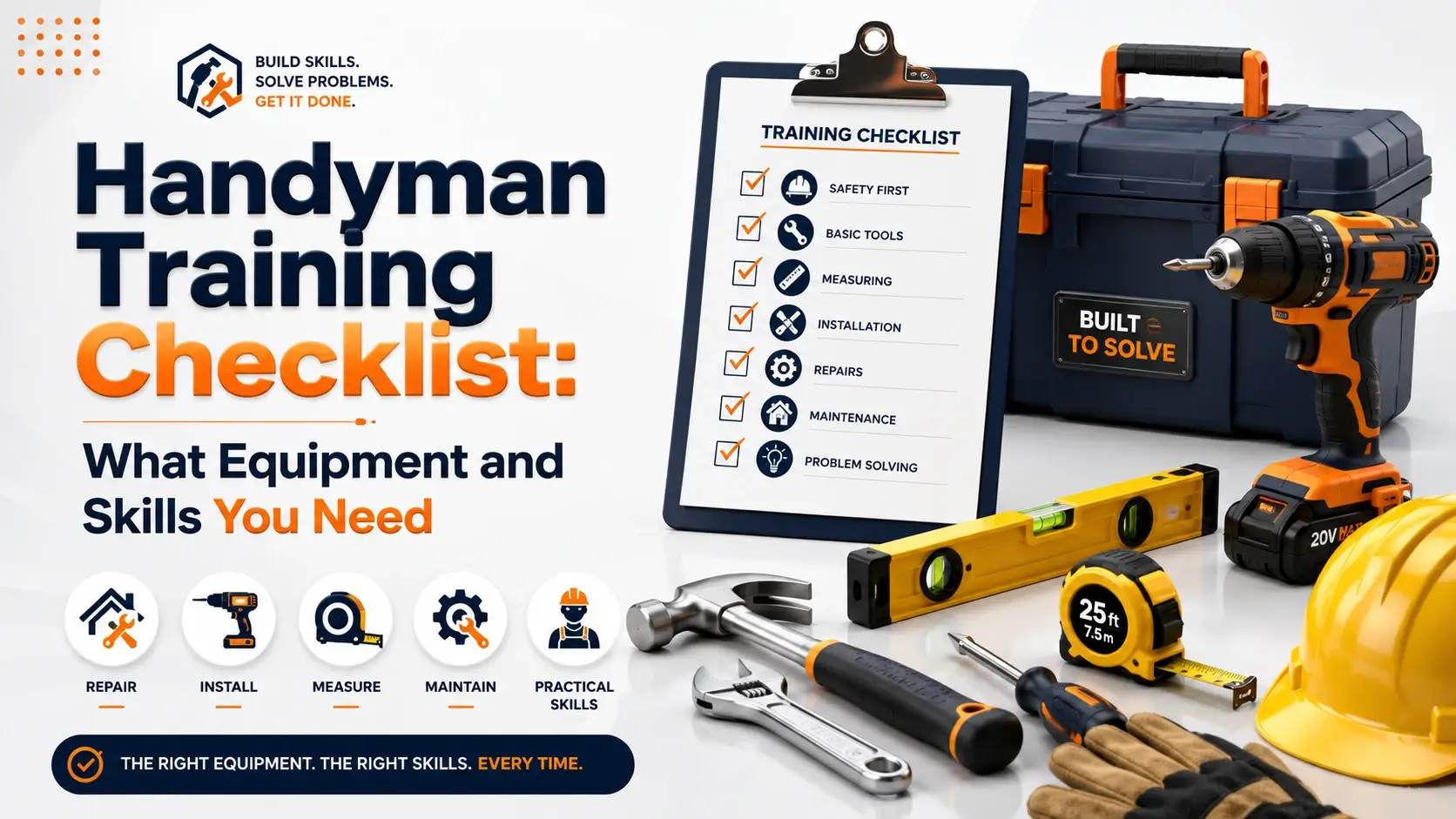
What makes a really good handyman isn’t how big your toolbox is – it’s knowing exactly what to bring, what to get good at, and which jobs are right for you. Nail those basics from day one, and every job gets easier, clients trust you more, and you’ve got a solid base to build your whole career on.
Good gear matters, of course – but this work is just as much about common sense, doing things safely, thinking on your feet, and talking clearly to people. Get the right tools and learn the key skills, and you’ll get jobs done well without wasting money or getting stuck. It’s just as important to know where your limits are, and when you need extra training or to call in a specialist.
This checklist covers every bit of kit, practical skill, and professional know‑how you need before you start taking on paying work. Whether you’re setting up your own business or ready to move past just doing jobs for yourself and friends, these essentials will help you feel confident, do great work, and build something that lasts.
Table of Contents
Handyman Training
Develop practical repair, maintenance and DIY skills with Handyman Training. Learn essential tools, safety practices and techniques for everyday jobs.
The Core Hand Tools You Can’t Do Without
You don’t have to spend thousands in one go. Start with these – they will handle almost every job you’re likely to take on at first.
A reliable cordless drill and driver is the single most useful tool you’ll own, plus a full set of bits for different screws and materials. You’ll also need a good claw hammer, a range of screwdrivers including flathead, Phillips and Torx, and an adjustable wrench alongside a basic set of spanners.
Add pliers in long‑nose and side‑cutting styles, a sturdy 5‑metre tape measure, a spirit level at least 600mm long, a sharp Stanley knife with spare blades, a general‑purpose hand saw, and a caulking gun with a sealant remover tool. These are the items you’ll reach for every single day.
Safety Equipment: Never Cut Corners Here
Safety gear isn’t just something to buy for show – it protects you, and it shows clients you take your work seriously.
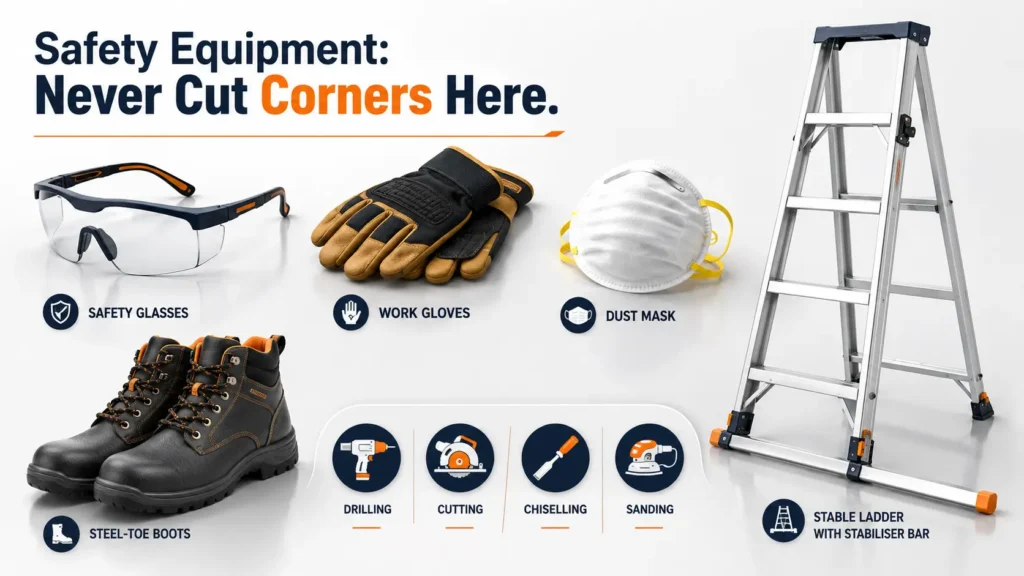
You need impact‑resistant safety glasses for any drilling, cutting or chiselling work, and a pair of tough work gloves that give you grip without making it hard to feel what you’re doing. A disposable dust mask keeps fine dust out of your lungs when sanding or cutting old materials. Steel‑toe safety boots with good grip are essential, and a solid ladder with a stabiliser bar is safer and more stable than cheap alternatives.
Power Tools Worth Adding Gradually
Once you have your core kit, you can pick these up as you start getting jobs that need them – there’s no rush to buy them all at once.
A jigsaw lets you cut curves or trim flooring neatly. A multi‑tool is brilliant for cutting skirting close to walls, removing old sealant or sanding awkward corners. Always keep a spare battery and charger for your drill too – running out of power halfway through a job looks unprofessional and wastes time.
How to Organise, Maintain and Transport Your Tools
Having the right gear is only half the work – keeping it organised, in good shape, and easy to carry will save you hours of frustration and look far more professional. Start with a sturdy tool bag or divided chest rather than a loose box; separate hand tools, power tools, and consumables like screws, nails, and sealants into clear labelled pouches or small cases. You’ll never turn up to a job and realise you left a vital bit at home again.
Get into the habit of wiping tools clean after every use, and check blades, cords, and batteries weekly. A blunt saw or dull drill bit makes work harder and risks accidents. For transport, secure heavier items low down in your vehicle so nothing shifts or gets damaged – and always carry a small first‑aid kit and spare basic consumables like wall plugs and tape in your daily bag. A well‑kept kit shows clients you take pride in your work, and stops you replacing items unnecessarily.
Equipment Priority Summary
| Priority | Category | Items | Typical Cost Range |
|---|---|---|---|
| First | Safety | Glasses, gloves, mask, boots, basic ladder | £80–£150 |
| Second | Core hand tools | Drill, hammer, screwdrivers, tape, level, knife | £150–£300 |
| Third | Extra essentials | Spanners, pliers, saw, caulking gear | £60–£120 |
| Fourth | Power add-ons | Jigsaw, multi-tool, spare batteries | £100–£250 |
| Later | Upgrades | Laser level, circular saw, dust extractor | £150+ |
Must‑Have Consumables and Spares You Should Always Carry
It’s easy to forget the small items until you’re halfway through a job and realise you don’t have them – wasting time and money running back to the shop. Keep a steady stock of the things you’ll use almost every day: mixed wall plugs, screws from 25mm to 75mm, nails, rawl bolts, silicone sealant in clear and white, filler, sandpaper in fine and medium grades, masking tape, and cleaning wipes.
Add a few universal tap washers, toilet cistern spares, and replacement light bulbs too – these tiny parts let you finish small jobs in one visit rather than coming back another day. Buy in bulk where you can to keep costs down, but only stock what you’ll actually use regularly. Running out of a £1 pack of screws can delay a whole morning’s work, so keeping these basics with you makes you faster, more reliable, and far more impressive to clients.
The Practical Skills Clients Ask For Most
These are the jobs that keep your diary full – master these first, and build new skills as you go.
Fitting and Carpentry
You’ll need to know how to fit shelves, curtain rails, TV brackets and mirrors securely. You should be able to fix sticking doors, loose hinges and broken handles, replace skirting boards or small fence panels, and put together flat‑pack furniture neatly so it feels solid, not flimsy.
Basic Repairs and Maintenance
Learn how to replace tap washers, shower heads and toilet flush parts, clear simple blockages in sinks and baths, patch small holes in walls before painting, and seal around baths, sinks and windows so water doesn’t get in.
What You Can And Can’t Do With Electrics
You can replace light switches, socket faceplates and light fittings – but only if you’re not changing any wiring or altering the circuit. Anything more than that falls under Part P building regulations, and needs to be done by a qualified electrician.
Extra Skills That Set You Apart From Other New Starters
You can stand out fast by picking up simple, high‑demand skills most new handymen skip. Learning how to hang wallpaper neatly, touch up paint without leaving marks, or fit basic blinds and curtains means you can take on whole rooms rather than just odd jobs. Basic tiling for splash backs or small floors is another big winner – clients often struggle to find someone for these smaller projects.
Also learn how to use a stud finder and cable detector properly – guessing where wires or pipes run is dangerous and unprofessional. A quick online course or short workshop on these extras costs very little, but lets you charge more per job and win work from people who want one person to handle everything, instead of hiring three different trades. Master these first, and you’ll be busy long before people who only offer the most basic repairs.
Rules And Safety Knowledge You Must Understand
Knowing what you shouldn’t do is just as important as knowing what you can.
You must never attempt any gas work at all – it’s illegal and extremely dangerous unless you’re fully Gas Safe registered. When working at height, only use ladders for short, light tasks, never overreach, and always check rungs and feet before you climb. You should also understand the basics of storing paints, glues and chemicals safely under COSHH rules.
Public liability insurance isn’t always a legal requirement, but almost every client, estate agent or business will ask to see it before you start work – aim for cover of at least £2 million.
Useful Training And Certification
You don’t need long college courses, but these short programmes will make you safer, easier to insure, and more trusted by clients.
Working at height awareness teaches you how to use ladders properly and spot risks. COSHH awareness covers chemical safety. Part P awareness explains exactly what electrical work is legal for you to carry out. A basic handyman skills course fills in the standards and best practice you won’t pick up just from working at home.
Professional Skills That Make You Stand Out
Being good with tools is only half the job. Turn up exactly when you say you will, or call as early as you can if something comes up. Be clear about what a job includes and how much it will cost before you start, so there are no surprises later.
Tidy up properly when you finish, and take away your rubbish rather than leaving it for someone else. If a job is too complex or sits outside your legal limits, be honest about it – recommending a specialist shows you care about doing things right, not just taking the money.
Final Checklist Before You Start Your First Job
- Have all your core safety gear in good condition
- Own the tools you need for your most common jobs
- Understand the rules around gas, electrics and working at height
- Have public liability insurance arranged
- Can explain clearly what you do and don’t offer
- Have practised your key skills on your own home or for friends
Conclusion
You don’t need a perfect kit or every qualification to begin. Start with safety, build your tools around the work you actually get, and master the basics thoroughly before adding more.
What matters most is that you work carefully, stay within what you’re trained and allowed to do, and treat every client’s home with respect. That’s how you build a reputation that brings work back again and again.
Frequently Asked Questions on Handyman Training Course: What Equipment and Skills You Need
A beginner’s handyman toolkit should include a cordless drill, hammer, screwdrivers, pliers, adjustable spanner, tape measure, spirit level, utility knife, hand saw and caulking gun. You should also have suitable safety equipment.
Handyman training commonly covers basic carpentry, furniture assembly, painting, decorating, minor plumbing repairs, wall repairs, sealing, tiling, tool handling and general property maintenance.
No. Most handyman training courses are suitable for beginners and provide step-by-step guidance to help learners develop practical skills, use tools safely and complete common household repairs.
Essential safety equipment includes protective glasses, work gloves, dust masks, hearing protection, steel-toe boots and suitable workwear. A stable ladder and a basic first-aid kit are also important.
A basic toolkit and essential safety equipment may cost approximately £300 to £600. The total cost depends on the quality of the tools and whether you purchase additional power tools.
Yes. Handyman training can provide the practical knowledge needed to offer repair and maintenance services. You will also need customer service, pricing, scheduling and job-estimation skills to operate professionally.
A handyman may fit shelves, assemble furniture, repair doors, replace handles, patch walls, reseal baths, install curtain rails, complete minor decorating work and carry out basic property maintenance.
A handyman should only complete electrical tasks that are legally permitted and within their training and competence. Gas work must always be completed by a suitably qualified and Gas Safe registered professional.
Public liability insurance may not always be legally required, but it is strongly recommended. Many homeowners, landlords, estate agents and commercial clients expect handymen to have appropriate insurance before starting work.
Useful training includes handyman skills, working at height awareness, COSHH awareness, electrical safety and basic first aid. Additional courses in carpentry, tiling, painting or plumbing can help expand the services you offer.
Recent Posts

Poultry Management Training: Fees and Entry Guide
August 1, 2026

eBay Selling Guide: Secrets to Building a Profitable Store
August 1, 2026

Hydroponic Farming Systems: Commercial Basics
August 1, 2026
How to Transition From a DIYer to a Professional Handyman
August 1, 2026

Conquer ADHD & Dyslexia: Level 3 Teaching Assistant Diploma
August 1, 2026
July 31, 2026


