Starting an oven cleaning business in the UK can be a practical way to build a flexible and profitable service business with relatively low startup costs. Ovens require regular deep cleaning, but many homeowners, landlords and commercial kitchens do not have the time, equipment or confidence to complete the work properly.
You can begin as a sole trader, work part-time or full-time, and gradually build a reliable customer base through local advertising, referrals and repeat bookings. However, long-term success depends on more than cleaning skills. You also need suitable equipment, safe working practices, accurate pricing, appropriate insurance and professional customer service.
This guide explains how to start an oven cleaning business in the UK, including the expected costs, essential tools, pricing strategies, legal responsibilities and practical ways to attract customers and grow your income.
Table of Contents
Level 2 Certificate in Oven Cleaning Training
Why Oven Cleaning Is Such a Strong Business Choice
It is worth understanding why this business works so well before you start. For one thing, demand never really drops. People cook every day, ovens get dirty whether it is a busy festive season or a quiet summer week.
Many people simply do not have the time or patience to scrub away burnt‑on grease and carbon. Others worry about damaging their oven or using the wrong chemicals. Professional cleaning is seen as a luxury that saves hours of hard work, and customers are happy to pay for that convenience.
Start‑up costs are very low compared to other trades. You do not need a workshop, a van or expensive machinery to begin. You can charge decent rates for a job that usually takes two to three hours, so you can make good money even with just a few clients a week.
Oven Cleaning Business Startup Costs and Equipment
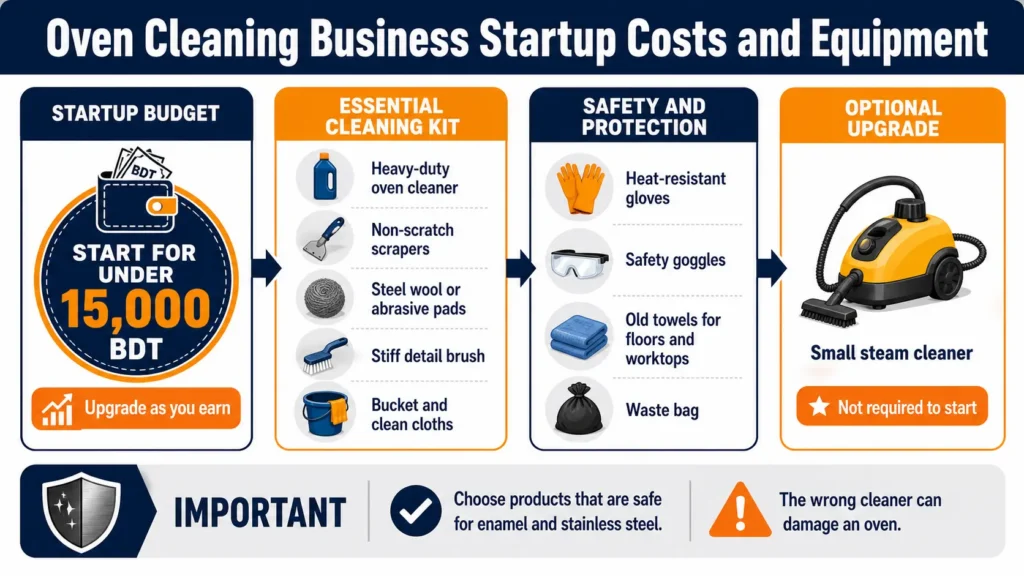
You do not need to spend thousands before you take your first booking. You can get everything you need for under 15 000 BDT to begin with, and upgrade later as you earn.
The basics are simple: heavy‑duty oven cleaner that cuts through burnt‑on food without damaging enamel or stainless steel, non‑scratch scrapers, steel wool or abrasive pads, heat‑resistant gloves, safety goggles, a bucket, clean cloths and old towels to protect floors and worktops. You will also need a small stiff brush for tight spots, and a plastic bag to carry away waste.
If you want to do a more thorough job, you can pick up a small steam cleaner later on, but you do not need one to start. Always choose products that are safe for different surfaces, using the wrong cleaner can ruin an oven and cost you money in replacements.
Oven Cleaning Training and Essential Skills
You do not need formal training, but you must know what you are doing. A good clean takes skill, and doing it badly will lose you customers fast.
Spend time practising on your own oven first, or ask friends and family if you can clean theirs for free or at half price. Learn how to remove shelves and panels safely, how long to leave cleaner to work, and how to rinse everything so no chemical residue is left behind.
Find out how to tell apart enamel, stainless steel, glass and catalytic liners ,each needs a different approach. Never use sharp tools on delicate surfaces, and never get chemicals on heating elements. If you are unsure about a part of the process, take your time to find out before you start work on a paying job.
How to Price Oven Cleaning Services in the UK
| Service or Pricing Factor | Typical Time | Suggested Price | Important Considerations |
|---|---|---|---|
| Standard single oven | 2–3 hours | 1,200–2,000 BDT | Include labour, cleaning products, travel costs and a reasonable profit margin. |
| Double oven | More than 3 hours | 2,500–4,500 BDT+ | The price should reflect the oven’s size, condition and required cleaning time. |
| Range cooker | Varies by size | 2,500–4,500 BDT+ | Consider the number of compartments, racks, burners and removable components. |
| Commercial kitchen oven | Varies by condition | 2,500–4,500 BDT+ | Heavily used equipment may require additional labour, specialist products and safety precautions. |
| Hob cleaning | Additional time required | Additional fee | Set the fee according to the hob type, size and level of grease buildup. |
| Extractor fan degreasing | Additional time required | Additional fee | Clarify whether filters, covers and internal components are included. |
| Full kitchen deep clean | Several hours | Custom quotation | Inspect the kitchen before confirming the final price and scope of work. |
| Door-glass removal and cleaning | Additional time required | Included or additional fee | Clearly state whether the glass will be removed and cleaned or only wiped externally. |
| Main oven cavity only | 2–3 hours for a standard oven | Base price | Specify which racks, trays, doors and removable parts are included. |
| Hourly earnings target | Not applicable | Calculate before pricing | Your rate should cover operating costs, travel, materials, taxes and a fair wage. |
| Local market comparison | Not applicable | Research competitors | Avoid pricing too low to make a profit or too high for customers to book. |
How to Find Your First Oven Cleaning Customers
You do not need a fancy website or big advertising budget to find your first work.
Start close to home. Tell friends, family and neighbours exactly what you are doing, offer a small discount for the first few jobs, and ask them to spread the word. Word of mouth is still the most powerful way to build this kind of business.
Put up simple notices in local shops, community centres, schools and apartment blocks. You can also join local Facebook groups or community pages ,just keep your posts friendly and honest, and avoid spamming. If you have a few good photos of work you have done, share those too ,seeing results convinces people faster than any description.
How to Deliver a Professional Oven Cleaning Service
How you behave matters just as much as how well you clean. Arrive on time, wear clean clothes, and introduce yourself clearly. Ask the customer to show you the oven and point out any areas they are especially worried about.
Lay down towels or sheets before you start so you do not make a mess in their home. Keep your voice low, work neatly, and put everything back exactly as you found it. When you finish, show the customer the result, explain what you have done, and ask if they are happy before you take payment.
Always carry a few spare supplies so you do not have to stop halfway through a job. If you are running late, send a message well ahead of time, reliability builds trust more than anything else.
UK Business Registration, Payments and Insurance
You can keep this very simple to begin with. Take cash, mobile banking or bKash ,whatever is easiest for your customer. Give them a handwritten note or a simple receipt showing what they have paid for.
You do not need complex accounts at first, but keep a basic record of what you earn and what you spend on supplies. This will help you see how much profit you are actually making, and make things easier if you decide to register the business later on.
It is also sensible to get basic public liability insurance once you start taking regular bookings. It costs very little, and protects you if you accidentally damage something or someone gets hurt while you are working.
Oven Cleaning Business Mistakes to Avoid
- Using harsh chemicals without checking what surface you are working on
- Quoting a price without seeing the oven first ,badly neglected ovens can take twice as long
- Forgetting to rinse away all cleaner, which can leave fumes or bad smells when the oven is next used
- Turning up without proper protection for floors and worktops
How to Grow a Profitable Oven Cleaning Business
Once you have a few happy customers, your business can grow steadily. Ask every customer if you can send them a message in six months or a year ,most people will book the service again once they have seen how much easier it is than doing it themselves.
You can also approach local restaurants, bakeries, guesthouses and office canteens. Commercial work pays better and can give you regular weekly or monthly contracts that keep your income steady.
As you earn more, you can invest in better equipment, put up proper signs on your bag or vehicle, and even take on help if you get more bookings than you can handle alone.
Final Thought: Start Your UK Oven Cleaning Business Today
Starting an oven cleaning business in the UK offers a relatively affordable route into self-employment. You do not need a large team, commercial premises or expensive machinery to secure your first customers. With the right cleaning products, practical training and a professional approach, you can begin offering services in your local area and build your reputation gradually.
Focus on delivering consistent results, protecting customers’ homes and communicating clearly about your prices and services. Encourage reviews, offer additional cleaning services and contact previous customers when their ovens may need cleaning again.
As demand increases, you can invest in professional equipment, expand your service area, work with landlords and commercial kitchens, or hire additional cleaners. A well-managed oven cleaning business can provide flexible working hours, repeat bookings and a dependable source of income.
Frequently Asked Questions on How to Start a Profitable Oven Cleaning Business in the UK
Start by learning safe and effective oven cleaning techniques, purchasing essential equipment and researching local demand. You should also choose a business structure, register with HM Revenue and Customs where required, arrange suitable insurance and create a clear pricing structure before accepting customer bookings.
A small oven cleaning business can often be started for approximately £500 to £2,000, depending on the equipment and products you purchase. Your initial budget may include cleaning chemicals, scrapers, brushes, protective clothing, insurance, marketing materials and transport costs. Professional dipping tanks and specialist equipment will increase the startup cost.
There is no specific legal qualification required to start a domestic oven cleaning business in the UK. However, professional oven cleaning training can help you understand different oven surfaces, chemical safety, appliance components and effective cleaning methods. Training can also improve customer confidence and reduce the risk of accidental damage.
Essential equipment includes oven cleaning products, non-scratch scrapers, brushes, microfibre cloths, protective gloves, safety goggles, floor coverings, buckets and waste bags. Many professional cleaners also use a heated dipping tank to clean oven racks, trays and removable components more efficiently.
Prices depend on the appliance type, size, condition and location. A standard single oven may cost around £50 to £80 to clean, while double ovens, range cookers and heavily soiled appliances usually cost more. Additional charges may apply for hobs, extractor fans, microwaves and commercial kitchen equipment.
Yes, an oven cleaning business can be profitable when services are priced correctly and travel time is managed efficiently. The business benefits from relatively low operating costs, repeat customers and opportunities to sell additional services. Profitability will depend on the number of bookings, supply costs, local competition and the time required for each job.
Public liability insurance is strongly recommended because it can protect you if you accidentally damage a customer’s appliance or property. You may also need business vehicle insurance if you use your car or van for work. Employers’ liability insurance is generally required if you hire employees.
Create a Google Business Profile, build a simple website and promote your services through local Facebook groups, community pages and directories. You can also distribute flyers, work with landlords and letting agents, and ask satisfied customers for reviews and referrals. Before-and-after photographs can help demonstrate the quality of your work.
Yes, many people start an oven cleaning business part-time while working another job. Evening and weekend appointments can be convenient for residential customers. As your bookings and repeat customers increase, you can decide whether to expand into full-time self-employment.
You can grow the business by encouraging repeat bookings, collecting positive reviews and offering related services such as hob, extractor fan, microwave and barbecue cleaning. Building relationships with landlords, letting agents, restaurants and commercial kitchens can also create regular work. As demand increases, you may invest in better equipment, expand your service area or hire additional cleaners.
Recent Posts