Having a health inspector or auditor turn up unannounced? It’s enough to make anyone’s heart race – even if you’ve been running your food business for years. But passing isn’t just about giving the counters a quick wipe-down. It means sticking to strict hygiene rules in every corner of your place. Whether you run a busy London restaurant, do catering, or own a local bakery, staying ready at all times is the only way to protect your good name and keep your customers safe. That means knowing food safety standards inside out and making sure your whole team follows them, every single shift. Get this right, and you’ll skip the panic of surprise visits and just focus on serving great food.
When the inspector walks in, they’ll look at how you work, using a system built to catch small risks before they turn into big problems. To get that top rating, you’ve got to match your daily routine exactly to what they’re checking for. Spend a little time on the key areas right before they arrive, and you can fix the simple mistakes that usually drag scores down. Once you know what they want to see, your normal way of working will already fit their expectations and that’s how you sail through.
Food Safety and Hygiene
Mastering Your Food Safety Audit Checklist
You must have a Food Safety Audit Checklist that is solid and isn’t staying in a manager’s drawer to stay ready. It should form part of your daily life in the kitchen. Auditors are not only interested in you talking about safety, they want to see it. They’ll review records, procedures and habits to verify that risks are kept top of mind on your team. Daily use of the checklist will help you identify issues early, maintain a well-functioning kitchen, and ensure you are always in compliance.
From the beginning, inspectors will observe your staff, including hand washing practices. Do storage areas have a neat appearance? Are raw food and ready-to-eat food separated from each other to prevent cross contamination? When things get busy it is critical that everyone on your team is aware of what to do and that you have systems in place to support them. This is as important as having good equipment and facilities.
Last-Minute Kitchen Cleaning That Actually Counts
| Cleaning Focus | What to Check | Why It Matters |
|---|---|---|
| Last-Minute Kitchen Cleaning | Focus on high-risk areas instead of only wiping visible surfaces. | Inspectors often check areas where grease, dirt, and bacteria build up over time. |
| Hidden Grime | Check fridge door seals, undersides of prep tables, and extractor hood filters. | Grease or old food in these areas can suggest that cleaning is not regular or thorough. |
| High-Touch Points | Sanitise door handles, ice scoops, tin openers, and other frequently touched items. | These areas can spread germs quickly if they are not cleaned properly. |
| Safe Cleaning Products | Use food-safe cleaning products approved for use in the UK. | This helps keep food preparation areas safe and hygienic. |
| Final Inspection Readiness | Make sure missed areas are clean, sanitised, and free from grease or food residue. | A clean kitchen shows inspectors that food hygiene standards are being taken seriously. |
Manage Waste & Drains Properly
Don’t be pulled down by your waste and drain areas. Inside bins should be clean, foot-operated and not be over filled. Outside bins need to be completely covered and secured to prevent pests entering. Inspect floor drains as well, to ensure they are not clogged and are draining properly. Bacteria and other unwanted guests love damp and stagnant areas.
Understanding HACCP Documentation
Food businesses must have a food safety management system based on HACCP principles. For many small food businesses, the Food Standards Agency’s Safer Food, Better Business pack can help structure daily checks, records and safe working procedures. They want consistent, honest notes that show you’re monitoring risks every day. Real, up-to-date data proves you’re in control and that’s exactly what they want to see.
Many businesses lose marks over simple gaps: missing temperature logs, unsigned cleaning rosters, or no notes on how problems were fixed. For example, if your fridge ran slightly warm one Tuesday morning, the auditor will want to know what you did about it. Did you move the stock to another chiller? Call an engineer? Check temperatures again afterwards? Taking action and recording it shows you have a strong safety culture and that’s what earns you a top rating.
How Your Food Hygiene Rating Is Calculated
To get ready, it helps to know how inspectors work. In the UK, the Food Hygiene Rating Scheme uses three key areas to score your business from 0 (urgent improvement needed) up to 5 (very good):| Inspection Element | What Auditors Check | Your Last-Minute Check |
|---|---|---|
| Hygienic Food Handling | How you prepare, cook, reheat, cool, and store food. Risks of cross-contamination and correct use of colour-coded equipment. | Confirm raw and ready-to-eat items are separated; check boards and utensils are used correctly. |
| Physical Cleanliness & Structure | The condition of your building, ventilation, lighting, handwashing facilities, and pest control measures. | Make sure handwash basins are clear, with warm running water, soap, and disposable paper towels. |
| Management & Safety | Your written HACCP plan, staff training records, and daily monitoring logs. | Check all logs are signed and up to date; ensure your allergen matrix is clearly displayed and accurate. |
Quick Checks for Your Temperature Logs
Before the auditor arrives, spend a few minutes testing your fridges and freezers. Use a clean probe thermometer to check the actual temperature of food, and compare it to the readings on your appliances. This simple step catches issues before they become problems.
Make sure all temperature records for the week morning and evening checks are fully filled in. If someone forgot to sign off during a busy shift, ask the person on duty to confirm the reading so you can complete the log. Blank spaces make it look like you aren’t paying attention and that will make inspectors look more closely. Keeping your records complete is the easiest way to show you’re staying on top of safety.
How to Handle the Inspection Itself
Stay Calm and Professional
A food safety audit is not only about kitchen cleanliness. It also checks how your team works, communicates, and follows procedures.
Answer Clearly and Honestly
If an inspector asks about cooking temperatures, allergens, or hygiene rules, staff should answer clearly and confidently based on their training.
Avoid Vague Answers
Do not try to hide problems or give unclear replies. This can make inspectors look more closely at your business.
Make a Good First Impression
Keep Handwashing Stations Clear
Handwashing stations should be clean, easy to access, and used only for washing hands.
Avoid Common Mistakes
Do not use handwashing sinks for washing pans, rinsing food, or preparing vegetables.
Show Good Food Safety Practice
Clean and properly used handwashing stations show inspectors that your business takes food hygiene seriously.
Food Safety & Hygiene Management for Supervisor
Your Final Hour Walk-Through
Right before the inspector arrives, walk through your whole premises just as they would looking for anything out of place. Make sure all containers are tightly sealed, clearly labelled, and dated correctly following your stock rotation system. Check shelves, fridges, and freezers from top to bottom.
Don’t miss these two quick but vital checks:
- Confirm your probe thermometer is clean, calibrated, and kept next to sanitising wipes.
- Make sure your allergen matrix matches every ingredient listed on your current menu.
Long-Term Readiness: Stay Ready Every Day
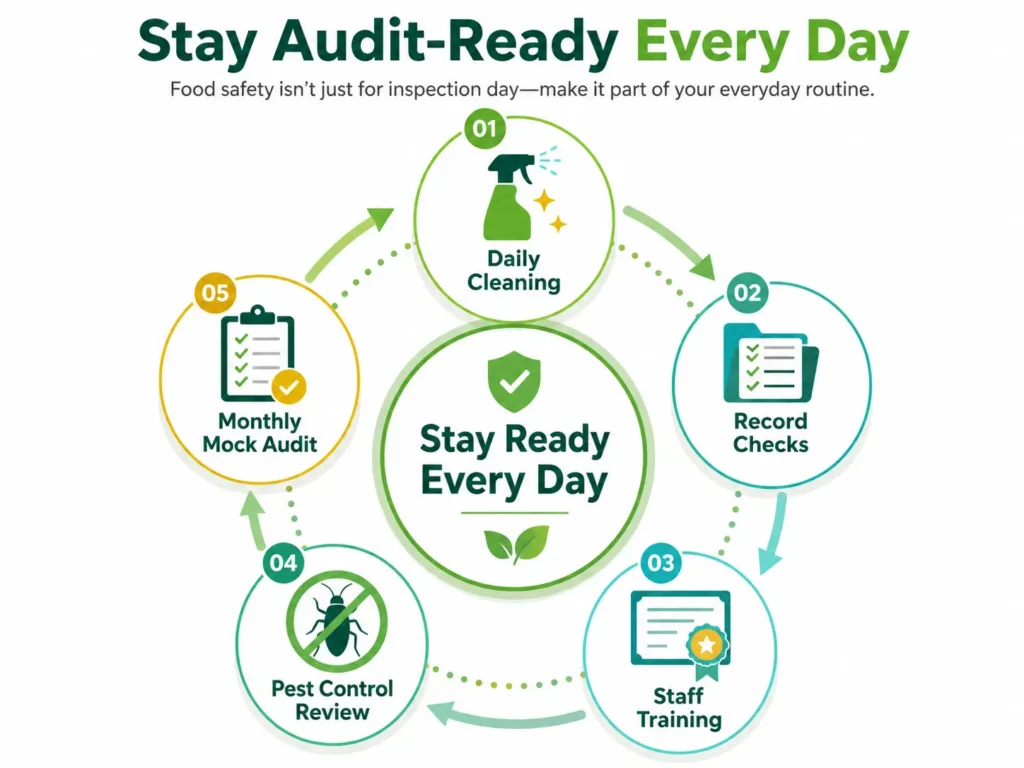
To keep a top rating, you need to move beyond “cleaning for the visit” and build safety into your daily routine. Businesses that hold onto 5-star ratings treat every shift like an inspection day. Set a regular schedule to review paperwork, update pest control logs, and renew staff training before it expires.
- Do a full mock audit every month using your checklist that picks up wear and tear or slipping habits early.
- Set a calendar reminder to re-calibrate thermometers regularly using the ice-point or boiling-point test.
Final Thoughts
Getting an inspection isn’t a one-day event. It’s all about creating a robust safety culture that is instilled in all aspects of your life. With standards high and records accurate, you’re not only keeping your customers safe, you’re keeping your business safe and its reputation intact.
Embrace these tips and your checklist with each service. See audits as an opportunity to demonstrate professionalism. Do not panic, remain organised and the seemingly stressful test can be your proof that you are a safe and reliable food business.
FAQs on Pass Your Food Safety Audit: Critical Last-Minute Tips for Success
A food safety audit checklist is a pre-audit/inspection checklist for food hygiene, food handling, documentation and legal compliance.
Ensure good hygiene, record keeping, ensure staff are properly trained and address any problems before the inspector visits. Preparing for last minute compliance is not as effective as doing it daily.
Ensure the kitchen is ready for inspection by focusing on food preparation areas, refrigeration units, cooking areas, floors, drains, waste disposal areas, handwashing stations and high touch surfaces.
For the food safety management system, the business must keep records such as hazard analyses, monitoring records, corrective action records, verification records, records of suppliers, staff training, and temperature records.
The inspectors evaluate food handling, cleanliness, structure and confidence in the management. These findings help to determine a rating from 0 (Urgent Improvement Necessary) to 5 (Very Good).
Periodic internal audits for each of the months is useful for many businesses and regular daily and weekly checks can aid the continuous compliance process. The frequency is determined based on the size, complexity and risk level in the operation.
Staff should remain nonjudgemental, polite and honest in their responses to questions. Staff should be able to answer questions about allergens, cooking temperatures or cleaning procedures clearly in response to an inspector’s question using their training.
The handwashing station will indicate to inspectors if basic hygiene rules are being followed. They should be clean, clear and easily accessible and used solely for hand washing.
Typical spots missed are fridge door seals, extractor hood filters, under prep tables, door handles, ice scoops and tin openers. Over time, if not cleaned regularly, these areas can become an accumulation of bacteria, dirt and grease.
By following daily cleaning procedures, maintaining records, monitoring temperatures, further training employees and conducting routine internal audits and inspections, a business can remain ready for action before issues arise.
Recent Posts