If you have been in poultry farming even for a short time, you will have heard people say: “A disease outbreak can take away what you built in months, in just a few days.” It is not an exaggeration. I have seen farms doing well suddenly lose half their flock or more, all because of small mistakes that could have been avoided.
Biosecurity is not some complicated scientific term. It simply means putting barriers between your birds and anything that carries germs. It is the cheapest, most effective way to protect your investment. You do not need expensive equipment or imported chemicals, mostly it is about being careful, consistent, and following common sense.
Here we break it down into three easy sections: first, stopping germs from reaching your farm; second, keeping them under control inside the shed; and third, building habits that keep your farm safe year after year.
Table of Contents
Keeping Germs Away From The Farm Gate
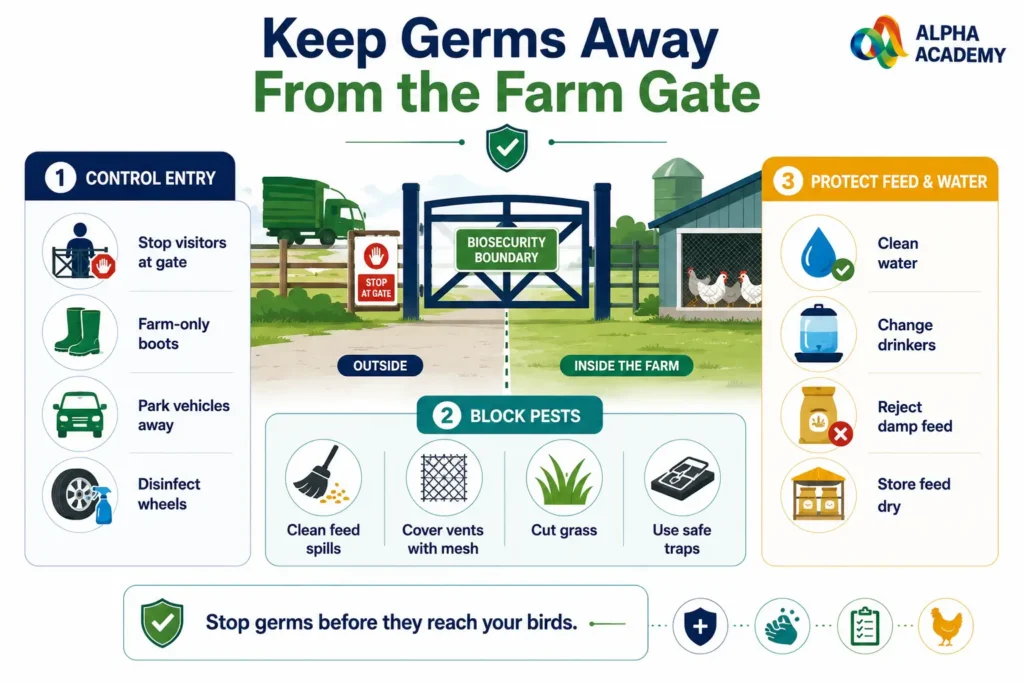
The best way to fight disease is to stop it from getting onto your land in the first place. Think of your farm like your own home, you do not let dirty shoes or unknown things walk straight into your living room. The same logic applies here.Control Who And What Comes In
Most germs do not fly in by themselves, they are carried by people, vehicles, and tools. Put up a simple fence or boundary line to mark where your farm begins. Do not let anyone just walk in whenever they want. If someone must visit , like a feed supplier, vet, or buyer , ask them to stop at the gate. Tell them gently that it is a rule to keep your birds healthy. Have a separate pair of rubber boots and a worn shirt or coat kept just for visitors. They must change into these before stepping any closer. Their own shoes may have walked through markets, other farms, or muddy roads where germs live. Vehicles are another big risk. Do not let trucks or bikes drive right up to the shed. Make a parking spot at least 10 to 15 metres away. If a vehicle has to come near, spray its wheels and lower body with a disinfectant mix. It takes only a minute but makes a big difference.Keep Out Wild Birds And Pests
Rats, mice, wild birds, and even stray dogs and cats are like taxis for disease. They move from place to place, eat waste, and leave germs wherever they go. Do not leave any feed or grain lying around outside. Clean up every spill right away , even a small handful of rice husk or feed is enough to attract rats. Cover all windows, vents, and openings with strong wire mesh so wild birds cannot fly in and perch above your flock. Cut the grass and weeds around the shed regularly. Tall grass gives rats and insects a safe place to hide. You can use traps or safe rodent poison, but put them in spots where your chickens will never reach.Check Water And Feed Quality
Water and feed are two things your birds take into their bodies every hour. If either is dirty, sickness will spread fast. Always use the cleanest water you can get. If you rely on a pond or open well, do not assume it is safe. Sometimes it looks clear but still carries bacteria. You can add a tiny amount of approved water sanitiser or boil it first if you have a small flock. Change the water in drinkers at least twice a day , especially in hot weather, when it gets warm and stale quickly. Buy feed only from suppliers you trust. When bags arrive, feel them. If they are damp, smell musty, or feel warm inside, reject them. That means mold is growing, and mouldy feed can poison your birds. Store feed in a separate room, raised off the floor on wooden planks, and away from walls where moisture seeps in.Inside The Poultry House : Daily Care And Cleanliness
Once you’ve done your best to keep germs from getting onto your farm in the first place, the next thing is making sure they don’t spread around inside where your birds live. This is where the small things you do every day make all the difference. To help you keep on top of it easily, here’s a simple breakdown of what needs doing, when to do it, and why it matters:| Activity | Frequency | Main Purpose |
|---|---|---|
| Check water supply and cleanliness | 2–3 times daily | Prevent dehydration and stop bacteria growing in stale water |
| Top up feed and remove spills | Morning and evening | Avoid hunger stress and stop attracting pests |
| Turn over litter and remove wet patches | Every 2–3 days | Keep the floor dry, reduce bad gas, and lower germ build-up |
| Clean and scrub drinkers and feeders | Daily or every other day | Stop dirt and slime from making water and feed unsafe |
| Observe bird behaviour and droppings | At least twice daily | Catch early signs of sickness before it spreads |
| Full cleaning and disinfection | Between every batch | Break the disease cycle and prepare the house for new chicks |
Level 3 Diploma in Poultry Farming
Work In The Right Order
If you have more than one shed or different age groups of birds, always visit the youngest ones first. Chicks have weaker immune systems and catch sickness much faster. Leave the older birds, or any that look unwell, for last. This way, you do not carry germs from older birds to the new batch.
Never go from another farm, a market, or even a place where there are other chickens, and then walk straight into your own shed. Wash your hands well with soap, change your clothes, and wipe your boots before going near your flock.
Clean And Disinfect Properly
Cleaning isn’t just about making things look tidy, it’s how you get rid of all the dirt and waste where germs live and grow.
Once you’ve finished with one batch of birds and sold them, never just put new chicks straight in. Take out every bit of old bedding, sweep out every corner, wash the floor and walls thoroughly with soap and water, then spray the whole house with disinfectant. Keep the shed shut and empty for at least a full week. This break is really important, it gives any germs left behind time to die out naturally.
While your birds are inside, don’t use strong chemicals, but always keep the bedding dry. Stir it through every two or three days. If you see any wet bits or notice a sharp, bad smell, scoop that part out right away and put down fresh rice husk or sawdust. When bedding stays wet, it gives off gas that damages their breathing and makes them weak and easy to get sick.
Their water and feed containers need checking every single day. Scrub them well, rinse them out completely, and fill them again. Dirty drinking water is one of the fastest ways to cause diarrhoea and sickness across your flock.
Handle Sick And Dead Birds Immediately
No matter how careful you are, sometimes a few birds will fall ill or die. How you act at this moment decides whether the rest stay safe.
If you notice a bird sitting alone, not eating, looking droopy, or passing droppings that are unusual, move it to a separate small cage or corner far away from the others. Watch it closely. If it gets better, keep it separate until it is fully strong again.
Never throw dead birds into bushes, rivers, or open fields. That is the worst mistake you can make, it spreads disease to every animal nearby and brings it straight back to your farm. Dig a deep pit at least 1 metre deep, far from the shed and water sources, put the bird inside, and cover it fully with soil and lime.
After touching sick or dead birds, wash your hands, your tools, and your boots thoroughly. Do not use the same shovel or basket for cleaning waste and for moving feed.
Building Long-Term Safety And Avoiding Mistakes
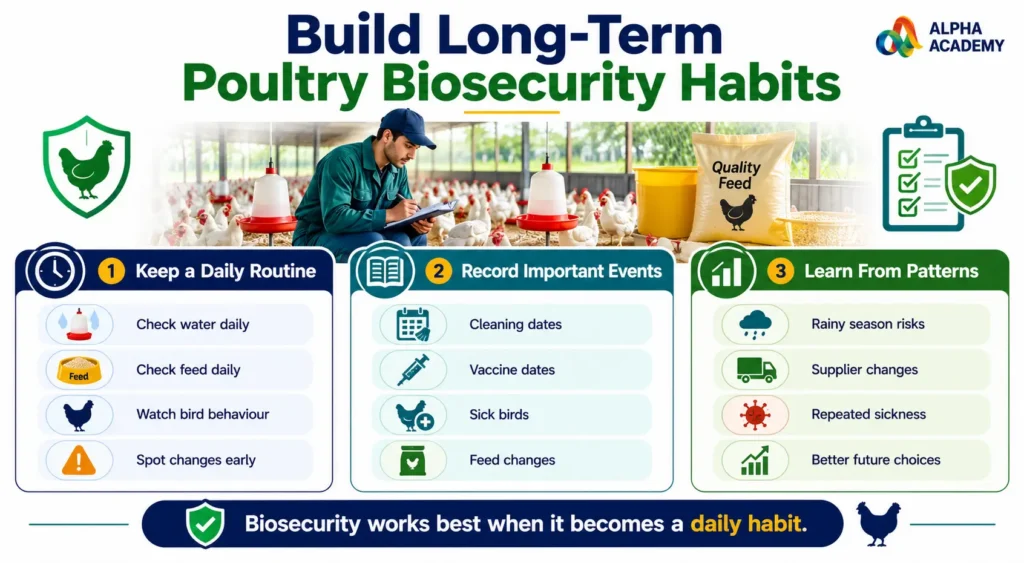
Biosecurity is not something you do once and forget. It becomes part of how you work. Once you get used to these steps, they will not feel like extra work, they will feel like protection for everything you own.
Keep A Simple Routine
Do not do things differently every day. Check water and feed at the same time each morning. Walk around the shed to watch how the birds behave. When you follow a pattern, you notice small changes right away, like one bird not eating, or water getting dirty faster than usual. That is when you stop a problem before it grows.
Keep a small notebook too. Write down when you cleaned the shed, when you gave vaccines, and if any birds fell ill. After a few batches, you will see patterns, maybe sickness comes when it rains heavily, or when feed prices go up and you switch suppliers. This helps you make better choices later.
Avoid These Common Errors
A lot of new poultry farmers lose money because of small mistakes that don’t look serious at first:
Overcrowding – Squeezing too many birds into one space causes problems faster than anything else. When birds don’t have room, they get stressed, their health drops, and diseases spread between them in no time. Always make sure there’s enough space for every bird to move around freely.
Reusing old litter – Some people try to save money by keeping the bedding from the previous batch. This is a risky move , germs can stay alive in that old material for months. It’s far better to spend a little extra on fresh bedding than to risk losing your whole flock to sickness.
Sharing equipment – Never borrow or lend cages, feeders, or tools unless you wash and disinfect them thoroughly yourself. Even if they look spotless, they can still carry germs from other places.
Ignoring early signs – If you notice just two or three birds acting off or looking unwell, don’t wait around hoping they’ll get better on their own. Speak to someone who knows what they’re doing, or call your local livestock officer straight away.
Work With Local Advice
You do not have to learn everything from books alone. Talk to other farmers nearby, ask your feed supplier, or keep the number of a vet or animal health worker saved on your phone. Local people know which diseases are common in your area and what works best in our climate.
Final thought: Poultry Biosecurity Protocols for Disease Control
Biosecurity costs almost nothing compared to what you could lose if sickness strikes. It is made up of small, daily actions, controlling who enters, keeping things clean, watching your birds closely, and being disciplined.
When you follow these steps, you are not just protecting chickens. You are protecting your income, your reputation, and the future of your farm. It takes effort at first, but once it becomes your way of working, you will find your losses go down, and your profits stay steady.
Frequently Asked Questions on Poultry Biosecurity Protocols for Disease Control
No. Many affordable disinfectants are available locally and work effectively. The most important step is removing dirt, manure, and organic material before applying disinfectant, because disinfectants work best on clean surfaces.
Leave the shed empty for at least seven to ten days. This downtime allows the building to dry properly and helps reduce any remaining bacteria, viruses, and other harmful organisms.
It is safer to keep different bird species separate. Ducks and other birds may carry diseases without showing symptoms, which can spread quickly to chickens and affect the entire flock.
Check your birds at least twice a day, preferably in the morning and evening. Look for changes in feeding, movement, breathing, droppings, egg production, or general behaviour.
Yes. Medicine treats birds after they become sick, while biosecurity helps prevent disease from entering or spreading on the farm. Prevention is usually cheaper, safer, and more effective than treatment.
No farming system can guarantee 100% protection. However, following proper biosecurity procedures can significantly reduce the risk of infection and prevent many serious disease outbreaks.
Visitors should be limited as much as possible. Anyone entering the poultry area should wear clean protective clothing and disinfect their footwear before and after entering.
Feeders and drinkers should be checked and cleaned daily. Other equipment, such as crates, tools, and cleaning materials, should be disinfected regularly and always before moving between sheds.
Separate the sick bird from the flock immediately. Monitor the remaining birds closely, clean and disinfect the affected area, and contact a veterinarian or animal health professional if symptoms continue or spread.
Dirty water can carry bacteria, parasites, and other disease-causing organisms. Provide fresh, clean water every day and regularly clean water containers, tanks, and supply lines to prevent contamination.
Recent Posts