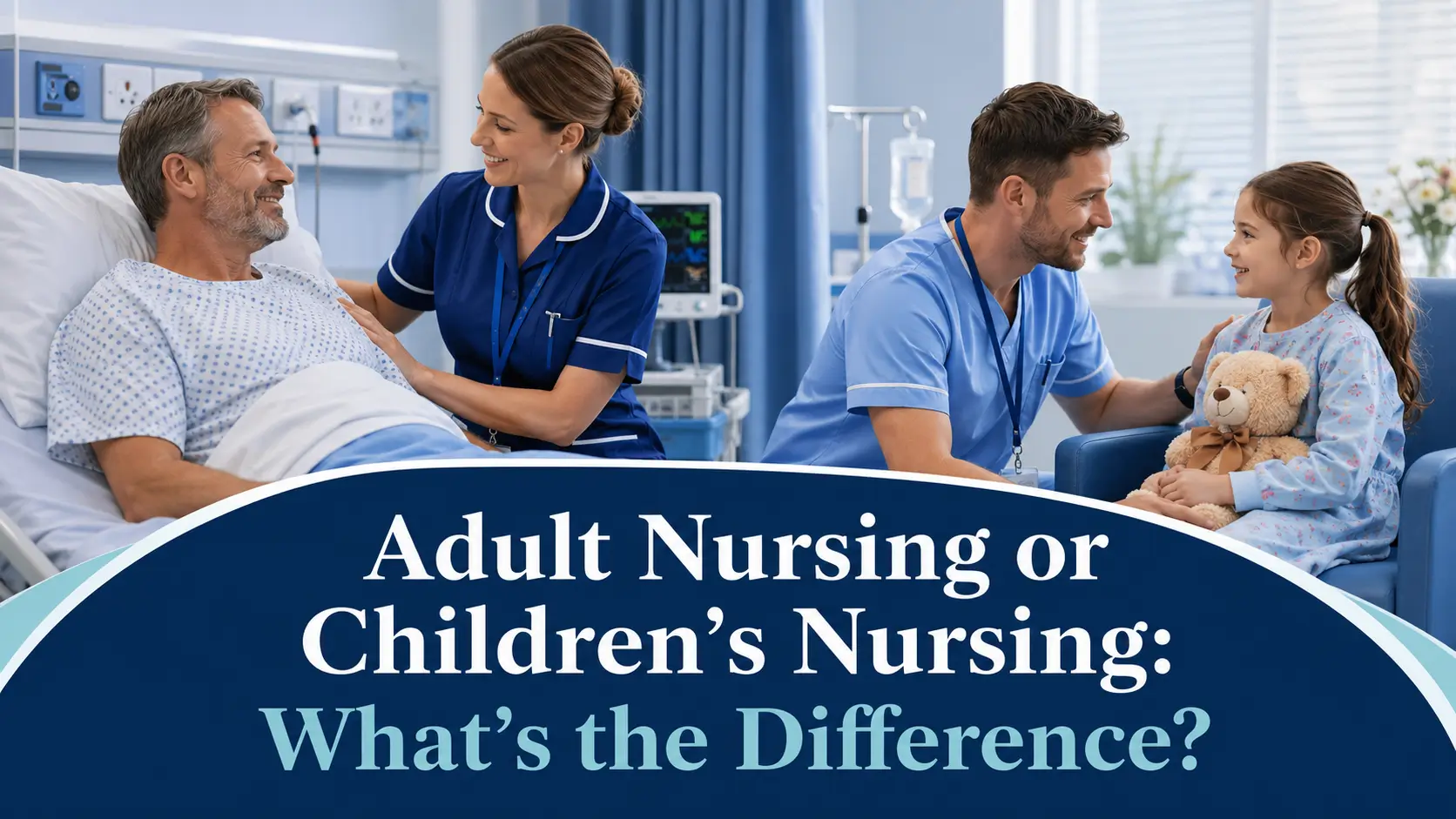
One of the most common questions in the UK nursing world is whether to choose adult nursing, children’s nursing or mental health nursing. This is a common question that gets asked in nursing forums, at careers fairs as well as in student WhatsApp groups. Although there are an array of different branches of the registered nursing profession,the day-to-day work, the patients being cared for, the healthcare settings and the skills developed are different
It is important for aspiring nurses to be aware of these differences from the outset if they are thinking about starting a nursing career in the UK. Communication, clinical judgement, emotional support and professional responsibility are all vital to patient care but are different ways of working in the various areas of nursing.
This guide compares three major nursing paths, real-life scenarios, training paths in the UK and tips to help you make an informed decision with confidence. It can be a useful comparison for school leavers, those with career changers or a person already in employment in health and social care, to help them make a decision on their strengths, interests and intentions for the future.
Why This Decision Matters More Than You Think
The UK nursing profession is not like many others, where you gain a basic qualification and add optional specialisms later. When you apply through UCAS or directly to a university, you will usually choose your field of practice early: adult nursing, children’s (paediatric) nursing, mental health nursing or learning disability nursing. After registration by the Nursing and Midwifery Council (NMC) in a specific area, changing to another area of work generally involves further training.
That’s why it is essential to pick the right nursing specialty right from the start. Your choice can influence your placements, the patients you serve, the clinical skills you build and the opportunities available following qualification. All routes can be a successful pathway into rewarding careers in the NHS and private healthcare but may feel vastly different depending on the branch you choose.
The aim is to understand the differences early and avoid second-guessing later. It will also provide you with an idea of what kind of nursing career you’re going for, and help you write a better personal statement to apply to the right nursing degree.
What Is Adult Nursing?
Adult nursing is the biggest branch of nursing within the UK, and is the type of nursing people think of when they picture a nurse. In many circumstances, adult nurses look after people aged 18 years and over – for example, when a patient breaks their ankle in A&E, when they have chemotherapy or when they are at the end of their life.
This may involve checking on vital signs, giving medicine, assisting with wound treatment and communicating with doctors about treatment plans, and providing emotional support for patients and families. Adult nurses can work in any of the following health care environments: hospital, GP surgery, care home, hospice and, more recently, in the community and in home-care.
If you are seeking variety, you’re not afraid of working nights or weekends and want as many doors open for you down the road, then you might want to begin your nursing career in adult nursing.
A Quick Real-World Scenario
Imagine that you are a nurse in a respiratory ward. One patient has pneumonia, and needs monitoring and reassurance. The next bed is a newly diagnosed COPD patient who requires education about inhaler technique and lifestyle changes. At lunchtime, the same nurse may already be working with a social worker to arrange the paperwork for the patient’s discharge. The life of an adult nurse is all about problem solving with vastly different physical and emotional requirements.

What Is Children’s (Paediatric) Nursing?
Paediatric nursing, also known as children’s nursing, focuses on patients from birth to around 18 years old. But it is not simply adult nursing for smaller patients — it is a different field of practice.
Sometimes children are not able to tell you what hurts or how they feel, particularly toddlers or babies. Therefore a lot of children’s nursing involves reading non-verbal cues, body language and behaviours. You’re also always dealing with parents and carers who are usually anxious and require as much reassurance as the child.
Children’s nurses may work in paediatric wards, neonatal intensive care units, community health teams, schools and children’s hospices. The care is family-centred by design, from treatment planning to discharge advice and the way a procedure is explained to a six-year-old compared with a 14-year-old.
A Quick Real-World Scenario
Imagine a paediatric nurse preparing a five-year-old child for a blood test. They may not use clinical terms, but rather play – “Give teddy an injection first,” to show what is to come. At the same time they’re keeping their parents updated on what’s next and calming them down. The combination of child and family is what makes paediatric nursing different.

What Is Mental Health Nursing?
The third major branch is mental health nursing, and likely the most misunderstood by those out of the healthcare field. Mental health nurses support people experiencing depression, anxiety, psychosis, eating disorders, addiction or severe trauma responses.
Mental health nurses are more concerned with therapeutic communication, risk assessment and establishing trust over time, unlike adult and children’s nursing, in which physical skills are paramount. You may spend your entire shift communicating with a patient who is in crisis, calming an agitated patient, or assisting a patient during a structured therapy session, as part of a care team.
Mental health nurses work in various settings, such as psychiatric hospitals, community mental health teams, crisis intervention teams, prisons, and more recently in GP surgeries, in integrated care. There has been an increase in the mental health nursing workforce in the UK over the last several years, in part due to the increased awareness of mental health problems among the public and the increased referral for anxiety and depression.
A Quick Real-World Scenario
If you’re thinking of a career in mental health, one role is a mental health nurse in a community crisis team. A call comes in about someone having a panic attack and experiencing suicidal thoughts. The nurse is not responsible for “solving the problem” with a medication chart, but is responsible to take a calm look at the situation and decide which action to take, including a safety plan, referral or hospital admission. This skill set is primarily related to relationships, communication and professional judgement.
Side-by-Side Comparison
| Factor | Adult Nursing | Children’s Nursing | Mental Health Nursing |
|---|---|---|---|
| Patient age | 18+ | Birth to ~18 | All ages |
| Core focus | Physical illness/recovery | Development + family care | Psychological wellbeing |
| Key skill | Clinical assessment | Communication with children/parents | Therapeutic relationship-building |
| Common settings | Hospital wards, GP, hospice | Paediatric wards, schools, NICU | Psychiatric units, community teams |
| Typical pace | Fast, task-driven | Family-centred, adaptive | Slower, conversation-led |
Training Pathways in the UK
Each route usually involves a three-year NMC-approved nursing degree (or a longer nursing degree apprenticeship programme that includes paid employment and study). Students typically need to have GCSEs with English and maths and A-levels or equivalent, as well as be able to demonstrate a commitment to care and a real interest in the nursing profession, especially for children’s and mental health nursing, where entry can be more competitive.
Across all fields, training is usually split between classroom learning and supervised clinical placement, meaning you’ll be in actual care settings well before you qualify. This is one of the most helpful aspects of the course – it is not until you actually spend six weeks on an actual ward that you will know if it is a good fit for you or not.
Whether you’re a school leaver looking to expand your knowledge of patient care, clinical procedure and professional standards or a career changer trying out adult nursing before committing to a full nursing course, The Complete Guide to Adult Nursing course is a great way to get a head start before applying.
The Complete Guide to Adult Nursing
Explore adult nursing, key responsibilities, required skills, career routes and training options in this complete guide for aspiring UK nursing professionals.
Salary and Career Outlook
Newly qualified nurses in all three specialisms usually begin on the Agenda for Change Band 5, with pay increasing with experience and progression into areas of specialism, senior roles and Bands 6, 7 and beyond. Please remember pay bands are subject to regular changes, so it is advisable to check the current bands from NHS Agenda for Change as opposed to those from previous years.
However, when it comes to demand, it is easy to see why adult nursing is the biggest nursing category in terms of numbers, given the wide range of services that fall within that category. There are also fewer training opportunities for children’s nursing nationally, so it can be more competitive to gain entry into the profession but also there are more consistently sought-after qualified paediatric nurses. There has been an increasing demand for mental health nurses in recent years, driven by growth in the NHS mental health services which incorporate new roles within primary care and schools.

Which One Is Actually Right for You?
Instead of asking which field sounds more impressive, think about which work environment energises you and which one might drain you.
If you enjoy diversity, prefer the most flexible career paths in the long-term, and are comfortable with a more accelerated clinical work pace, you may want to consider adult nursing. If you have a natural ability to be patient, enjoy working with families, and enjoy creative communication instead of frustration, you might be more likely to lean toward children’s nursing. If you prefer engaging in one-to-one conversation, are emotionally resilient, and are motivated by the thought of helping others not only through physical recovery but also psychological recovery, then you may be a good fit for mental health nursing.
A helpful exercise is to shadow a nurse in each field, even informally – or set up a ‘taster placement’ with your sixth form or college. Many students find that spending time in a paediatric ward or a mental health crisis team helps them decide which route suits them best.

Final Thoughts
There isn’t one “best” branch of nursing; there’s only one branch that suits your personality, interests and the sort of effect you would like to have. Adult nursing is wide and flexible. Children’s nursing offers a special, family-focused pathway. Mental health nursing is a relationship-based role that is more highly valued than ever in the UK’s health and care sectors.
Regardless of the path you’re taking, you should speak with working nurses, if available, seek placement experience and consider entry-level courses to gauge your interest before you sign up for a full degree. The right choice is not the one that sounds the most prestigious, but the one that keeps you motivated during difficult shifts years into the role.
FAQs on Adult Nursing or Children’s Nursing: What’s the Difference?
Adult nursing is dedicated to the care of adults (18 years and older) with physical health issues. Nursing for children helps babies, children and young people, and may involve working closely with their families. Mental health nursing involves the care of individuals who have emotional, psychological and mental health issues.
Adult nursing is generally the most flexible choice as it covers a variety of health care environments, from hospital to GP surgery, care home, hospice and community care. It also may lead to numerous specialist positions in your future career.
No. Children’s nursing also includes helping and supporting parents and carers, explaining to children in an appropriate manner and understanding what children are communicating through their behaviour, body language and feelings.
Mental health nurses should be able to communicate well, be patient, emotionally resilient and have a capacity to build trust. They need to evaluate risks and also provide support to those in crisis, while collaborating closely with broader health care teams.
Yes, but often some study or NMC-recognised training is necessary for switching. That’s why it’s crucial to know about every nursing specialty before deciding on your degree or training route.
Yes. The majority of nursing jobs will require an NMC-approved nursing degree or a nursing degree apprenticeship for adults, children and mental health. Training usually includes classroom learning and supervised clinical placements.
The most family-focused route is children’s nursing, where nurses work closely with children, parents and carers. Care must be explained clearly and they must minimise anxiety and communicate to the child’s age and needs.
Yes. Mental health nursing is suitable for people who are good listeners, patient communicators and emotionally resilient. Typically, the focus of this role is on trust-building and the evaluation of risk and the support of people in challenging circumstances.
Adult nurses can find work in a variety of settings, such as hospitals, GP surgeries, care homes, hospices, community healthcare and in private clinics and specialist departments. This is one of the most wide-ranging nursing career paths.
Think about the type of patients you want to support, the work setting you prefer and your personal strengths. Shadowing nurses, volunteering in care settings or taking an introductory nursing course can help you make a more confident decision.
Recent Posts


July 1, 2026


