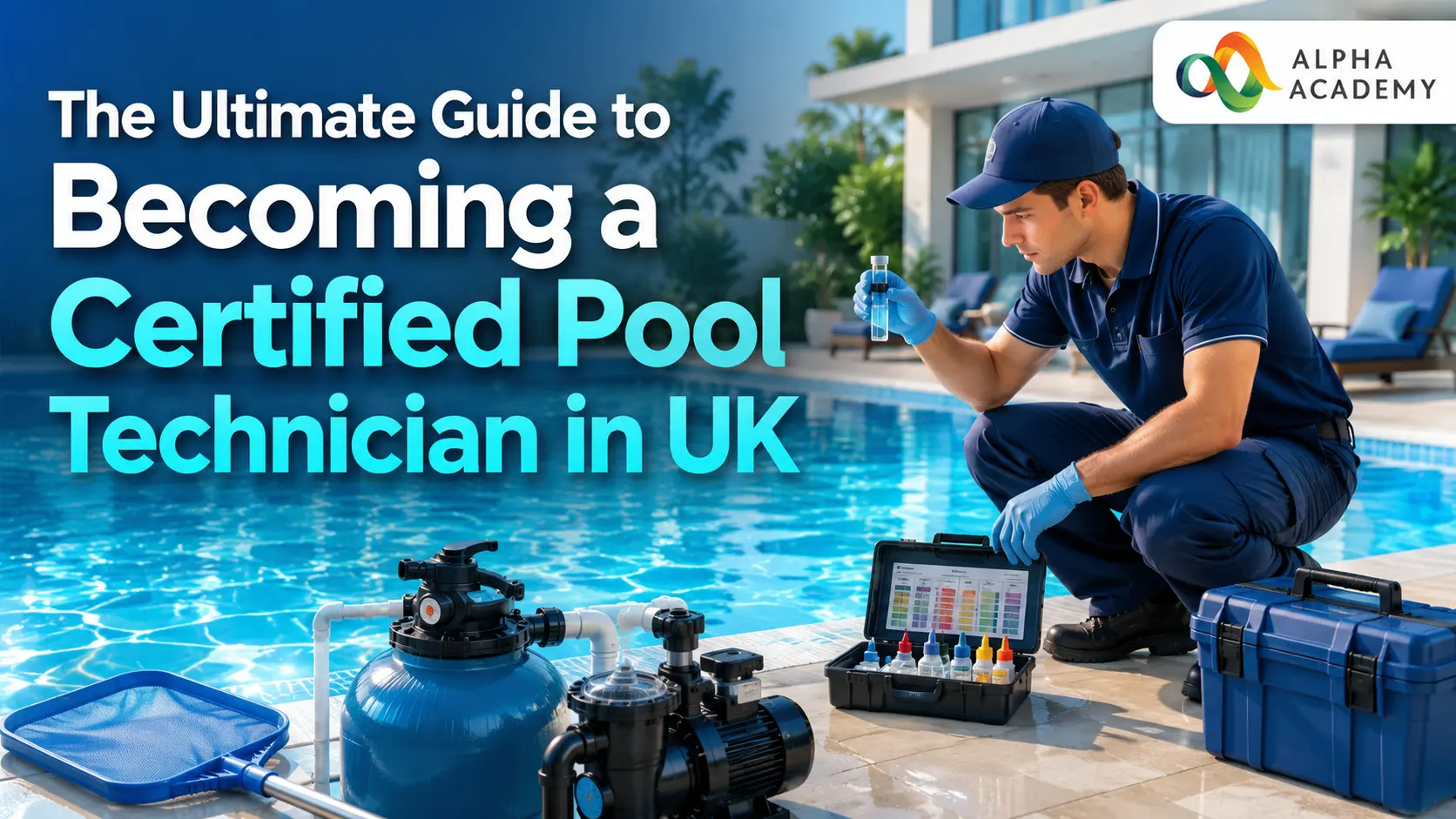
If you like working with your hands, figuring out how things work, and want a job that keeps you busy outdoors as well as in plant rooms, becoming a pool technician could be ideal. It’s much more than just keeping water looking blue,it’s about protecting public health, maintaining expensive equipment, and solving problems that can stop a pool from opening.
You might wonder why you need certification at all, when plenty of people say they “know how pools work”. The difference is that proper training teaches you what can go wrong, how to avoid harm, and how to do the job to a standard that clients and insurers can trust. This guide takes you through every step, from what you need to start, to where to get qualified, and how to turn it into steady work.
Table of Contents
Pool Maintenance Career Training
What The Job Actually Involves
It’s easy to think it’s mostly skimming leaves and emptying baskets, but that’s only a very small part. As a certified technician, your main focus is water safety and system reliability. You’ll test and balance pH, alkalinity, disinfectant levels and water hardness. You’ll inspect pumps, filters, heaters and valves, spot early signs of wear, and carry out routine servicing.
You’ll also handle seasonal work – opening pools after winter, closing them down properly, and bringing back water that’s turned green or cloudy. On public or commercial sites, you’ll keep written records, follow strict rules, and work alongside leisure managers or health and safety officers. Sometimes you’ll deal with leaks, broken controls, or equipment that needs replacing.
Why Certification Matters More Than Just Experience
You can pick up useful tips helping someone else for a few weeks, but you won’t learn the risks or the correct standards that way. A certificate proves you’ve been taught the right methods, not just whatever habit your last boss had.
Most importantly, it opens doors. Almost all leisure centres, hotels, schools and public facilities will only hire or pay technicians who hold recognised qualifications. Insurance companies will either refuse cover or charge you much more if you can’t show you’ve been trained. It also protects you ,if something goes wrong, having formal proof that you know the rules makes resolving it far simpler.
Which Qualifications Are Actually Recognised
There’s no single law saying you must have a licence to work on private pools in the UK, but these are the ones the industry respects:
Pool Plant Operator Certificate (PPOC) – the standard starting point. Covers water chemistry, filtration, chemical handling and basic maintenance. Good for residential and small commercial work.
Swimming Pool Technical Operator (SPTO) – goes deeper into plant room equipment, testing procedures, compliance and fault finding. Essential if you want to work on larger public pools.
BISHTA Registered Technician – shows you follow the industry code of practice and meet set standards. Looks very good to clients.
COSHH Awareness – you’ll need this to handle and store chemicals legally and safely.
City & Guilds or NVQ Level 2 and 3 are also available if you want to move into management or complex plant work later.
Skills You’ll Need Before You Start
You don’t need a degree or a background in science, but a few basic skills will help you a lot. You should be comfortable with simple maths – measuring chemicals, calculating pool volumes and working out flow rates. You need to be observant; noticing a small drop in pressure or a faint smell of chlorine can stop a big problem later.
Being reliable and careful matters more than anything else. You’ll be working in people’s homes or public spaces, so you need to be tidy, clear about what you’re doing, and respectful of rules. Good communication helps too – many clients won’t understand technical terms, so you’ll need to explain things simply.
Choosing A Course That Counts
Not every certificate carries the same weight. Avoid short online-only courses that don’t let you get hands-on – insurers and employers rarely accept them. When you’re comparing options, look for these things:
- Run by a provider recognised by BISHTA or ISPE
- Includes practical sessions with real filters, pumps and testing kits
- Covers both residential and commercial standards
- Ends with a formal assessment, not just a multiple-choice quiz
Comparing Common Certification Routes
| Qualification | Best Suited For | Time to Complete | Typical Cost |
|---|---|---|---|
| PPOC | Beginners, residential and small commercial | 2 days | £250–£400 |
| SPTO | Those aiming for public or larger commercial pools | 3–4 days | £400–£650 |
| BISHTA Registration | Technicians wanting industry recognition | 1-day assessment plus membership | £150–£300 plus annual fee |
| COSHH Awareness | All technicians, chemical safety | Half day | £50–£100 |
Safety And Legal Rules You Must Know
Safety is the heart of this job. You’ll learn how to handle strong acids and chlorine without creating dangerous fumes, how to store them separately, and what protective gear you actually need. You’ll also cover working near electricity, entering confined spaces like plant rooms, and disposing of waste safely.
You don’t need a special licence for private work, but you must follow health and safety law and environmental rules. Public pools are inspected regularly, and you’ll need to produce your certificates and work records if asked.
Getting The Right Insurance
Once qualified, insurance is essential. If you work for a company, they should cover you, but check what their policy includes. If you go self-employed, you’ll need public liability as a minimum. You should also look for pollution liability – chemical spills count as pollution and can be costly to fix and professional indemnity if you give advice or make recommendations.
Having your PPOC or SPTO certificate will bring your premiums down, because insurers see trained technicians as lower risk.
Building Practical Experience
Your course teaches you the theory, but experience teaches you how to apply it in real situations. Many people start as an assistant or trainee with an established company. This lets you see different pool setups, learn how to plan your day, and pick up tricks you won’t find in a manual.
You can also offer to help at a local club, community pool, or with friends who have their own pool. Keep a simple note of what you’ve worked on ,this will be useful when you apply for better roles.
Finding Work Or Starting Your Own Business
With your certificate in hand, you can apply to pool maintenance firms, leisure operators, or installation companies. These jobs often give you steady hours, a van, and access to training on new equipment.
If you want to work for yourself, register as a sole trader, get your insurance sorted, and start locally. Your certificate is your strongest selling point ,put it clearly on your website, cards and social media. Pool installers often need reliable technicians to hand over to, so introduce yourself to them early.
Keeping Your Qualification Up To Date
Most certificates last two to three years. Refresher courses keep you up to date with new regulations, changing products, and smarter equipment. You can also add specialist training later – for saltwater pools, spas, or smart control systems ,which lets you charge more and take on varied work.
Conclusion
Becoming a certified pool technician isn’t just about getting a piece of paper. It’s about building the knowledge and trust that let you do the job properly, keep people safe, and run a career you can rely on. It takes a few days of training and a willingness to keep learning, but it opens up work across residential, commercial and public sites.
Whether you want to work for a team or run your own business, certification is the foundation that makes everything else possible.
Frequently Asked Questions on The Ultimate Guide to Becoming a Certified Pool Technician in UK
A certified pool technician is responsible for maintaining swimming pools, testing and balancing water chemistry, servicing filtration systems, inspecting equipment, troubleshooting common issues, and ensuring pools remain clean and safe.
No. Many pool technician training courses are designed for beginners and provide step-by-step instruction in pool maintenance, water treatment, equipment servicing, and safety procedures.
You’ll develop skills in water testing, chemical balancing, filtration system maintenance, pool cleaning, equipment inspection, troubleshooting, and preventative maintenance.
Yes. Certification demonstrates your knowledge and practical skills, helping you stand out to employers and clients while supporting career progression in the pool maintenance industry.
The time required depends on the course provider and study format. Many online courses allow learners to progress at their own pace and complete the training within a timeframe that suits their schedule.
A pool technician certification can lead to roles in residential and commercial pool maintenance, leisure facilities, hotels, resorts, property management, or self-employment running your own pool service business.
Yes. Most entry-level courses are designed for beginners, introducing the core principles of pool maintenance, water chemistry, equipment care, and health and safety in an easy-to-follow format.
Training often includes pool water chemistry, filtration and circulation systems, chemical handling, cleaning methods, equipment maintenance, troubleshooting, safety procedures, and routine inspections.
Many pool technician courses are available online, allowing you to learn at your own pace and fit your studies around work, family, or other commitments.
Yes. Swimming pools at leisure centres, hotels, health clubs, schools, holiday parks, and private properties all require regular maintenance, creating ongoing demand for trained pool maintenance professionals.
Recent Posts