

Thinking about learning Spanish but wondering whether the grammar, pronunciation or unfamiliar words will be difficult? You might be surprised by how much Spanish you can already recognise.
Spanish is generally one of the more accessible languages for English speakers to learn. Both languages share familiar vocabulary and a similar writing system, while Spanish pronunciation follows relatively consistent patterns. Although verb conjugations, grammatical gender and natural conversations take practice, these skills become more manageable as you gain experience.
The difficulty also depends on what you want to achieve. Learning enough Spanish for a holiday is different from holding detailed conversations or using the language professionally.
Here is what makes Spanish easier than expected, which aspects require more attention and how beginners can develop their skills confidently.
Table of Contents
Why Is Spanish Easier to Learn Than You Might Think?
Spanish has several features that make it approachable for English-speaking beginners. Familiar vocabulary, recognisable sentence structures and consistent pronunciation patterns can help you start communicating sooner than you might expect.
Spanish and English Share Familiar Vocabulary
English and Spanish share many words with similar spellings and meanings. These are known as cognates, and they can make learning Spanish easier for English speakers.
For example, the English words animal, hospital, natural and chocolate are written the same way in Spanish. Other words are slightly different but still easy to recognise. The English word important becomes importante in Spanish, while family becomes familia.
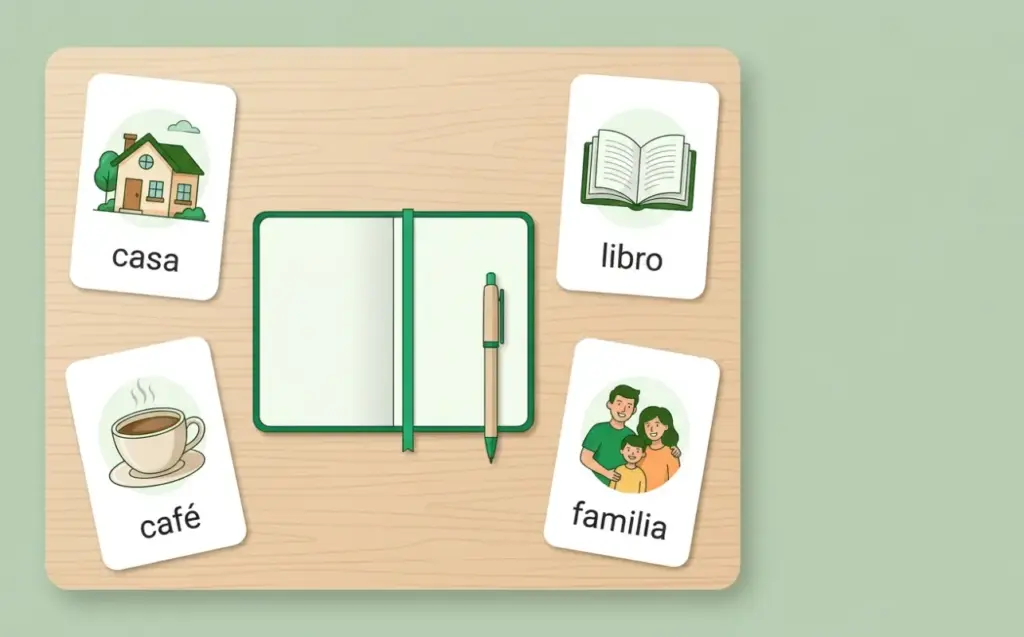
These similarities give beginners a useful starting point. You may recognise familiar words in Spanish sentences even before studying their meanings, making it easier to build your vocabulary.
However, not every similar-looking word has the same meaning. For instance, embarazada means pregnant, not embarrassed. Such words are called false friends. Being aware of them helps you avoid confusion and use Spanish vocabulary more accurately.
Spanish Spelling and Pronunciation Are Often Predictable
English spelling can be complicated because identical letters sometimes produce different sounds. Spanish generally follows more consistent spelling-to-sound patterns.
For example, words such as casa (house) and mesa (table) contain vowel sounds that remain relatively consistent.
Spanish also uses a familiar Latin alphabet, with distinctive features such as the letter ñ and written accent marks.
Once you become familiar with the basic sounds, reading Spanish words aloud often feels more straightforward. This consistency provides a useful foundation for pronunciation practice.
Beginners Can Start With Simple Sentences
Spanish and English frequently share similar sentence structures, making basic expressions easier to follow.
For example:
- English: I eat apples.
- Spanish: Como manzanas.
Spanish often leaves out subject pronouns because the verb ending indicates who acts. In this example, como already means “I eat”.
You can begin with greetings, introductions and everyday expressions before studying more complex grammar.
Following a step-by-step approach to learning Spanish can help you build on these simple foundations through regular listening, reading and speaking practice.
Limited Time Offer
Complete Spanish Online Course
Beginner to IntermediateGo from the alphabet and greetings to past, present and future tenses. Build the vocabulary and confidence to speak Spanish in everyday situations.
- 18+ Hours of Video
- No Prior Spanish Needed
- 4 Core Modules
- 1 Year Access
$19.99$319You save $299.01
Enrol Now
- 14-Day Money-Back Guarantee
- Self-Paced Learning
- Accredited Certificate Available
Save93%OFF
What Makes Spanish Difficult for English Speakers?
Every language has features that require practice, and Spanish is no exception. For English speakers, the main challenges often involve grammar patterns, verb forms and understanding natural speech.
1. Verb Conjugations and Different Tenses
Spanish verbs change depending on who performs an action and when it happens. English also changes verb forms, but Spanish uses more endings, which can feel unfamiliar to beginners.
For example, the Spanish verb hablar means “to speak”. Its form changes depending on the person:
- Hablo — I speak
- Hablas — You speak
- Habla — He or she speaks
- Hablamos — We speak
These examples use the present tense. Spanish also has different verb forms for talking about past and future actions.
Fortunately, many Spanish verbs follow regular patterns. Once you become familiar with common endings, recognising and using different verb forms becomes easier.
A practical starting point is to focus on frequently used verbs in the present tense. As your confidence grows, you can gradually introduce past and future forms.
Learning how Spanish tenses work can help you build accurate sentences and communicate more naturally without memorising every verb form at once.
2. Gendered Nouns and Grammar Agreement
Spanish nouns have grammatical gender. They are generally classified as masculine or feminine, which affects the articles and adjectives used with them.
For example:
- El libro — the book (masculine)
- La casa — the house (feminine)
- El libro rojo — the red book
- La casa roja — the red house
Notice how the adjective changes from rojo to roja to agree with the feminine noun.
A useful learning technique is to remember nouns together with their articles. Instead of memorising casa alone, learn la casa as a complete expression.
Over time, this helps you recognise common grammatical patterns more naturally.
3. Understanding Ser and Estar
English usually uses the verb “to be” in situations where Spanish uses two common verbs: ser and estar.
For example:
- Soy estudiante — I am a student.
- Estoy cansado/cansada — I am tired.
Both examples use “I am” in English, but Spanish requires different verbs.
The distinction depends on meaning and context. Learning when to use ser and estar through everyday examples makes the difference easier to recognise.
Practising expressions about identity, location, feelings and conditions is a useful starting point.
4. Pronunciation and Understanding Spoken Spanish
Spanish pronunciation is relatively consistent, but some sounds may be unfamiliar to English speakers.
The rolled RR, for example, requires a tongue movement that many learners need to practise. Listening carefully and repeating short words can help improve pronunciation.
Understanding spoken Spanish is another skill that develops through regular exposure.
Might you recognise ¿Cómo estás? (How are you?) in writing but need more listening practice to understand it during a quick conversation.
Spanish speakers also have different regional accents and speaking styles.
Listening to short recordings, following conversations with transcripts and repeating useful phrases can help you recognise spoken words more confidently.

Is Spanish Harder Than English? It Depends on the Skill
Whether Spanish feels harder than English depends on the particular language skill you are developing.
For English speakers, Spanish spelling may seem more predictable, while verb endings and grammatical agreement can feel less familiar.
Reading and writing also involve different challenges from listening and speaking. You might understand a written sentence but need more time to respond naturally during a conversation.
Your goals make a difference, too.
Someone preparing for a holiday in Spain may focus on ordering food, asking for directions and exchanging greetings. A learner who wants to discuss complex topics will need more advanced vocabulary and grammar.
Spanish becomes easier to approach when you focus on the communication skills that matter most to you.
How Can You Make Spanish Easier to Learn?

You can make Spanish learning more manageable by developing a few practical habits. The aim is to use the language regularly and build confidence through familiar situations.
Practise Common Words and Useful Phrases
Start with vocabulary that relates to everyday activities.
Greetings, food, shopping, travel and introductions provide practical topics for beginners.
Instead of memorising isolated words, practise short expressions such as Quiero un café (I want a coffee) or ¿Dónde está la estación? (Where is the station?).
Learning complete phrases helps you understand how vocabulary and grammar work together.
Listen and Speak From the Beginning
Speaking practice is useful even when you are just starting.
Listen to short Spanish recordings and repeat familiar phrases aloud. You could practise introducing yourself, describing your day or asking basic questions.
Reading aloud also helps connect written words with their pronunciation.
Regular practice makes common sounds and expressions more familiar, helping you communicate with greater confidence.
Use a Manageable, Structured Learning Routine
A balanced learning routine combines vocabulary, grammar, listening and speaking.
For example, you might spend one study session reviewing useful phrases, listening to a short conversation and practising a few sentences aloud.
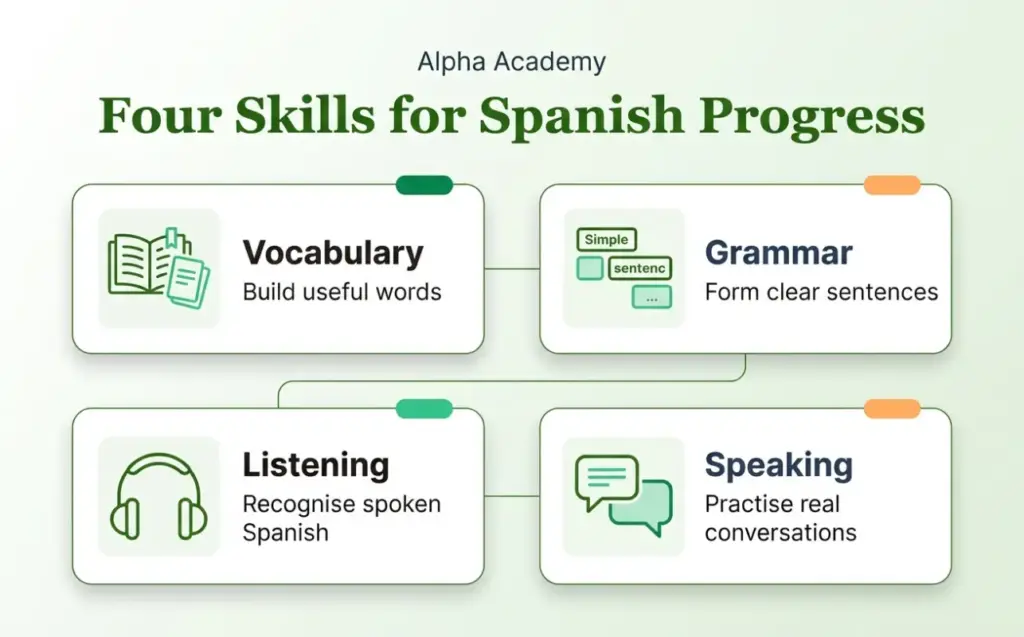
Short, regular sessions can be easier to maintain than occasional lengthy study periods, particularly when learning alongside work or family commitments.
Different resources suit different learning preferences. Apps can support vocabulary practice, tutors provide opportunities for interaction, and structured courses organise topics into a planned learning sequence.
For learners who prefer guided lessons, Alpha Academy offers the Complete Spanish Online Course – Beginner to Intermediate. The course introduces pronunciation, everyday vocabulary, grammar and verb tenses, progressing from basic expressions towards more complex language use.
Progress will vary according to your experience, consistency and learning goals. Understanding how long it takes to learn Spanish can help you set reasonable expectations while developing your skills.
Is Spanish Difficult to Learn as an Adult?
Adults can develop Spanish language skills regardless of whether they have studied another language before.
If you’re starting with no previous experience, a practical guide to learning Spanish from scratch can help you get familiar with the basics.
For many adult learners, the main consideration is finding a study routine that fits their responsibilities.
If you are balancing work, family and other commitments in the UK, manageable study sessions can make regular practice easier.
It also helps to begin with achievable communication goals. You might start by introducing yourself, ordering food or asking for directions before moving towards longer conversations.
The Common European Framework of Reference for Languages describes language proficiency across six levels, from A1 to C2. A1 and A2 represent basic language use, providing useful reference points for beginners.
Rather than expecting immediate fluency, focus on what you can communicate at each stage.
Final Thoughts: Is Spanish Worth the Effort?
Spanish is an approachable language for many English speakers, especially when learning begins with familiar vocabulary and practical expressions.
Its grammar, pronunciation and listening patterns become easier to recognise through consistent practice.
As you develop confidence, you can gradually move from beginner conversations towards more advanced communication skills. Choosing an intermediate Spanish course may provide further structure when you are ready to progress.
The most useful starting point is simple: focus on everyday language, practise regularly and build on what you already know.
Every consistent learning session brings you another opportunity to use Spanish more naturally.
Frequently Asked Questions About Learning Spanish
Yes. You can start learning Spanish without previous experience of another language. Familiar vocabulary, predictable spelling patterns and beginner-friendly lessons provide a helpful foundation. Learning everyday phrases and gradually developing grammar, listening and speaking skills can make the process more manageable.
Verb conjugations, grammatical gender and listening comprehension are common challenges for English speakers. However, the hardest aspect varies between learners. Some people become comfortable with grammar quickly, while others find speaking and understanding natural conversations easier to develop.
You can begin speaking Spanish while developing your pronunciation. The rolled RR is a distinctive Spanish sound, and practising it can improve clarity. Listening to native pronunciation and repeating words regularly can help you become more comfortable producing the sound.
Neither variety is universally easier. Spanish spoken in Spain and Latin America differs in certain pronunciation patterns, vocabulary and grammatical conventions. The most useful choice depends on your interests and communication goals. Learning either variety provides a foundation for understanding Spanish speakers from different regions.
Yes. Online lessons, listening materials, reading practice and conversations with Spanish speakers can help you develop your skills from home. Travelling provides additional opportunities to use the language, but it is not essential for building vocabulary, improving pronunciation or practising everyday conversations.
Thinking in Spanish may feel unfamiliar initially because beginners often translate sentences from English. As your vocabulary grows, you can start recognising common expressions without translating every word. Practising simple thoughts, such as describing what you are doing, can help Spanish feel more natural.
You do not need lengthy grammar lessons every day. However, regular exposure to common grammar patterns can improve your understanding. Practising short sentences, reviewing verb forms and using familiar expressions can help reinforce grammar alongside listening and speaking activities.
Yes. You can communicate in everyday Spanish while continuing to improve your grammatical accuracy. Familiar phrases, useful vocabulary and regular speaking practice can help you express basic ideas. As you gain experience, you can gradually develop more accurate and flexible sentences.
Many English-speaking beginners find written Spanish easier to recognise because its spelling patterns are relatively consistent. Speaking requires you to recall vocabulary, form sentences, and pronounce words in real time. Both skills improve with practice, although individual learners may progress at different rates.
Yes, Spanish television programmes and videos can support listening comprehension and introduce everyday expressions. Beginners may benefit from shorter clips with Spanish subtitles and clear dialogue. Replaying familiar scenes and repeating useful phrases can help connect spoken words with their meanings.
Recent Posts

Barriers in Health and Social Care for Autistic People
November 9, 2026
Ser vs Estar: When to Use Each (With Simple Rules and Examples)
November 5, 2026

Online Speech Therapist Training A Beginners Career Guide
August 24, 2026

Stop Guessing SEN: Get a Level 3 Teaching Assistant Diploma Now
August 13, 2026
November 11, 2026


