

You’ll find fresh juice bars everywhere on the British high street from Manchester’s Northern Quarter to the food halls in London’s Borough. But just as there’s a science to every juicery, there’s a technology and technique to each glass of vibrant green juice or thick tropical smoothie, which most home enthusiasts never truly master. If you are looking for “juicing for beginners UK” or “how to start juicing at home” or “blending vs juicing for weight loss”, this guide takes you step-by-step through what you need to do to get it done right- and how a structured Juicing and Blending Course can help you transform random YouTube hacks into real, sustainable skills.
Table of Contents
Why Juicing and Blending Have Become a UK Wellness Staple
The reasons behind juicing and blending being a staple of wellbeing in the UK.Juicing and Blending has become a UK health staple for a reason. Home juicing and blending has been increasing steadily in the UK for the last ten years and this has been due in part to increasing awareness of the need for 5 a day targets and in part by a general trend towards a home prepared whole food diet. Sales of these drinks are growing strongly in British supermarkets and independent health food shops, according to industry reports, which have echoed the growing trend in the UK to see convenience drinks as healthy, nutrient-dense options. This isn’t just a passing trend. Juicing and blending is part of an established tradition in the dietary world which has been around for a long time in ayurvedic and naturopathic circles, and has now been embraced by mainstream nutritionists as a popular way to get more fruits and vegetables in, especially for people who can’t eat enough whole produce in a hectic working week.The Difference Between Juicing and Blending
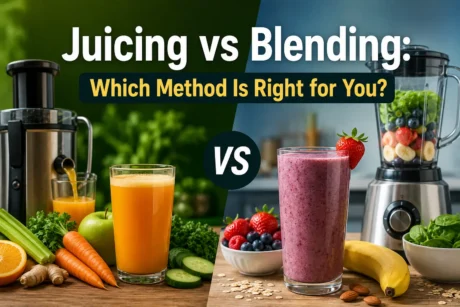
A lot of new juicers tend to think that juicing and blending are the same thing. They are not, and the first and most crucial step is to understand the difference. Juicing is the process of removing liquid from fruit and vegetables, and discarding the fibrous pulp. This results in a thinner beverage which is easily absorbed by the digestive system and provides nutrients without placing a heavy burden on the digestive tract. Blending, on the other hand, does not break up the whole fruit or vegetable, so that the drink becomes thicker and contains more of the original vegetable’s dietary fiber.| Feature | Juicing | Blending |
|---|---|---|
| Fibre Content | Removed or greatly reduced | Retained in full |
| Texture | Thin, liquid | Thick, pulpy |
| Digestion Speed | Rapid nutrient absorption | Slower, sustained release |
| Best Suited To | Nutrient boosts, detox-style resets | Meal replacement, satiety |
| Typical Equipment | Cold-press or centrifugal juicer | High-speed blender |
Getting Started: What Equipment Actually Matters
Many new music makers make the mistake of buying the most expensive machine on the market without knowing what it can do. It also helps to think about how much use is likely to be made of a kit in a given week, space requirements in a typical British kitchen and the amount of time available to spend cleaning up after use, as this is often the sticking point which prevents people from persisting.
Juicers: Cold-Press Versus Centrifugal
Cold press (or masticating) juicers turn out the juice slowly by crushing, which creates less heat and oxidation as many nutritionists believe, which helps prolong the activity of enzymes and vitamin activity in the product. However, centrifugal juicers have much faster spinning blades and are generally cheaper, faster to use and are more readily available in the mainstream stores in the UK, including Argos and John Lewis.
For someone juicing daily, a cold-press model typically proves more economical over time despite a higher upfront cost, since it extracts more juice per item of produce and the resulting juice keeps fresh in the fridge for a longer period.
Blenders: What to Look For
If you’re looking for a powerful blender for your home use in the UK, then you want one that can handle fibrous vegetables like celery or kale without leaving any stringy pieces behind. The lower powered blenders may have problems processing frozen fruit and clog, which can ruin the enjoyment of drinking. When it comes to choosing motor wattage and blade design over style, aesthetics and brand recognition, any serious green smoothie fan will heed the words of wise men and not the women or men.

Building a Foundational Juicing and Blending Routine
A lack of perfection is less important than consistency when beginning. Someone who juices three times a week for a year will reap more benefits than a person who juices very hard for a fortnight and then gives up altogether.
A reasonable starting layout for the week could look something like this:
- Two to three mornings to get into the habit of a juice that’s mostly vegetables, like a cucumber, celery, green apple and a small piece of ginger so it’s less bitter.
- Every morning 2 to 3 of these are prepared from a fibre-rich smoothie of leafy greens, banana for natural sweetness, and a protein source, whether it be natural yoghurt or plant-based protein powder, plus a little splash of oat milk.
The use of bullet points is limited on purpose: In most cases, there is a lot of practical detail in this guide, and it is conveyed in prose; this is because the process would be explained in a natural way to a knowledgeable practitioner in conversation, rather than conveyed as a series of steps.
Common Beginner Mistakes
Each of these is one of the most common mistakes made by new players. If you’re using juice as a way to get your daily dose of fruits and veggies, you might be using the beverages that are made from high-sugar fruit, which can cause blood glucose to rise quickly, and therefore, defeating the purpose of juice. Generally juice should be a combination of vegetables and little fruit to help balance flavor.
A common mistake is ignoring the pulp and fibre that are lost during juicing. This material can instead be used to make baking, soups or homemade vegetable stock, thereby not discarding this food and prolonging the use value of the food items purchased.
Lastly, many beginners don’t take into account the time it will take to clean. A juicer or blender will be much more stubborn to clean if it’s not cleaned for several hours and if it is not cleaned for too long, the residue may contain bacteria. When cleaning is part of the everyday routine, as opposed to “this is for cleaning later,” the habit sticks, and the weeks go by.
The Nutritional Case for Juicing and Blending
Fresh produce loses nutritional value over time once picked, largely due to oxidation and exposure to light and air. Juicing and blending, performed at home shortly before consumption, allow for near-immediate intake of vitamins such as vitamin C and folate, alongside minerals including potassium and magnesium, in a form more concentrated than eating the same volume of whole produce might allow.
That said, nutritionists generally caution against replacing whole meals entirely with juice, given the reduced fibre content in extracted juice and the risk of rapid blood sugar spikes if consumed on an empty stomach without any accompanying protein or fat. Blending tends to sit more comfortably within a balanced diet for this reason, since retained fibre slows digestion and supports steadier energy levels throughout the morning.
Supporting Digestive and Immune Health
Leafy greens such as spinach and kale, when juiced or blended regularly, contribute meaningfully towards daily micronutrient targets, particularly for people who find it difficult to eat sufficient vegetables through conventional meals. Ginger and turmeric, both popular additions to UK juice recipes, are commonly associated with anti-inflammatory properties, though it remains sensible to treat such claims as supportive rather than curative, and to consult a GP or registered dietitian regarding any specific health condition.
Why Structured Learning Beats Trial and Error
Free recipes scattered across social media can certainly provide inspiration, yet they rarely explain the underlying reasoning: why certain fruit-to-vegetable ratios work, how to balance flavour without resorting to excess sugar, or how to adapt recipes for specific goals such as improved skin health, athletic recovery or weight management.
This is precisely where a dedicated Juicing and Blending Course offers genuine value beyond what free online content typically provides. A well-structured course walks a learner through equipment selection tailored to budget and goals, ingredient combinations grounded in nutritional science rather than guesswork, food safety and hygiene practices essential for anyone considering selling juice commercially, and troubleshooting techniques for common problems such as overly bitter or watery results.
For anyone genuinely committed to making juicing and blending a long-term part of their lifestyle — rather than a habit abandoned within a month — investing in a properly accredited course represents a far more reliable path to lasting competence than piecing together fragments of advice from disparate sources online.
Who Benefits Most From a Formal Course
Home cooks wanting to improve family nutrition sit alongside personal trainers, wellness coaches and aspiring juice bar owners as typical course participants. Many people enrol not simply to drink better juice at home, but to build a credential that supports a wider career pivot into health and wellness, hospitality or nutrition coaching.

Practical Tips From Experienced Practitioners
Seasoned juicers and blenders tend to share several habits rarely mentioned in beginner guides. Freezing fruit in advance, for instance, not only extends its usable shelf life but also creates a naturally thicker, colder smoothie texture without diluting flavour through added ice. Rotating vegetable choices weekly, rather than relying on the same two or three staples, helps maintain a broader spread of micronutrients and prevents the palate fatigue that often leads people to abandon their routine. Storing juice in airtight glass containers, filled to the very top to minimise air exposure, helps preserve freshness for slightly longer than storing in partially filled bottles. Consuming juice within twenty-four hours remains the safest general guideline for home-prepared juice lacking commercial pasteurisation.A Simple Chart: Matching Goals to Method
| Personal Goal | Recommended Approach | Reasoning |
|---|---|---|
| Quick Nutrient Boost Before Work | Juicing | Fast absorption, minimal preparation time |
| Sustained Energy Through the Morning | Blending | Retained fibre slows digestion |
| Weight Management Support | Blending with Protein Added | Improves satiety, reduces snacking |
| Introducing Children to Vegetables | Juicing, Diluted with Fruit | Milder taste encourages acceptance |
| Post-Exercise Recovery | Blending with Added Protein Source | Combines carbohydrate and protein intake |
Making the Habit Sustainable Long Term
But for a home routine, it isn’t about willpower – it’s about lessening friction every day. Measurably, pre-washing and chopping the night before, keeping ingredients in easy reach, and keeping the juicer or blender out on the worktop, rather than in a cupboard, increase the chances that a morning routine will stick.
Budgeting is also crucial. Seasonal items, where possible, tend to be cheaper than exotic fruit items that are imported from overseas, and many greengrocers and farmers’ markets will sell “wonky” or surplus vegetables at a reduced price, ideal for juicing as appearance is not as important as freshness when broken down.
Seasonal Produce and the British Climate
Many new juicers don’t consider the effect this growing season has on the types of fruits and vegetables that are available in the juicer or blender over the course of the year. In the summer the variety of soft fruit becomes plentiful – strawberries, raspberries, stone fruit each have their own delicious flavor and can all be mixed into a thick natural smoothie without adding sugar. It’s all about apples, pears and root vegetables in the autumn, particularly beetroot, which is widely available and popular for its earthy sweetness and bright colour.
It is slightly harder in the winter as fresh soft fruit is less available and more expensive when imported. The fact that frozen produce tends to be at its peak ripeness when it’s frozen makes it an ideal addition to a smart diet, as nutrients may lose some of their value when they end up on the shelf in the middle of the country. Citrus fruit, on the other hand, is at its best in the cold months, so go for orange, grapefruit and lemon juice, which is high in vitamin C, helping to keep your immune system on track when colds and seasonal illness increase.
Spring is a natural time to try lighter and greener recipes, as asparagus, spinach, and early rhubarb are in season, and help to move away from the heavier, starchier recipes that can dominate winter drinking.
Sourcing Produce Responsibly
In addition to the seasonality, the origin of the produce is not only of economic but also of ecologic importance. One way to minimise transportation-related carbon dioxide emissions is to buy locally grown produce, which can also be fresher than produce that has had a long journey to the supermarket. Although organic produce tends to be more expensive, it is sometimes chosen for juicing because a large percentage of the nutrients and fibre are in the skins of many fruits and vegetables, and not removed to be cooked or peeled away.
While those on a more restricted budget may choose to buy organics for fruit consumed with the skin on like apples, pears, and cucumbers, for those who remove the skin (such as oranges and bananas), it is a more reasonable compromise.
Understanding Flavour Balance Like a Professional
Flavour architecture is one of the more advanced skills gained from a seasoned juicer that a novice may be lacking. Most of the successful juice and smoothie recipes follow a basic formula: a base with bulk and mild flavour like cucumber or apple; a flavourful ingredient that adds something like ginger or mint or citrus; and, when adding sweetening ingredients like fruits or sugar, making sure they’re balanced to offset any bitterness from the leafy greens or root vegetables.
The one most common reason that newbies give up on green juice after a few tries is because they are feeling bitter. Kale, spinach and celery are healthy and delicious foods, but they can be quite bitter on their own. Adding a small block of fruit, which will add some natural sweetness, then adding an acid component (such as lemon juice) usually reduces the bitterness significantly, without compromising the nutritional value of the drink.
Perceived flavour is also understatedly influenced by temperature. Some taste receptors are inhibited by the cold and a juice that is served immediately at room temperature will taste quite a bit different, often bitter, from the same recipe served chilled and enjoyed on a cold day. So too can a small handful of ice inside the blender, or refrigerating the ready vegetables beforehand, have a significant impact on enjoyment without changing the recipe.

Addressing Common Concerns and Myths
There is much misinformation floating around regarding juicing and blending, and a lot of it is not based on nutritional science, but rather in extreme detox culture. Claims such as “draining toxins” from the body in juice “cleanses” are not supported by clinical evidence, as the liver and kidneys do this on a daily basis, without the intervention of a juice program. The better way to put it is that juicing and blending help you to stay hydrated and get nutrients from the foods you consume, but don’t do anything special you wouldn’t be able to do with a healthy diet.
A common misconception is about sugar content. Although the natural sugar content of many juices is less than that of soft drinks, after juicing the high-sugar fruits like mangoes or grapes, the amount can be similar. While not all juices are bad, it’s important to watch your portions, and to use the ratio of vegetables to fruit more carefully than most casual juicers would expect, especially if you have a blood sugar disorder or have a weight loss objective.
Final Thoughts on Juicing and Blending for Beginners in the UK: A Complete Guide
Building genuine competence in juicing and blending is less about owning premium equipment and more about understanding the underlying principles: how fibre and nutrient absorption differ between methods, how to balance flavour without excess sugar, and how to build a routine resilient enough to survive a busy week. Free online resources offer a starting point, but for anyone wanting a structured, credible foundation , whether for personal wellbeing or a future career in the wellness industry , enrolling in a properly designed Juicing and Blending Course remains the most dependable route towards mastering the craft rather than merely dabbling in it.
Juicing and Blending Course
Explore juicing and blending techniques, healthy recipes, smoothie preparation, and nutrition basics in this beginner-friendly online course.
Frequently Asked Questions on Juicing and Blending for Beginners in the UK: A Complete Guide
For anyone juicing regularly, particularly with leafy greens, a cold-press juicer generally justifies its higher price through better yield, reduced oxidation and a longer shelf life for the resulting juice. Occasional users may find a centrifugal model perfectly adequate.
A juicer separates liquid from fibre, producing a thin drink, while a blender keeps the entire ingredient intact, producing a thicker drink that retains fibre. Both serve different practical purposes rather than one replacing the other.
A higher-wattage motor generally handles frozen fruit and fibrous vegetables more effectively, producing smoother texture with less effort, making it a worthwhile consideration for anyone blending several times weekly.
Price does not automatically guarantee suitability. The right choice depends on realistic usage frequency, ingredient preferences and budget, meaning a mid-range machine can suit many households perfectly well without overspending on unused features.
Longevity depends heavily on maintenance, cleaning habits and build quality, though many well-maintained mid-range and premium machines can perform reliably for several years before requiring replacement parts or full replacement.
Refurbished units from reputable retailers can offer good value, though second-hand marketplace purchases carry greater risk regarding hidden wear, and the likely absence of a manufacturer warranty should be factored into the decision.
Blenders generally involve fewer components and are typically easier and quicker to clean than juicers, which often include multiple parts such as filters, pulp containers and mesh screens requiring more thorough attention.
Certain combination machines exist offering both functions, though they often involve compromises in performance compared with dedicated juicers or blenders, meaning enthusiasts committed to both methods regularly may prefer separate, purpose-built machines.
How noisy are high-speed blenders compared with juicers?
Yes, a well-structured course typically includes practical equipment guidance tailored to individual goals and budgets, helping avoid costly purchasing mistakes that often arise from following generic online reviews alone.
Recent Posts
Juicing vs Blending: Which Method Is Right for You?
July 10, 2026


Turn AI Skills Into Income: 23 Freelance Work Ideas
July 9, 2026


23 Workflows to Start an AI Business from Home
July 9, 2026
July 10, 2026


