
Thinking about studying German but wondering how much time you’ll need? Whether you’re preparing for a trip, planning further education or developing a new skill, knowing the expected timeline can help you set realistic goals.
So, how long does it take to learn German? According to the Goethe-Institut in London, reaching A1 can take approximately 60–150 instructional hours, while reaching C2 may require 750 hours or more. Your actual progress depends on your experience, study commitment and opportunities to practise.
If you’re starting from scratch, Alpha Academy’s Learn German Language: Complete Beginners Level Course offers structured introductory lessons to help you build foundational language skills.
Table of Contents
How Long Does It Take to Learn German at Each CEFR Level?
German proficiency is commonly measured using the Common European Framework of Reference for Languages (CEFR). This framework divides language ability into six levels, from A1 for beginners to C2 for highly proficient users.
Understanding these levels helps you estimate the time needed to reach your preferred standard.
German Learning Hours From A1 to C2
The following table shows approximate cumulative instructional hours based on Goethe-Institut London guidance.
| CEFR Level | Estimated Cumulative Hours | 45-Minute Teaching Units |
|---|---|---|
| A1 – Beginner | 60–150 hours | 80–200 |
| A2 – Elementary | 150–260 hours | 200–350 |
| B1 – Intermediate | 260–490 hours | 350–650 |
| B2 – Upper Intermediate | 450–600 hours | 600–800 |
| C1 – Advanced | 600–750 hours | 800–1,000 |
| C2 – Proficiency | 750+ hours | 1,000+ |
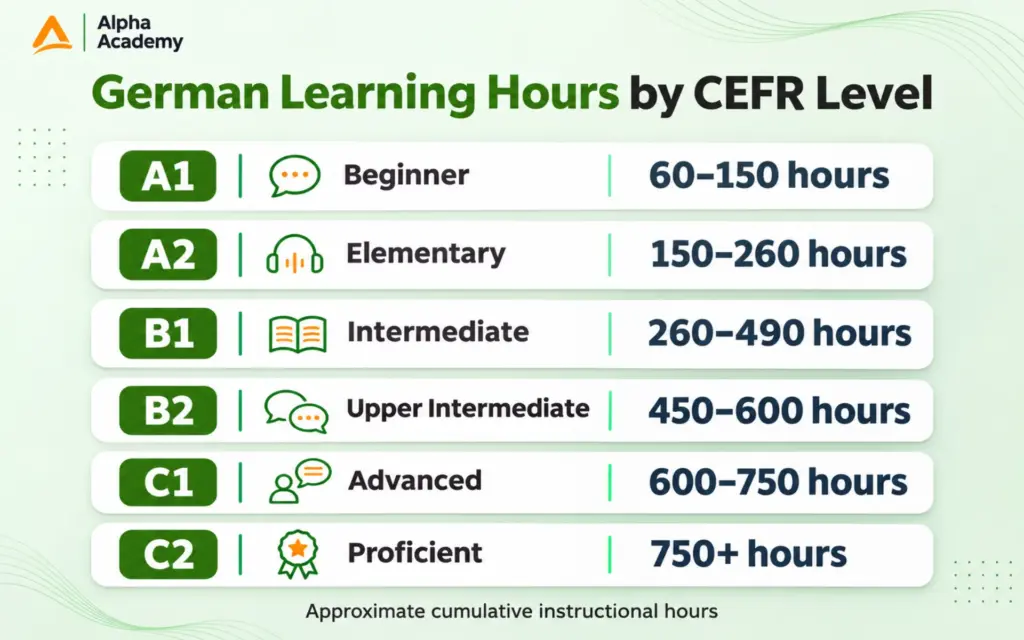
Important: These are cumulative estimates from the beginning of your studies. They are not additional hours required after completing each previous level or guaranteed achievement times.
If you’re focusing on your first milestone, our guide to what is German A1 level explains the skills and progress associated with this stage.
Why Do German Learning Hour Estimates Vary?
When asking how long it takes to learn German, it’s important to understand what different time estimates actually measure.
Some providers count classroom instruction, while others include homework and independent practice. The Goethe-Institut also uses teaching units of 45 minutes, which differ from full 60-minute hours.
Your progress ultimately depends on the language skills you develop, not simply the number of lessons you complete.
What Can You Do at Each German CEFR Level?
Each CEFR level represents a different stage of language independence.
The Goethe-Institut’s descriptions of German proficiency levels explain what learners can generally understand and communicate at each stage.
A1–A2: Basic Everyday German
At A1, you can introduce yourself, ask simple questions and understand familiar expressions when someone speaks clearly.
At A2, you can manage routine conversations about shopping, family, work and everyday activities.
For a broader starting pathway, our learn German for beginners guide covers the essential A1–A2 foundations.
B1–B2: More Independent Communication
At B1, you can discuss familiar subjects, describe experiences and explain straightforward opinions.
B2 allows you to understand more complex discussions, express viewpoints and communicate with greater independence.
C1–C2: Advanced German Proficiency
C1 supports effective communication in demanding academic, professional and social situations.
C2 represents highly developed comprehension and expression. However, reaching C2 does not automatically make someone indistinguishable from a native speaker.
Limited Time Offer
Learn German Online Course
Complete Beginners Level · A1 to A2+Start from scratch with essential vocabulary, pronunciation and basic grammar. Learn to introduce yourself, ask everyday questions and hold simple conversations in German.
- 16+ Hours of Video
- No Prior German Needed
- 59 Lessons
- 1 Year Access
$19.99$430.65You save $410.66
Enrol Now
- 14-Day Money-Back Guarantee
- Self-Paced Learning
- CPD-Accredited Certificate Available
Save95%OFF
How Long Does It Take to Learn German at Different Study Speeds?
Your weekly commitment significantly affects your overall timeline.
Someone studying consistently for ten instructional hours each week will generally accumulate the estimated hours faster than someone receiving three hours.
German Study Timelines at 3, 5 and 10 Hours a Week
| Target Level | 3 Hours/ |
5 Hours/ |
10 Hours/ |
|---|---|---|---|
| A1 | 20–50 weeks | 12–30 weeks | 6–15 weeks |
| B1 | 87–164 weeks | 52–98 weeks | 26–49 weeks |
| B2 | 150–200 weeks | 90–120 weeks | 45–60 weeks |
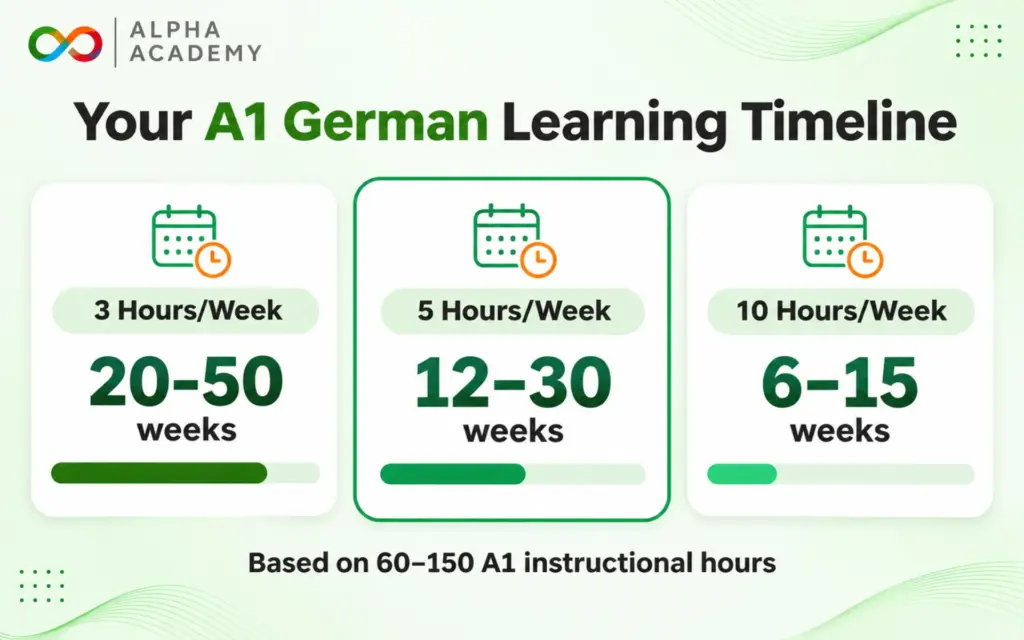
These calculations use the cumulative instructional-hour estimates. They assume consistent weekly instruction and do not include every hour of independent practice you may need.
Example: How Long Could Reaching A1 Take?
Suppose you’re a UK learner receiving five hours of German instruction each week.
Using the A1 estimate:
60–150 hours ÷ 5 hours per week = 12–30 weeks
This suggests approximately three to seven months of instruction.
However, reaching A1 still depends on your demonstrated listening, speaking, reading and writing abilities.
You can begin developing everyday communication skills with our collection of basic German phrases for beginners and travellers.
What Affects How Quickly You Learn German?
If you’re wondering how long does it take to learn German for English speakers, several factors influence the answer.
Previous Language Experience and Consistent Practice
English and German share linguistic roots, making some vocabulary recognisable. However, German sentence structures and grammatical rules can still take time to understand.
Previous experience with another language may also help you recognise useful study techniques.
For a closer look at these challenges, our article is German hard to learn for English speakers explains the main difficulties.

Consistency matters too. Regular, focused practice can reinforce vocabulary and language patterns between lessons.
Grammar, Study Methods and Feedback
German grammatical gender, noun cases and word order can initially challenge beginners.
For example, German articles change depending on their grammatical function. Our guide to German cases explained covers these structures in detail.
Rather than memorising every rule at once, practise using grammar in meaningful sentences.
Listening to natural German and receiving constructive feedback can also strengthen your communication skills.
How Can Beginners Make Steady Progress in German?
A manageable routine is often more sustainable than an ambitious schedule that becomes difficult to maintain.
Build a Manageable Weekly German Study Routine
If you have five hours available each week, consider this balanced approach:
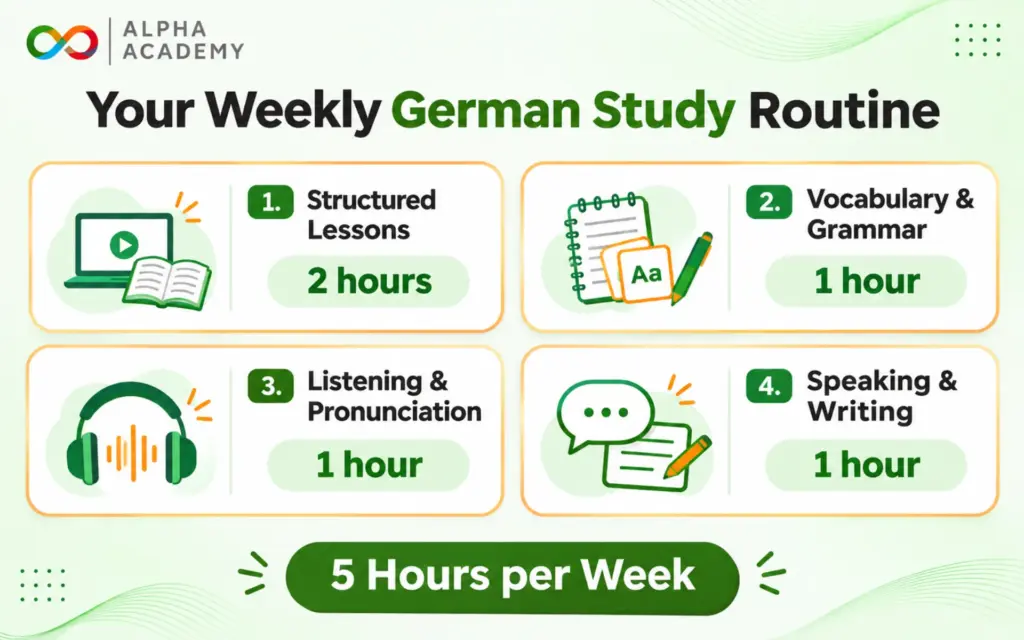
This example combines formal study with independent practice rather than representing five hours of instructor-led teaching.
Choose activities that suit your current level and regularly assess what you can understand or express.
Pronunciation deserves consistent attention, particularly when dealing with unfamiliar sounds. Our German pronunciation guide explains common challenges for English speakers.
Where Does a Structured German Course Fit?
For complete beginners, structured lessons can help organise vocabulary, grammar and speaking practice into a manageable sequence.
Alpha Academy’s Learn German Language: Complete Beginners Level Course provides 16 hours and 46 minutes of course content covering German vocabulary, pronunciation, sentence formation, essential grammar and everyday communication.
The course includes beginner-focused lessons on introductions, common expressions, basic conversations and practical language use.
You can work through the content at your own pace and reinforce it through listening, vocabulary revision and speaking practice.
However, the stated course duration is different from the total instruction and independent practice needed to demonstrate a particular CEFR level.
Which German Level Should UK Learners Aim For?
Your ideal German level depends on how you intend to use the language.
Choosing a Level for Travel, Study or Work
A1–A2 can support basic travel and everyday communication, while B1–B2 provides greater independence in familiar and more demanding situations.
Advanced academic or professional activities may require C1 or higher, depending on the institution, employer or role.
Choose your target according to your actual communication needs rather than assuming everyone must reach C2.
Checking Your German Level in the UK
If you need formal evidence of your proficiency, the Goethe-Institut offers German examinations in the UK at different CEFR levels.
Remember that completing an online training course and passing an independently assessed German language examination are separate achievements.
💬German Level Test
4 minutes
Final Thoughts
So, how long does it take to learn German? Your timeline depends on your target proficiency, weekly study commitment and the quality of your practice.
Start with a realistic CEFR goal, maintain a manageable routine and assess your progress through actual communication.
Alpha Academy’s Learn German Language: Complete Beginners Level Course provides a structured starting point for developing essential vocabulary, grammar, pronunciation and everyday communication skills. Combined with consistent independent practice, it can support your progress towards greater confidence in German.
Frequently Asked Questions
Yes, meaningful beginner progress is possible within three months, particularly with regular instruction and speaking practice. However, reaching a specific CEFR level depends on your starting point, available study time and demonstrated language skills.
There is no universal timeframe for fluency. Everyday conversational independence may develop around intermediate levels, while advanced academic or professional communication generally requires more extensive language proficiency and practice.
Thirty minutes of daily study adds up to approximately 3.5 hours per week. This can support steady progress, but the time required to reach a particular CEFR level depends on your study methods, instruction and opportunities to practise.
Yes. You can develop German language skills through online lessons, listening activities, conversation practice and independent revision while living in the UK. Regular opportunities to communicate in German can help strengthen your practical abilities.
Reaching B2 in German generally requires around 450–600 cumulative instructional hours, according to Goethe-Institut London estimates. At ten hours of instruction per week, this represents approximately 45–60 weeks. However, your actual timeline depends on previous language experience, consistent practice and opportunities to develop speaking, listening, reading and writing skills.
Recent Posts

50 Basic German Phrases for Beginners and Travellers
November 17, 2026

Deaf Awareness in the Workplace: Practical UK Guide
November 16, 2026

Intermediate Spanish Course Online: What to Look For Before You Enrol
November 13, 2026
Spanish Tenses Explained: Present, Past and Future Made Simple
November 12, 2026

Is Spanish Hard to Learn for English Speakers?
November 11, 2026
November 18, 2026


