















































































On this page
- What Is a 120-Hour TEFL Course?
- What Does a 120-Hour TEFL Course Cover?
- How Long Does a 120-Hour TEFL Course Take?
- Who Accepts a 120-Hour TEFL Certificate?
- How to Get a 120-Hour TEFL Certificate
- What Should You Check Before Choosing a 120-Hour TEFL Course?
- Final Thoughts: Is a 120-Hour TEFL Course Right for You?
- Frequently Asked Questions About 120-Hour TEFL
What Is a 120-Hour TEFL Course?
A 120-hour TEFL course is an introductory training programme for people interested in teaching English as a foreign language. It covers essential teaching methods, language skills and lesson planning to help beginners develop their teaching knowledge.
The terms are often used together, but knowing how TEFL and TESOL differ can help you choose training that suits your teaching goals.
TEFL stands for Teaching English as a Foreign Language. The training is relevant to people interested in working with English learners online, in private tutoring or through language schools.
The 120 hours represents the provider’s stated learning commitment, which may include lessons, reading, independent study and assessments. It does not necessarily mean 120 hours of recorded video lessons.
You may also encounter TESOL, which stands for Teaching English to Speakers of Other Languages. Both relate to English-language teaching, although their terminology and applications can differ.
What Does a 120-Hour TEFL Course Cover?
Most 120-hour TEFL courses introduce the essential knowledge needed to plan lessons, explain English and support learners at different levels.
Although course syllabuses vary, the following subjects are commonly included.

English Grammar, Vocabulary and Pronunciation
Speaking English confidently and teaching it effectively require different skills.
TEFL training introduces techniques for explaining grammar, presenting unfamiliar vocabulary and helping students improve pronunciation.
For example, a teacher might explain the difference between “I work” and “I am working” through everyday situations, followed by a short speaking activity.
Pronunciation training may also cover word stress, intonation and individual English sounds.
Lesson Planning and Teaching Methods
Lesson planning helps teachers organise activities around clear learning objectives.
During TEFL training, you may study how to structure lessons, select teaching materials and adapt activities to suit different abilities.
Digital tools can also make lesson preparation easier, and these AI resources for teachers offer practical ideas for planning activities and supporting learners.
Courses also introduce teaching approaches that encourage students to use English in meaningful conversations rather than simply memorising rules.
Teaching Speaking, Listening, Reading and Writing
English-language teaching focuses on four essential skills: speaking, listening, reading and writing. A 120-hour TEFL course introduces practical ways to develop each skill through engaging activities.
Speaking activities may involve pair discussions, role-playing or practising everyday conversations. Listening exercises help learners follow spoken English through short recordings, conversations and comprehension questions.
For reading practice, teachers might use short articles or stories to help students identify key information and improve comprehension. Writing activities could include composing emails, describing everyday experiences or practising sentence structures.
Combining these four skills helps teachers plan balanced lessons that build learners’ confidence and improve their overall English communication.
Classroom Management and Learner Assessment
Classroom management involves giving clear instructions, organising activities, maintaining engagement and responding to learners’ needs.
TEFL training may also introduce ways to assess progress, correct mistakes constructively and provide useful feedback.
These skills form a foundation for creating lessons that are organised, engaging and appropriate for different learners.
How Long Does a 120-Hour TEFL Course Take?
The time needed to complete a 120-hour TEFL course depends on its structure and your study schedule.
For a programme requiring 120 hours of total learning, the timetable could look like this:
- 10 hours per week: Approximately 12 weeks.
- 15 hours per week: Approximately eight weeks.
- 20 hours per week: Approximately six weeks.
These are illustrative schedules. Actual completion times depend on the course requirements, assessments and time available for independent study.

Self-paced online courses can be convenient for working professionals, students and career changers because learners can organise their study around existing commitments.
Do You Need Previous Teaching Experience?
Many beginner-level TEFL courses welcome learners without previous teaching experience.
You generally need sufficient English proficiency to follow the course and complete its assessments. Individual providers may also set age or educational requirements.
If you’re considering teaching professionally, check the entry requirements of your preferred course alongside those of your intended teaching role.
Who Accepts a 120-Hour TEFL Certificate?
Some private language schools, online tutoring platforms and overseas employers may accept a 120-hour TEFL certificate. Acceptance depends on the course, its assessment arrangements and the requirements of the teaching position.
Online Teaching Platforms and Language Schools
A TEFL certificate can demonstrate that you have completed training in English-language teaching methods.
It may be relevant when considering:
- Private English tutoring, online or face-to-face.
- Entry-level opportunities with certain private language schools.
- Online English teaching platforms.
- English-language teaching opportunities abroad.
If online tutoring interests you, developing online teaching and course-delivery skills can help you prepare lessons, use digital teaching tools and communicate with learners remotely.
If remote teaching interests you, researching how to start teaching English online can help you prepare for platform requirements, lessons and finding students.
Some employers may also request a university degree, previous experience or evidence of supervised teaching practice.
Before applying for teaching roles, it’s worth checking whether 120-hour training is enough for your chosen job, as requirements vary between employers.
If you have a particular role in mind, checking its requirements before enrolling can help you choose suitable training.
Accredited TEFL Courses vs Regulated UK Qualifications
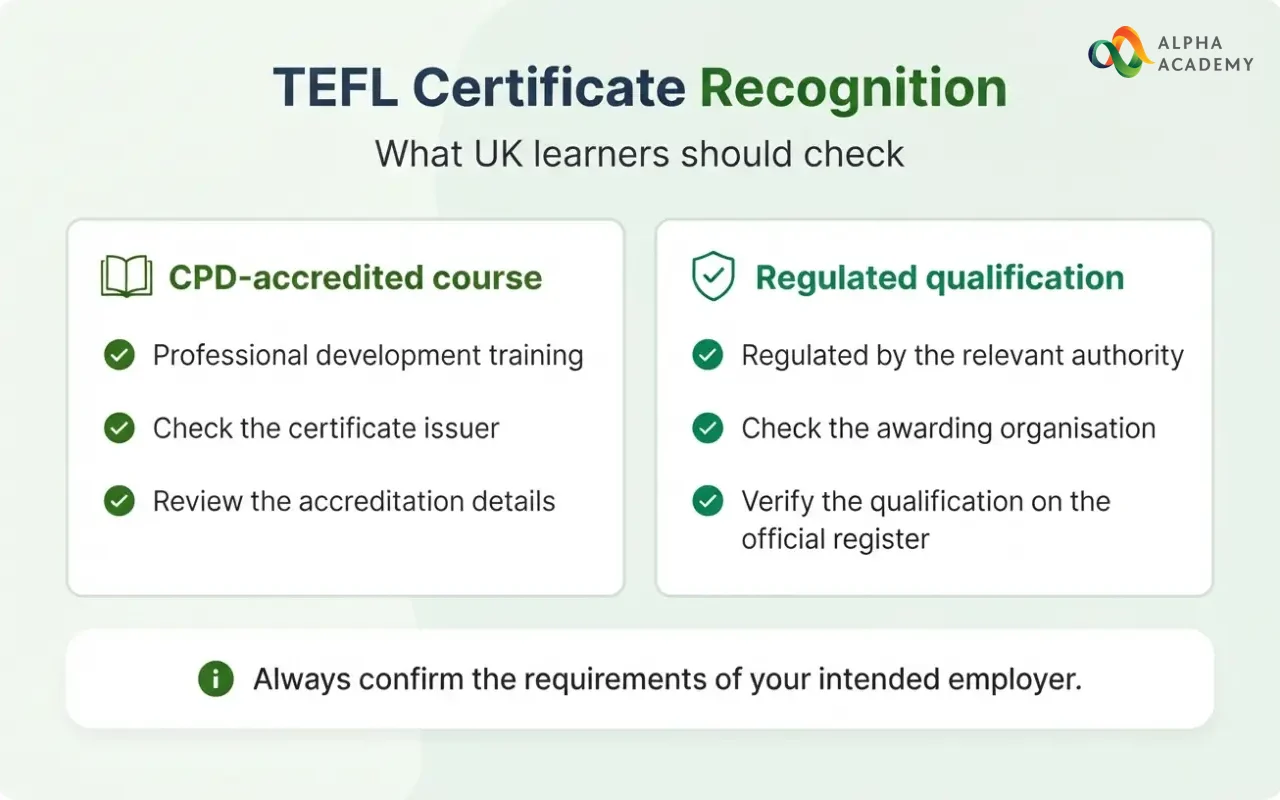
When comparing TEFL courses, it’s useful to know what their accreditation means.
A CPD-accredited course supports professional development, while an Ofqual-regulated qualification meets the requirements of a recognised regulatory framework.
You can check the official status of qualifications in England and Northern Ireland through GOV.UK’s regulated qualifications register.
For learners considering a broader career in education and training, Alpha Academy also lists a Level 5 Diploma in Education and Training, delivered and assessed through its affiliate partner, Janets.
For teaching at many established English-language schools in the UK, qualifications such as CELTA or Trinity CertTESOL, or participation in an accepted pathway such as AccessTEFL, are particularly relevant.
The British Council’s Accreditation UK scheme provides a quality-assurance framework for accredited English-language teaching centres.
These distinctions help you match your training choice to the type of teaching you want to pursue.
How to Get a 120-Hour TEFL Certificate
Getting started with TEFL training is straightforward once you’ve chosen a suitable provider.
Here are the main steps.
- Choose your TEFL course. Review the syllabus, learning format, accreditation information and assessment requirements.
- Check the entry requirements. Confirm any English proficiency, age or educational criteria before enrolling.
- Complete the training. Work through the lessons, learning activities and independent study required by your provider.
- Pass the assessment. Depending on the course, this may involve quizzes, written assignments, examinations or practical teaching tasks.
- Obtain your certificate. Check the certificate options, issuing organisation and any additional fees.
Before enrolling, also check whether the certificate is suitable for your intended teaching environment.
Study TEFL Online with Alpha Academy
If you prefer flexible online learning, Alpha Academy’s 120 Hours TEFL (TESOL) Masterclass introduces essential teaching methods, lesson planning and classroom management.
The programme introduces essential English-language teaching topics, including grammar, pronunciation, lesson planning, teaching methodologies, classroom management and learner assessment.
It is designed for learners aged 16 and over, with no formal academic qualification or previous TEFL training required. A good understanding of English and access to an internet-connected device are recommended.
The course includes:
- Flexible, self-paced online learning.
- Modules covering key TEFL and TESOL teaching concepts.
- An online multiple-choice assessment.
- Learner support during training.
- The option to order a CPD-accredited Certificate of Achievement after completing the assessment.
This makes it an option for beginners looking to build their English-teaching knowledge through independent online study.
You can review the curriculum, assessment process and certificate arrangements on Alpha Academy’s course page before enrolling.