


















































































Teaching English online can be a flexible way to work with learners around the world, whether you want part-time tutoring or a longer-term teaching career. But where do you begin?
To teach English online, start by checking your language skills and the requirements of different teaching platforms. Then choose your preferred type of student, develop your teaching skills, prepare your equipment and apply for suitable opportunities. Some platforms accept beginners without degrees or teaching certificates, while others have stricter requirements.
This guide explains how to teach English online from the UK, compare platforms, understand potential earnings and prepare for your first students.
Table of Contents
What Do You Need to Teach English Online?
You don’t necessarily need a teaching degree or previous classroom experience to start tutoring English online. However, you do need suitable language skills, the ability to explain concepts clearly and reliable equipment.
English Skills and Teaching Qualifications
Strong English communication skills are essential. You should be comfortable explaining vocabulary, correcting mistakes and adapting your language to different learners.
A TEFL (Teaching English as a Foreign Language) or TESOL (Teaching English to Speakers of Other Languages) course can help you develop practical teaching knowledge. If you’re new to the field, learning what TEFL means and how it relates to English language teaching is a useful starting point.
Knowing the TEFL and TESOL differences can also help you compare training options and understand how employers describe their requirements.
Training commonly covers lesson planning, grammar, pronunciation, teaching methods and learner assessment.
However, a TEFL certificate isn’t a universal requirement. Each teaching platform or employer sets its own eligibility criteria.
Do You Need a Degree or Teaching Experience?
Not always.
For example, Preply’s English tutoring requirements state that tutors don’t need a formal degree or teaching certificate. The platform accepts both native and highly proficient non-native English speakers.
Other employers may require a degree, teaching qualification or previous experience, particularly for more structured teaching positions.
If you’re also considering opportunities outside the UK, the requirements for teaching English abroad without a degree can differ from those for online tutoring.
If you’re starting without experience, developing your teaching skills and practising lesson delivery can help you prepare for applications. It’s also worth understanding whether a 120-hour TEFL course is enough to meet employers’ expectations, as requirements differ between teaching platforms.
Equipment and Internet Requirements
A professional online teaching setup doesn’t need to be expensive, but it should be dependable.
You’ll generally need a laptop or desktop computer, stable internet connection, working webcam, clear microphone or headset, and a quiet, well-lit space.
Check each platform’s technical requirements before applying. Some provide their own virtual classroom, while others may expect you to use separate video-conferencing tools.
How to Start Teaching English Online: Step by Step
Starting online English teaching becomes easier when you approach it as a series of manageable decisions rather than applying everywhere immediately.
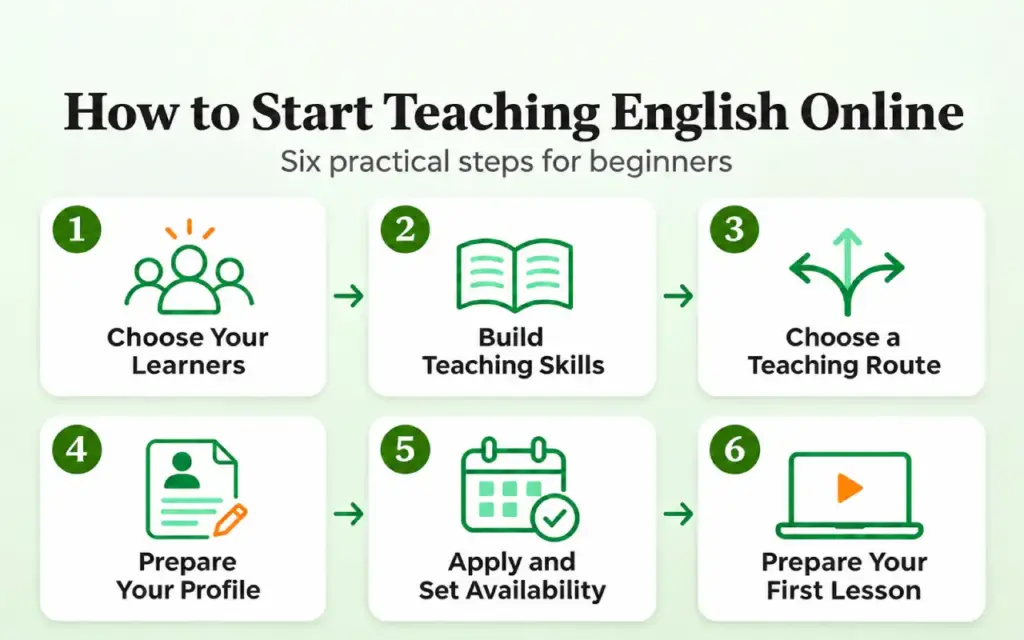
Step 1: Decide Who You Want to Teach
First, consider which learners you would feel comfortable supporting.
You might teach adults who want conversational English, beginners learning everyday vocabulary or professionals improving workplace communication.
Teaching children is another possibility, although it requires age-appropriate methods and additional safeguarding considerations.
Choose an audience that matches your skills. For example, someone with business experience might initially feel more comfortable helping adults practise workplace conversations than preparing students for specialist English examinations.
Step 2: Develop Your Teaching Skills
Being fluent in English doesn’t automatically mean you can teach it effectively.
Good online tutors understand how to explain language clearly, introduce activities, assess progress and give constructive feedback.
Before applying, practise explaining a grammar rule or introducing five new vocabulary words. Record yourself delivering a short lesson and review whether your instructions are easy to follow.
Structured TEFL or TESOL training can also help you build a foundation in English teaching methods. If you’re considering 120-hour TEFL training, it’s worth knowing what the course typically covers and how different employers assess TEFL qualifications.
Step 3: Choose Your Online Teaching Route
There are several ways to find online English teaching work.
Tutoring marketplaces allow you to create a tutor profile and attract students looking for lessons.
Conversation platforms focus more heavily on speaking practice and may use platform-defined payment arrangements.
Online language schools may provide structured lessons, schedules and teaching expectations.
Independent tutoring gives you more control over pricing and lesson design, but you’ll need to find students and manage bookings yourself.
If you’re new to teaching, compare at least two approaches before deciding. Consider how students are assigned, what fees apply and how much administrative work you’ll handle.
Step 4: Prepare Your Tutor Profile and Application
Your profile should help prospective students understand what you offer.
Include a clear photograph, a short introduction and an accurate explanation of your language skills, experience and teaching interests.
Instead of writing, “I can teach anyone English”, be specific:
“I help adult beginners practise everyday English conversations and build confidence when speaking.”
If a platform requires an introduction video, speak clearly, maintain natural eye contact and explain how you would support learners.
Some employers request a demonstration lesson. Prepare a short activity showing how you introduce a topic, involve the learner and check understanding.
Step 5: Apply and Set Your Availability
Once your profile is ready, follow the application process for your chosen platform or employer.
Check its eligibility requirements, payment methods, commission structure and cancellation policies before accepting work.
If you’re teaching internationally from the UK, remember that your students may live in different time zones.
Choose teaching hours you can maintain consistently. Offering a manageable schedule is generally better than advertising availability you cannot reliably fulfil.
Step 6: Prepare for Your First Booking
Before your first session, ask what the learner hopes to achieve.
Someone preparing for a job interview will need different activities from a beginner learning everyday phrases.
Prepare a short lesson with one clear objective, a speaking activity and time for feedback.
You don’t need a complicated presentation. A simple, well-organised lesson that gives the student opportunities to participate is often a better starting point.
Which Platforms Can You Use to Teach English Online?
The best online English teaching platform depends on your qualifications, preferred students, availability and earning expectations.
Two examples worth comparing are Preply and Cambly, although neither guarantees bookings or acceptance.
Preply operates as a tutoring marketplace where approved tutors create profiles and set their lesson rates.
Cambly focuses on English conversation practice. Its published tutor eligibility requirements specify native English speakers aged at least 18, without requiring previous teaching certification or experience.
| Teaching route | Main advantage | What to consider |
|---|---|---|
| Tutoring marketplaces, such as Preply | Set rates and build a student base | Platform commissions and competition |
| Conversation platform, such as Cambly | Focus on spoken English practice | Eligibility rules and payment arrangements |
| Online language school | Potentially more structured lessons | Employer-specific qualifications and schedules |
| Independent tutoring | Control over pricing and teaching methods | Finding students and handling administration |
If you’re considering independent tutoring, think about how students will find you. Referrals, a professional website or an appropriate tutor directory may help, but building a regular student base takes effort.
Before choosing a platform, check whether it’s currently accepting applications from UK residents and whether its payment arrangements suit you. Policies and opportunities can change.
Limited Time Offer
120 Hours TEFL (TESOL) Masterclass
Teach English as a Foreign Language · Online & Self-PacedLearn teaching methods, lesson planning, classroom management, grammar, pronunciation and the four language skills, then pass an online assessment to earn your certificate.
- 14 Modules
- No Experience Needed
- Mock & Final Exam
- 1 Year Access
£319
Enrol Now
- 14-Day Money-Back Guarantee
- Self-Paced Learning
- CPD-Accredited Certificate Available
TEFL120HOURS
How Much Can You Earn Teaching English Online?
Online English teaching earnings vary according to your rates, teaching hours, platform fees and student demand.
Some platforms allow tutors to choose their own prices. Others determine payment according to their established rates or arrangements.
For example, Preply’s commission model states that the platform takes 100% commission from trial lessons with new students and between 18% and 33% from subsequent lessons, depending on accumulated teaching hours.
Consider this hypothetical example:
If you charge £15 per hour and a platform deducts 20%, you receive £12 for that paid lesson before any other applicable expenses or tax.
However, an advertised £15 hourly rate doesn’t mean you’ll earn £15 for every hour you make available.
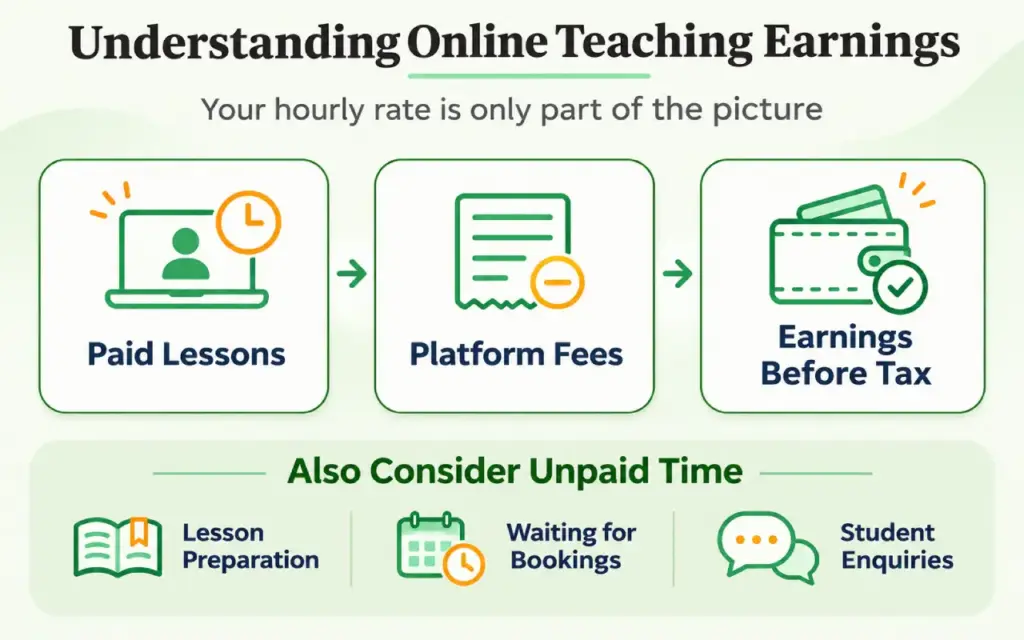
You may spend time preparing lessons, waiting for bookings, answering enquiries or handling cancellations.
When comparing opportunities, consider your effective earnings, not just the advertised hourly price. For a broader picture of earning potential, it’s useful to look at TEFL teacher salary expectations across online and overseas teaching roles.
How to Prepare for Your First Online English Lesson
Your first lesson should help you understand the student, establish a comfortable learning environment and identify useful next steps.

Use this simple preparation checklist:
- Test your equipment: Check your camera, microphone, internet and teaching platform.
- Clarify the student’s goals: Ask why they’re learning English and which situations they find difficult.
- Choose one lesson objective: Focus on a manageable skill, such as introducing yourself or describing daily activities.
- Encourage participation: Give the learner opportunities to speak rather than delivering a long explanation.
- Provide constructive feedback: Highlight what went well and identify one or two useful improvements.
For example, when teaching everyday introductions, demonstrate a short conversation, practise it together, then invite the student to adapt it using their own information.
Keep backup activities available in case an exercise finishes early or technical difficulties interrupt the lesson.
 FREE TEACHING RESOURCE
Your first English lesson, ready to teach.
Plan a confident first online lesson with our free First Online English Lesson Starter Pack — lesson templates, A1 speaking activities and tutor feedback sheets in one practical PDF.
- 30 & 60-minute lesson plans
- Ready-to-use A1 activities
- Speaking worksheets & scripts
- Feedback & preparation checklists
16-page printable PDF · No sign-up required · alphaacademy.org
ALPHA ACADEMY
First Online English Lesson
Starter Pack
Lesson plans & worksheets TEFL PDF
Lesson plans & worksheets TEFL PDF
What Should UK Online English Tutors Know?
If you teach independently, you may have self-employment and tax responsibilities.
According to HMRC’s sole trader guidance, sole traders generally need to register for Self Assessment when gross trading income exceeds £1,000 in a tax year, although individual circumstances can create other obligations.
Keep records of income and business expenses from the beginning.
If you teach children, consider safeguarding arrangements, professional boundaries, appropriate communication channels and protecting student information.
Eligible self-employed tutors can apply for Enhanced checks through registered umbrella bodies under the Disclosure and Barring Service guidance.
DBS eligibility depends on the role, and different checking arrangements apply across the UK.
Build Your Teaching Skills With TEFL Training
If you’re new to English language teaching, structured training can help you develop the knowledge needed to plan and deliver lessons.
Alpha Academy’s TEFL and TESOL teaching skills course, titled 120 hours TEFL (TESOL) Masterclass, covers grammar, pronunciation, teaching methods, lesson planning and learner assessment.
The self-paced course includes an online multiple-choice assessment. After successful completion, learners can order a certificate of achievement, which Alpha Academy describes as CPD accredited.
Before enrolling, comparing TEFL course costs can help you assess different training options, what they include and whether they fit your budget.
Check your intended employer’s requirements before choosing training, as course completion does not guarantee employment or acceptance by a teaching platform.
Conclusion
Teaching English online starts with choosing the right learners, developing practical teaching skills and finding opportunities that match your experience.
Before committing to a platform or course, compare its requirements, costs and earning arrangements. A realistic plan and well-prepared first lesson will give you a stronger foundation for building your online teaching work.
Frequently Asked Questions
Yes, some online tutoring platforms accept beginners without previous teaching experience. You’ll still need suitable English proficiency, communication skills and the ability to support learners effectively. Preparing sample lessons and developing teaching knowledge can help you get started.
Yes. Some platforms, including Preply, do not require a university degree. However, other employers may ask for particular qualifications or teaching experience. Always check the current requirements of the organisation you want to work with.
Not universally. Some platforms accept tutors without TEFL certification, while others have specific qualification requirements. TEFL training can still be useful for developing lesson-planning, language-teaching and assessment skills.
Yes, depending on the platform. Some accept highly proficient non-native speakers, while others require native English speakers. Strong communication skills and the ability to explain language clearly remain important regardless of your background.
It can be. Many tutoring arrangements allow flexible availability, making part-time teaching possible. However, actual working hours depend on student bookings, platform conditions and your schedule. Flexible availability doesn’t guarantee a steady income.
Start by creating a clear profile on a suitable tutoring marketplace or applying to an online teaching provider. If working independently, consider professional referrals and tutor directories. Explain who you teach, what students can expect and how your lessons support their goals.
Recent Posts

How Long Does It Take to Learn German? Hours by CEFR Level
November 18, 2026

50 Basic German Phrases for Beginners and Travellers
November 17, 2026

Deaf Awareness in the Workplace: Practical UK Guide
November 16, 2026

Intermediate Spanish Course Online: What to Look For Before You Enrol
November 13, 2026
Spanish Tenses Explained: Present, Past and Future Made Simple
November 12, 2026
November 20, 2026


